

Proudly serving Omaha · Elkhorn · Papillion · Bellevue & the Omaha metro

Two-story window cleaning on an Omaha-area lake home

What to check on your house after an Omaha storm

Nebraska storms arrive with the wind out in front of them.

(402) 213-5300

Get a free estimate

What do you need? (required)
5.0across 50+ reviews on

The short version

  • Rinse mud splash off siding and glass while it is still fresh
  • Pour water in the window track and watch whether it drains
  • Overflow at the front lip means the trough, not the downspout
  • Reseat downspout extensions the wind moved before the next rain
  • Hail, shingles and anything on the roof is a roofer's job

Why this comes up in Omaha

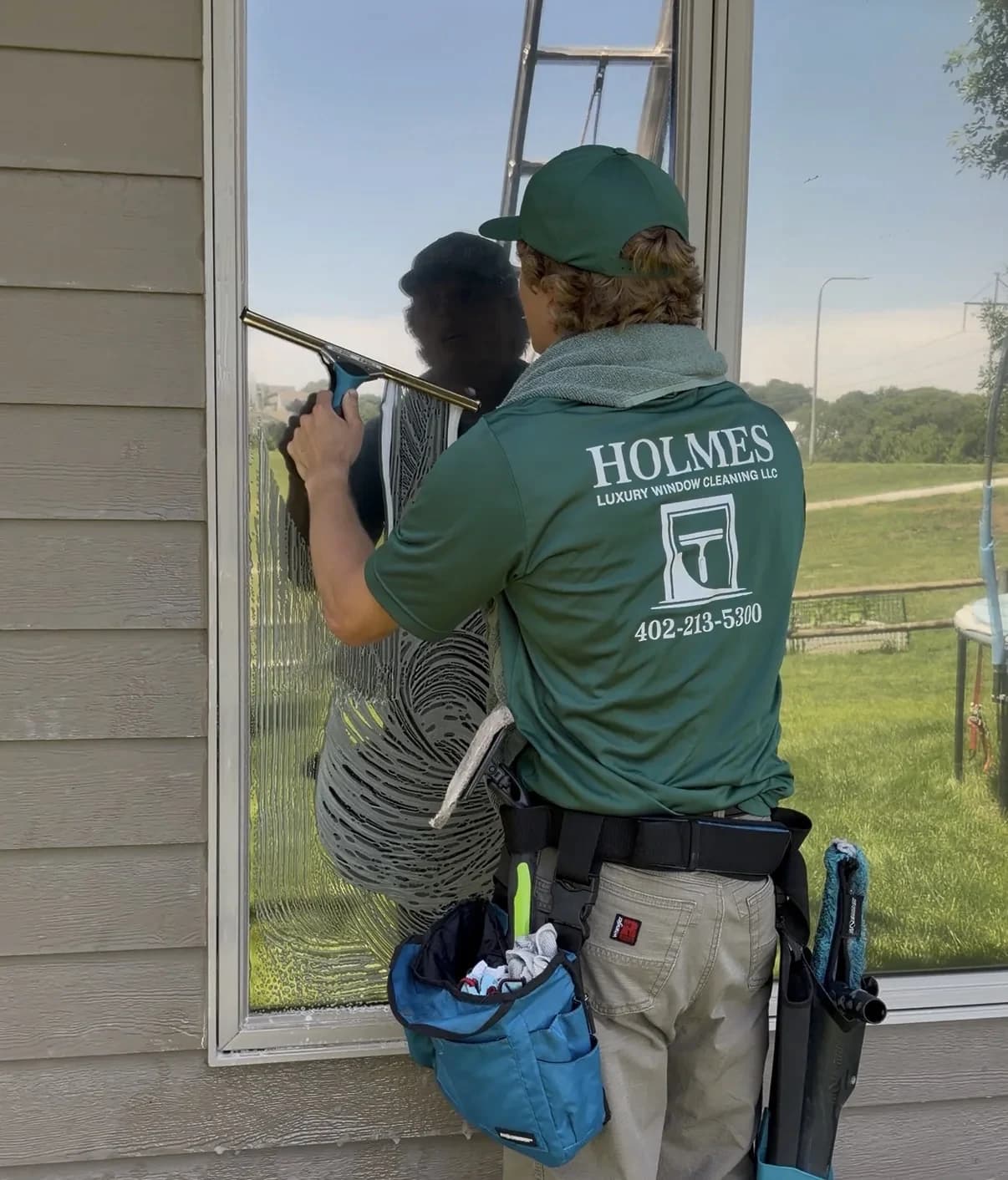
Residential window cleaning on a modern Omaha home

Nebraska storms arrive with the wind out in front of them. By the time any rain lands, that wind has stripped seed and small branch litter out of the trees and lifted loose grit off beds and driveways, and thrown all of it at the west and south faces of the house. The rain then drives what is airborne into every horizontal surface it can reach.

What follows is a walk-around you can do in about fifteen minutes with your eyes and a garden hose. Most of what you turn up will be cosmetic and can wait for the next scheduled visit. A few items cannot. We have marked which ones belong to a cleaner, which belong to a roofer, and which belong to your insurance carrier, because we do not do roofs and we do not assess hail.

The short of it

High-access window cleaning on a modern Omaha property

Start at the bottom of the walls

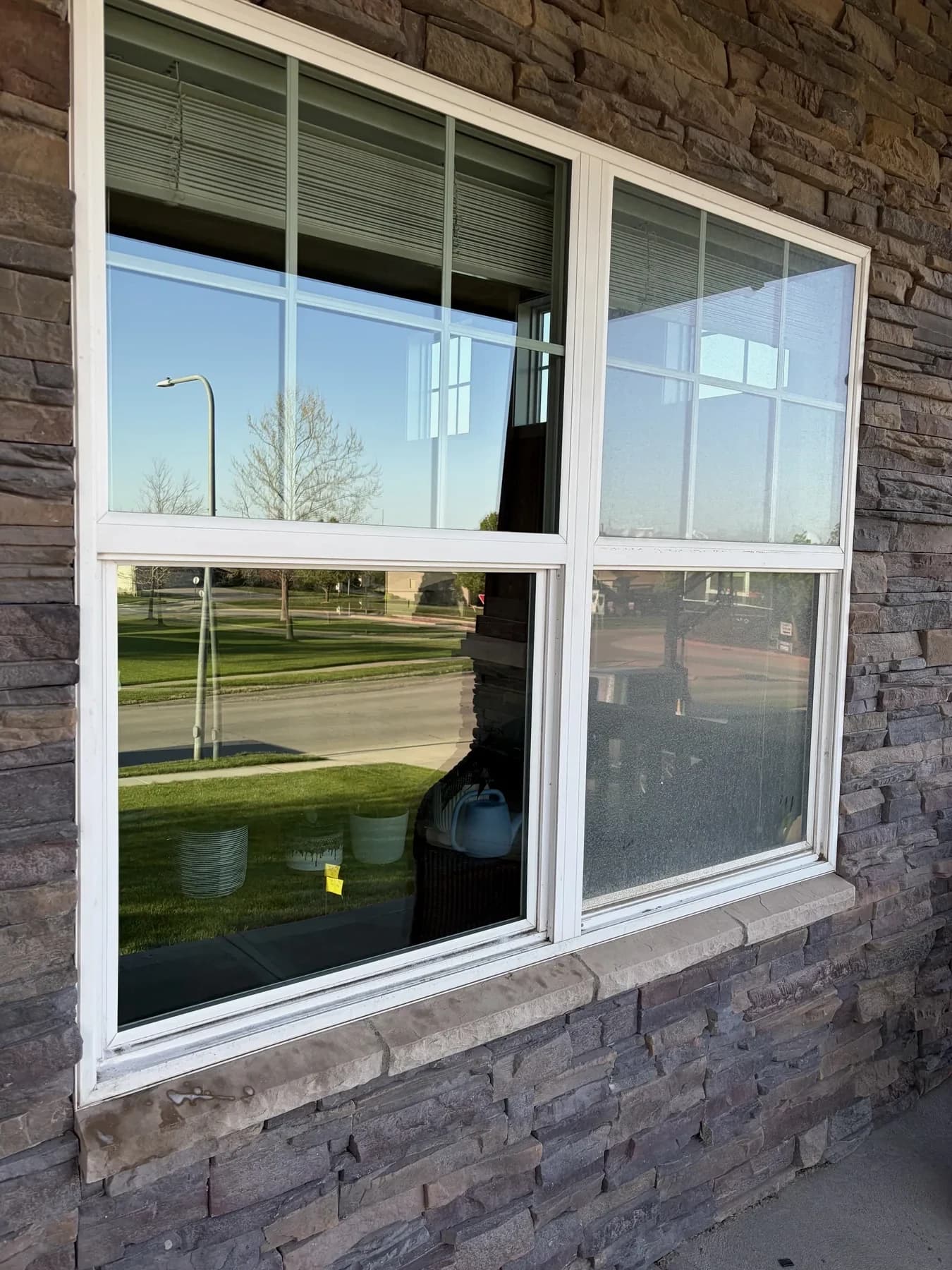
Look at the first three feet of siding and the ground-floor glass on whichever elevations face open beds. You will find a band of fine spatter, soil and mulch fines that the rain kicked off the ground and threw sideways at the house. It dries fast and it bonds, worst on the sunny elevations, because the clay fraction in eastern Nebraska soil grips a warm surface and holds on once the water leaves it.

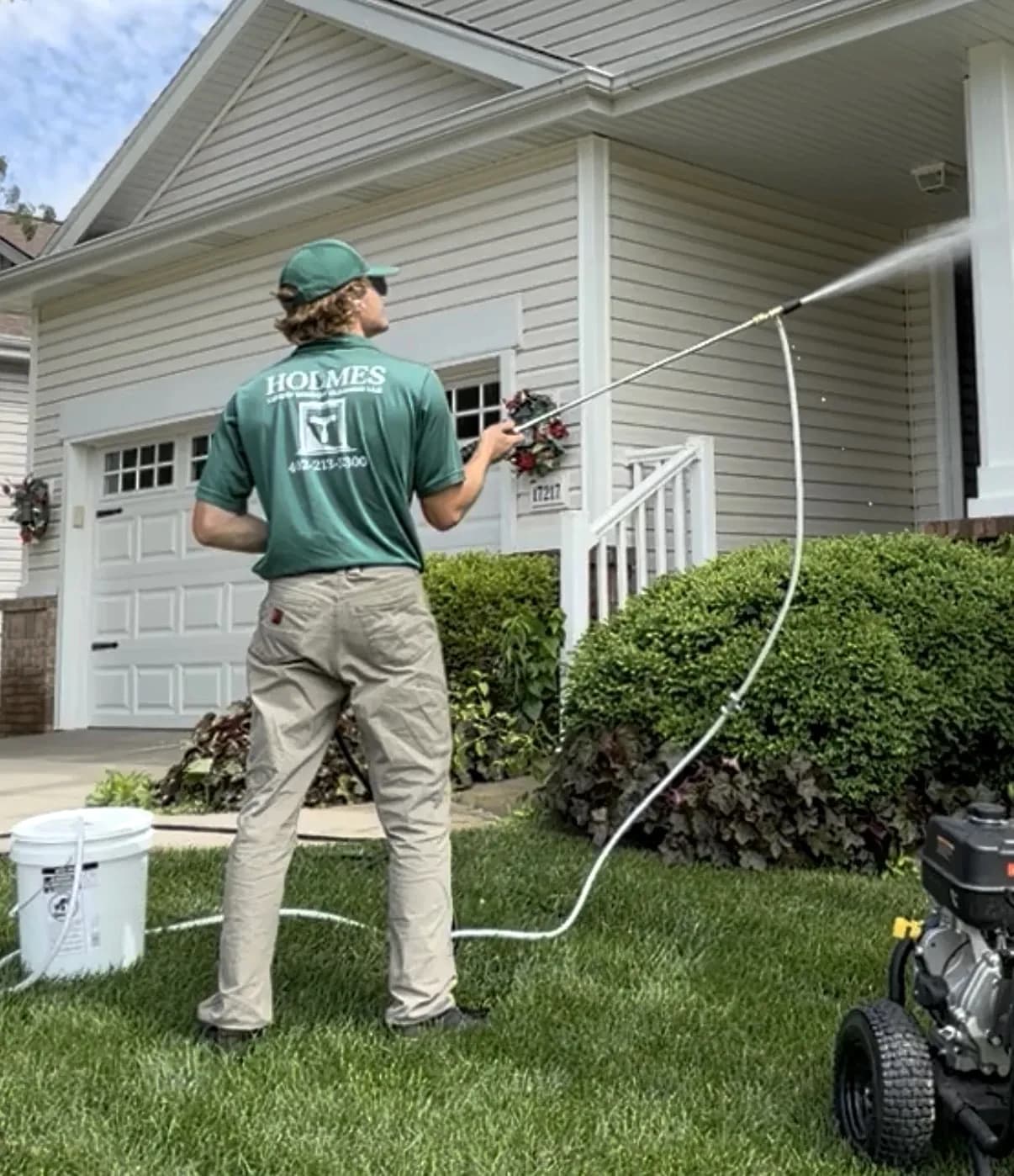
Rinse it while it is fresh, and understand that this advice costs us a call. A hose and an ordinary nozzle takes almost all of it off in the first week and almost none of it after a month of July sun. What will not rinse away is anything driven into a textured surface. Stucco, split-face block and rough-sawn cedar hold the fines down in the profile.

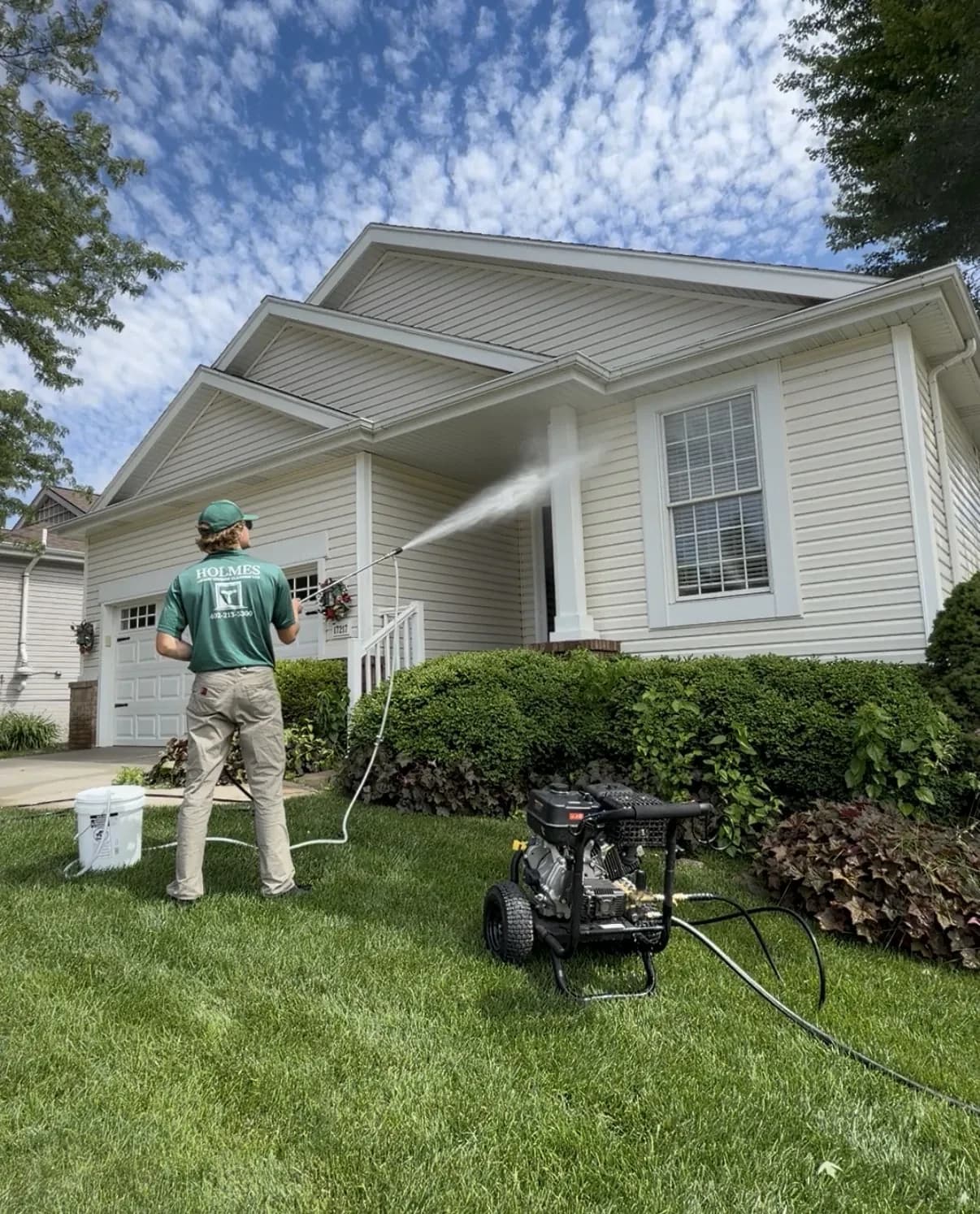
A modern Omaha property seen across the pool deck

Grit in the tracks and whether they still drain

Open two or three ground-floor windows and look down into the track. After a storm you find a gritty line of sand and soil along the outer channel, and it did not walk in there on its own. Wind pushed it under the screen and the rain packed it flat. Left there, it gets compacted harder by every open and close through the summer, then again by every freeze cycle after Thanksgiving.

Test the drainage instead of assuming it. Pour a cup of water into the outer channel and watch. It should be gone in seconds through the small slots at the base of the track. If it stands, those slots are packed and the track is now a shallow tray holding water against the frame. Vacuum the grit out dry first. Wetting it makes mud, and mud goes into the corners.

Low pressure exterior house washing in Omaha, NE

Where the downspouts are actually emptying

Wind and fast-moving water move downspout extensions constantly, and a knocked-aside extension is the single most common thing we find after a storm week. Check every spout base. A splash block rotated a few degrees off line, a hinged extension folded back up against the wall, a flexible pipe pulled clean off the outlet. Each looks like nothing from the sidewalk, and each one puts an entire roof plane's worth of runoff at the foundation.

That matters more here than in most places because of what the metro sits on. Clay swells as it takes on water and shrinks back as it dries, and it is the repeated cycle at the foundation wall rather than any one soaking that does the damage. Reseat the extension, aim it downhill, and check the ground still falls away from the house. Storms rearrange grade too, particularly where mulch was fresh in the spring.

Skylight and roof window cleaning on an Omaha home

Valleys, screens, and what the wind rearranged

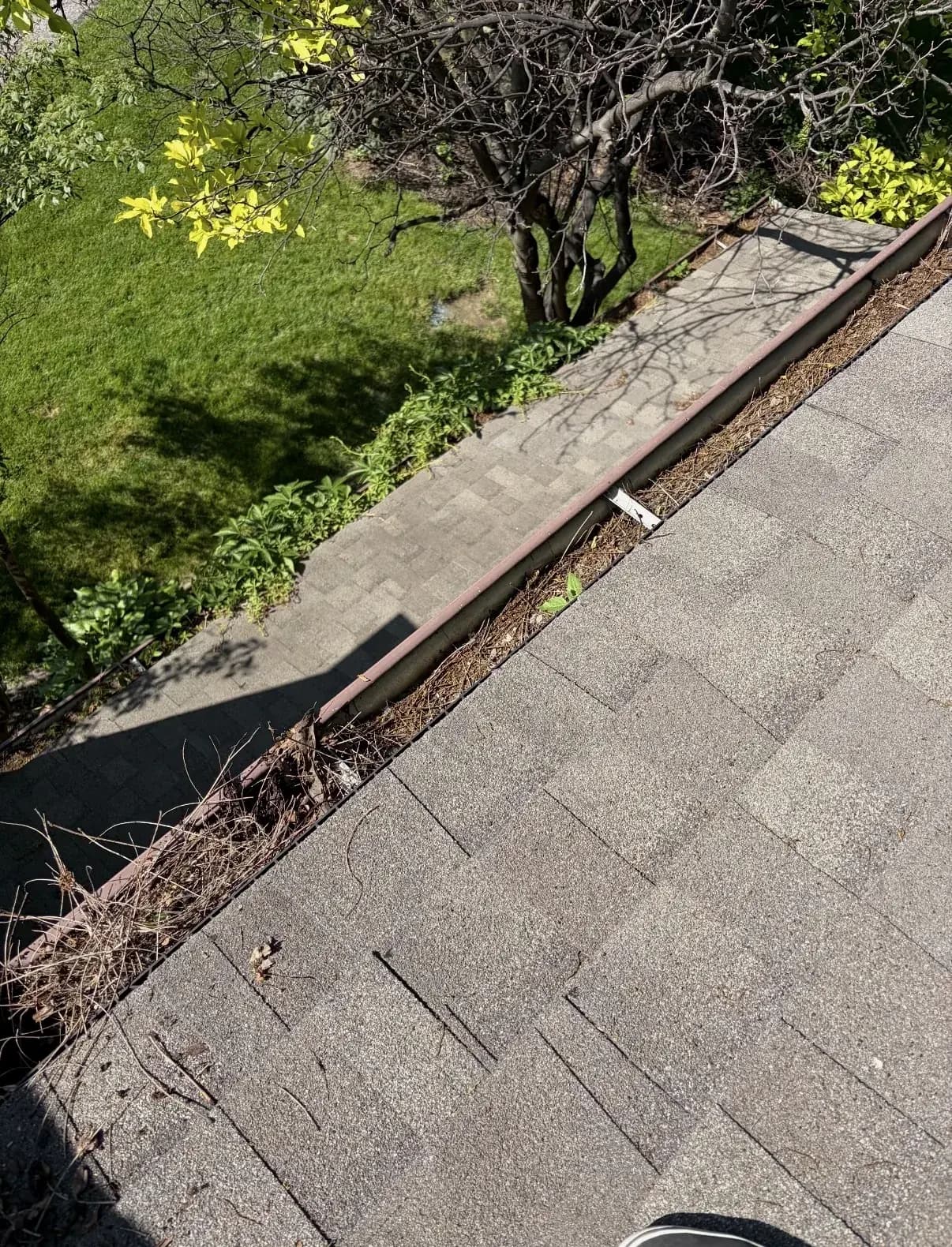
From the driveway, look up at the roof valleys, the interior angles where two roof planes meet. Wind piles debris in them because that is where the water already goes. A plugged valley holds moisture against the shingle and shunts runoff sideways over the gutter edge rather than into it. That is why you sometimes get a waterfall at one corner of a house whose gutters were cleaned last month.

Then walk the screens. Storm wind hits them from outside, so damage shows as a bowed panel, a corner lifted out of its channel, or spline popped free along one edge. A screen sitting proud catches the next gust the same way and eventually leaves entirely, so push it back square while it still will. Torn mesh is a replacement. We clean and reseat screens. We do not rebuild them.

The long version

Hand-finishing a pane on an Omaha home

Watch the gutters during the next rain

The useful gutter inspection is not from a ladder on a dry afternoon. It is standing under the eave during the next real rain, watching where water leaves the system. Where it overflows tells you what is wrong, and the two patterns mean completely different jobs. Give it ten minutes of steady rain before you judge anything, since a light shower will run through nearly any blockage without complaint.

Water pouring evenly over the front lip along a long stretch means the trough itself is full, usually leaf shred and branch litter the wind brought down early, lying flat across the bottom. Water that backs up and spills in one concentrated spot beside a downspout means the opposite: the trough is fine and the plug sits in the elbow at the top of the spout.

There is a way to find that plug from the ground. Rap down the length of the downspout with your knuckles. A clear spout rings hollow the whole way. A packed section goes dull and dead, and the point where the sound changes is the top of the blockage. It works on the lower story without any equipment, and it tells you whether you have a five-minute job.

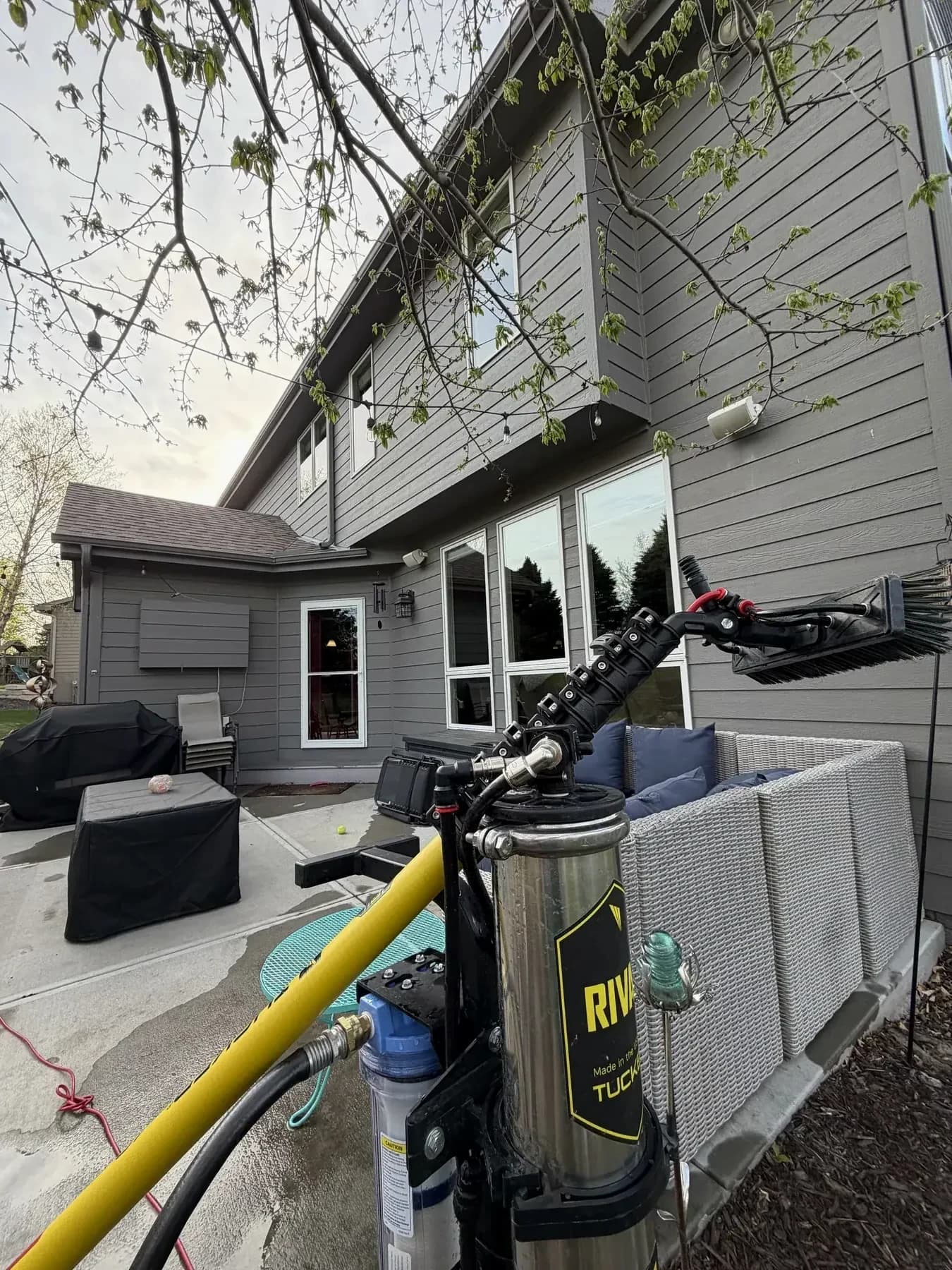
Water-fed pole window cleaning on an upper storey in Omaha

What belongs to a roofer or an adjuster

This is the part worth being blunt about, because a storm week in Omaha brings a great deal of door knocking. We do not do roofs. We do not walk them, we do not clean them, and we do not assess hail. If a job requires standing on shingles it is not ours, and anybody in the cleaning trade offering to inspect your roof for storm damage in the week after a storm should be treated carefully.

Call a roofer for granules collecting in unusual volume at the base of a downspout, for shingle tabs lifted or creased where you can see them from the ground, for exposed decking, for flashing pulled away at a chimney or sidewall, and for any water stain showing up on a ceiling. Call promptly. A compromised roof gets worse with the next storm.

Call your insurance carrier and let their adjuster assess anything that looks like hail. Dented gutter faces and downspouts, dings in soft metal like fascia trim or a roof vent hood, spatter marks on screen mesh, cracked siding. We will tell you what we noticed while we were working and send you a photo. We will not put a number on it or tell you whether to file.

Quick answers

What should I check around my house after an Omaha storm?

Mud spatter on lower siding and ground-floor glass, grit packed into the window tracks, whether those tracks still drain, gutter overflow during the next rain, downspout extensions knocked out of position, debris piled in the roof valleys, and screens bowed or pushed out of frame.

Will you check for hail damage while you are here?

No. We are window, gutter and pressure washing people, and hail assessment belongs to a roofer or to your insurance adjuster. If we notice dented gutter faces, spatter on the screens, or granules in a downspout while we work, we will photograph it and tell you what we saw. We will not estimate it or advise you on filing.

How soon after a storm should the gutters be cleaned?

Sooner than most people think, if the wind brought branch litter down. That material lies flat over whatever is already in the trough and settles right across the downspout opening, and Nebraska storms rarely arrive one at a time. Watch the next rain first though. If water leaves the system properly, it can wait for the scheduled visit.

Questions we did not answer here

Get a free estimate

What do you need? (required)
Call (402) 213-5300Free Quote