

Proudly serving Omaha · Elkhorn · Papillion · Bellevue & the Omaha metro

Two-story window cleaning on an Omaha-area lake home

When to clean gutters in Omaha

Twice: early summer once the cottonwood has finished, and late fall after the oaks let go.

(402) 213-5300

Get a free estimate

What do you need? (required)
5.0across 50+ reviews on

The short version

  • Two visits here: after the cottonwood in June, after the oaks in November
  • Cottonwood fiber and maple samaras mat over the downspout opening by midsummer
  • July and August rain arrives on a system already carrying spring debris
  • Oaks drop into December, so early November cleans often get paid for twice
  • Bare newer lots with no canopy honestly need only one fall visit

Why this comes up in Omaha

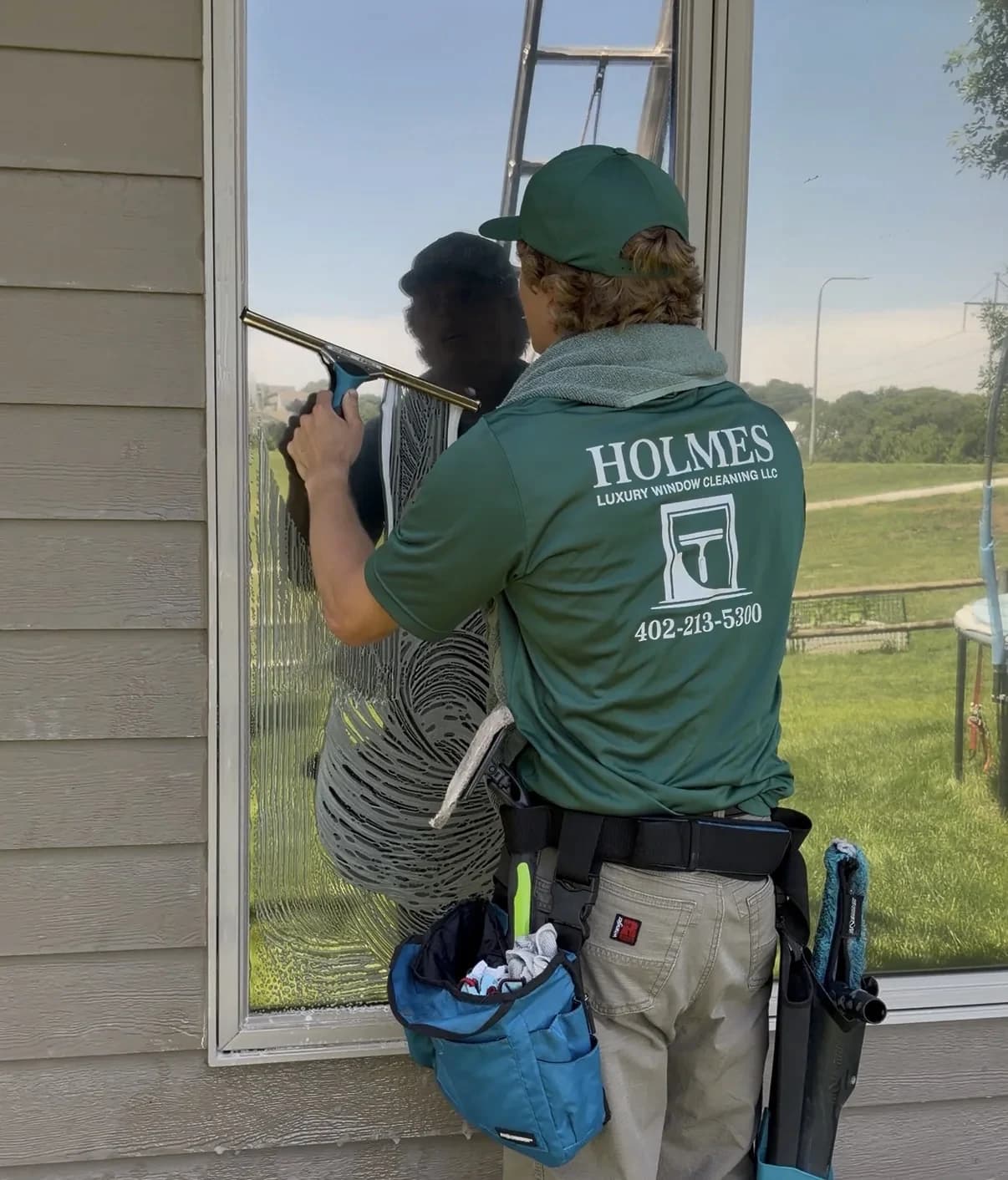
Residential window cleaning on a modern Omaha home

Twice: early summer once the cottonwood has finished, and late fall after the oaks let go. That is the honest answer for most of this metro, and it is not the answer the national advice gives you. The once-a-year, clean-it-in-November rule was written for places where one leaf drop is the entire debris load. Omaha gets two loads, four months apart, and the second one lands on whatever the first one left.

Frequency is the easy half. Timing is where most schedules go wrong, and both ends of the fall window are unforgiving. Go up too early and the maple over your driveway refills the run within three weeks. Go up too late and there is a block of ice in the trough that nobody can flush. This page covers what falls here, roughly when, and which houses can honestly skip the second visit.

The short of it

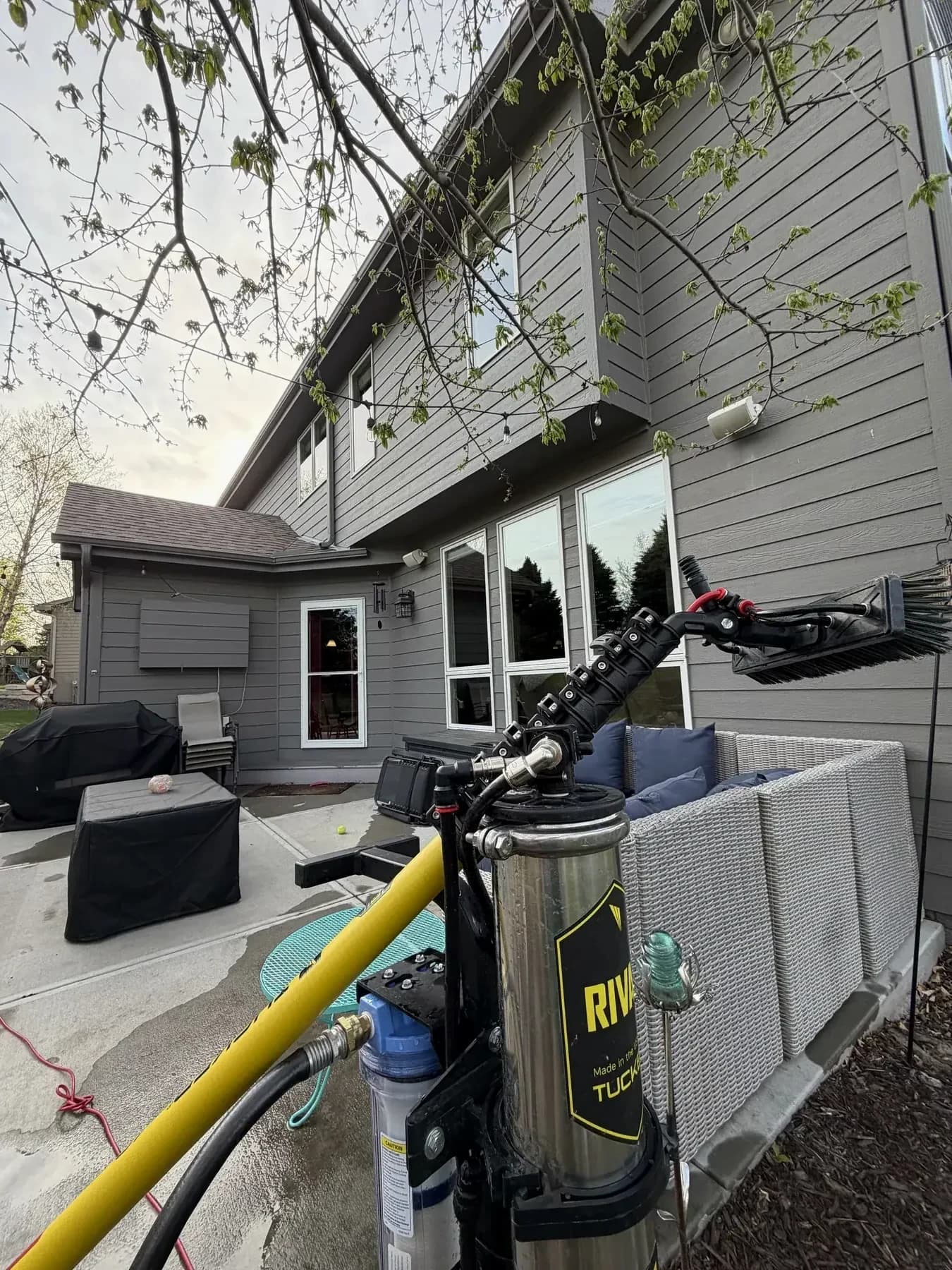
High-access window cleaning on a modern Omaha property

Why the national schedule misses here

Most gutter advice assumes a single annual debris event. Deciduous leaves come down in October, you clean after, you are set until next October. That holds in a lot of the country. It does not hold in a metro whose signature tree drops seed in May and whose oaks are still letting go at the start of December, with the heaviest rain of the year sitting in between those two dates.

Think of a gutter as having a service life between cleanings rather than a place on a calendar. What matters is whether the trough and the downspout elbow are open on the day the water arrives. In eastern Nebraska the days water arrives in volume are in July and August, which is exactly the stretch a November-only schedule leaves uncovered. The leaves you cleared out in fall were never the real risk.

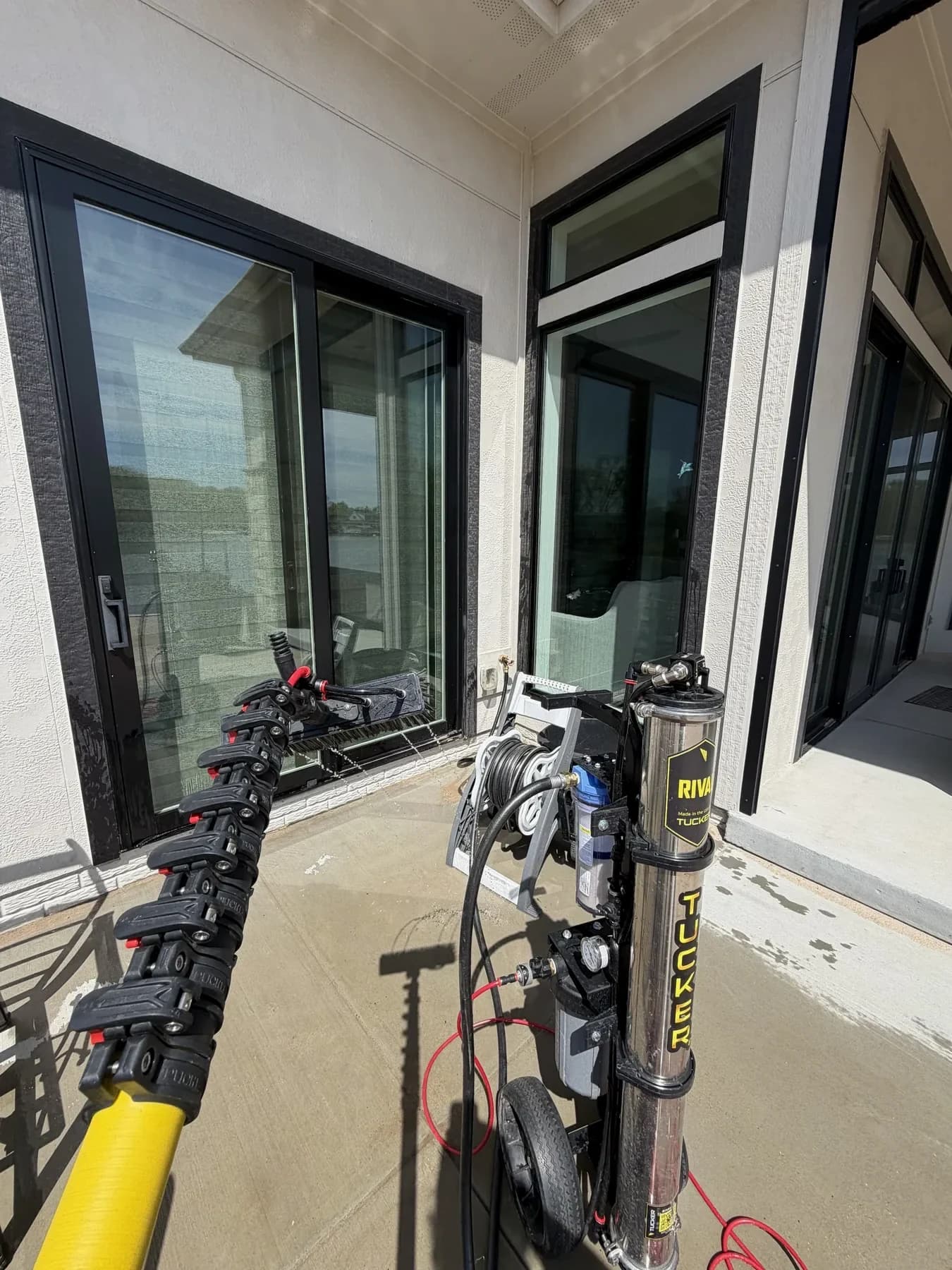
A modern Omaha property seen across the pool deck

What comes down in late spring

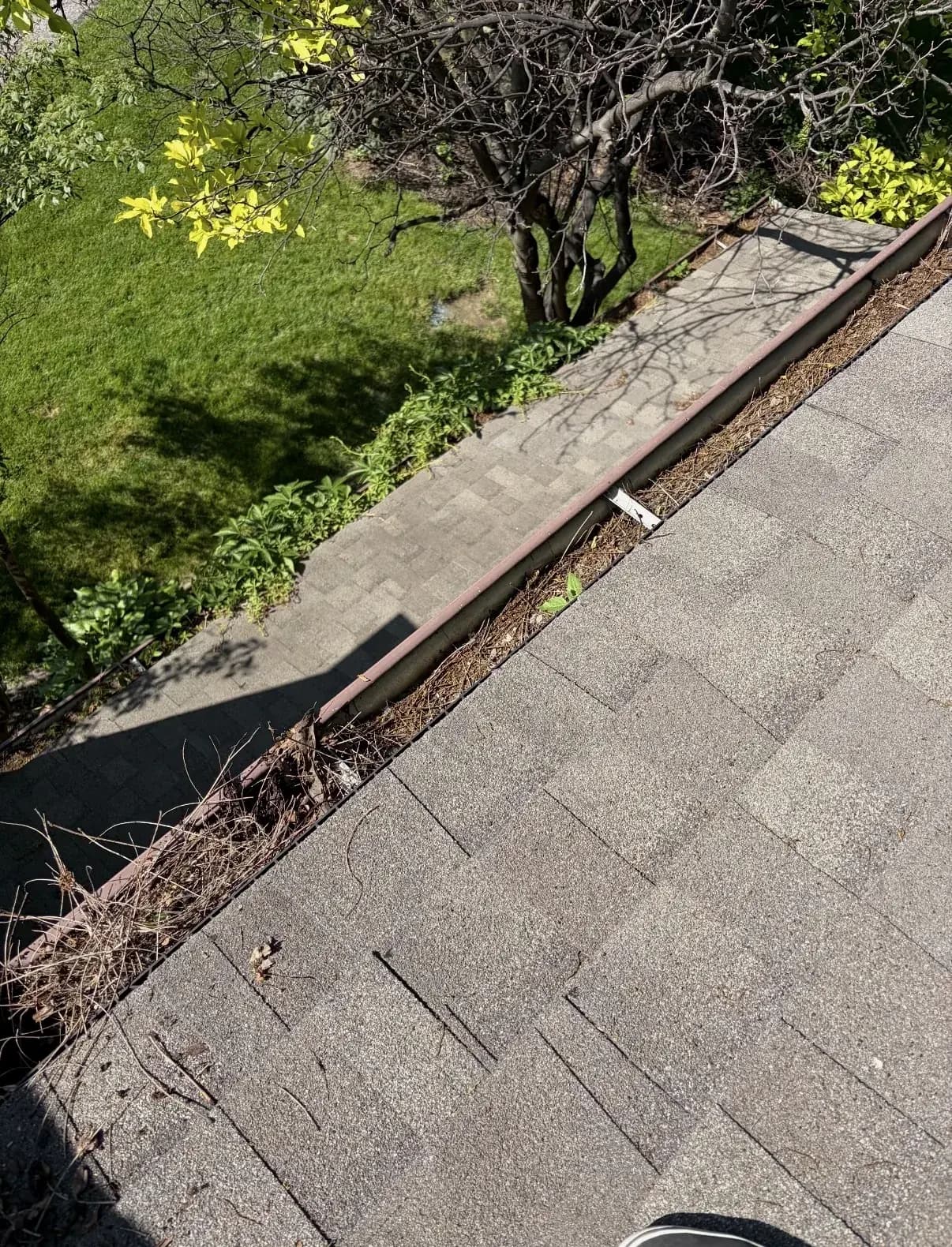
Cottonwood seed starts moving in the last week of May and keeps coming for weeks. It is not a leaf and it does not behave like one. Each seed is a fiber attached to a tuft, and fibers tangle. What collects in a gutter is closer to a wad of wet lint than to a pile of debris, and it will not float down to the downspout the way a leaf does when the trough fills up.

Maple samaras arrive in the same window and add the structural part. A samara is a seed with a stiff stem and a papery wing, and hundreds of them lying in one direction form a lattice. Rain packs that lattice down onto the fiber underneath. By the middle of June you have a mat with some rigidity to it sitting over a two-inch hole, and nothing about the summer breaks it up again.

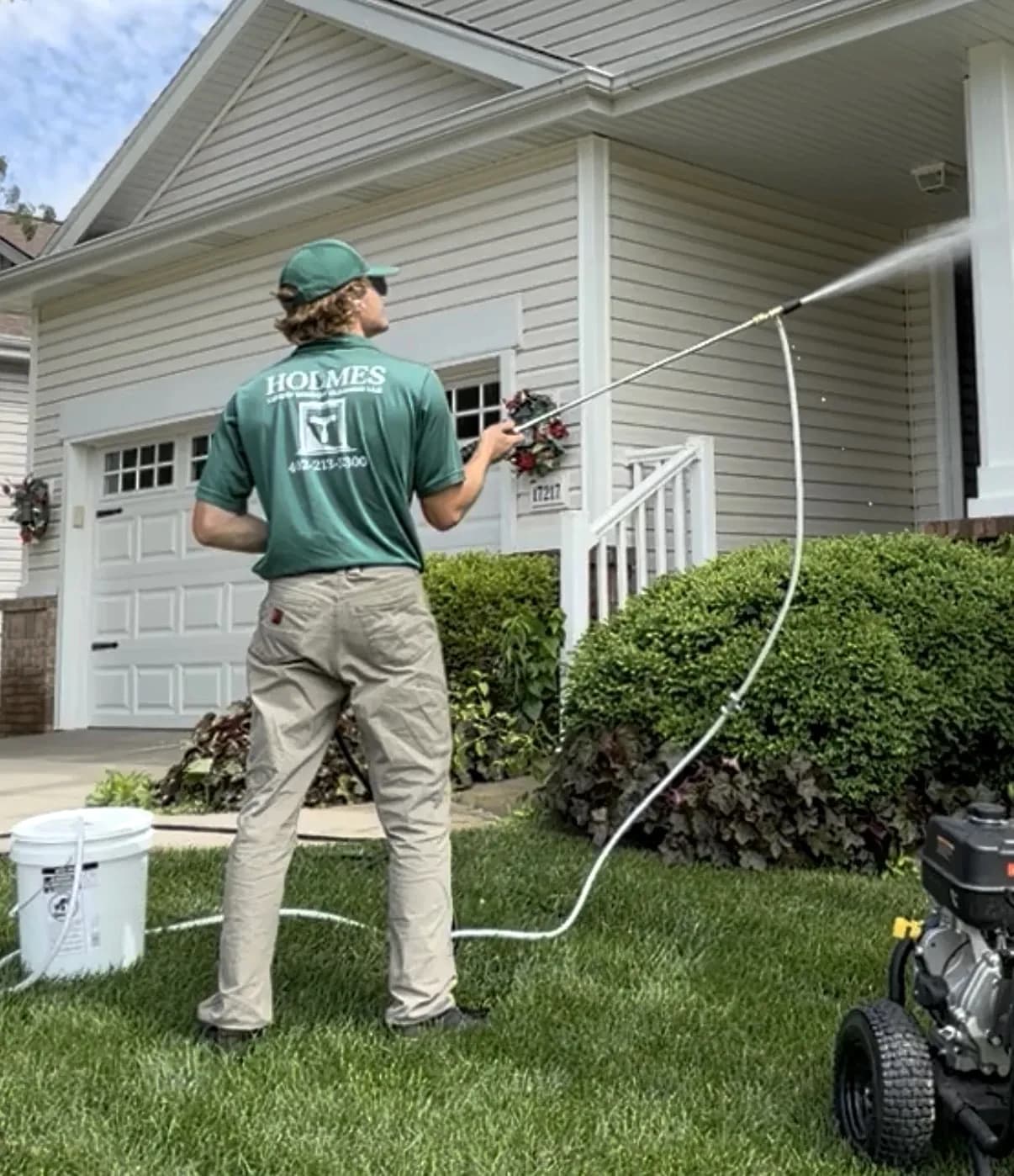
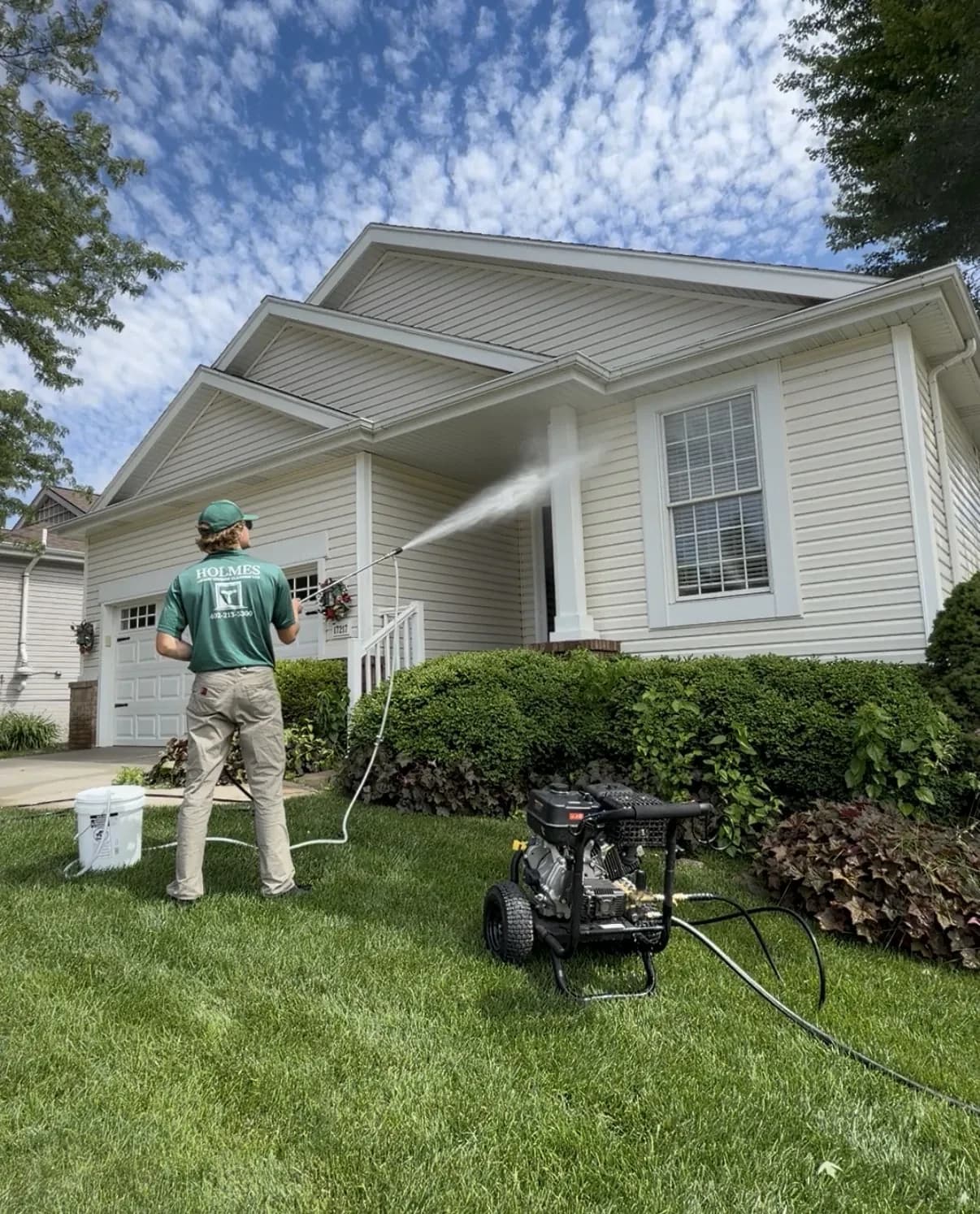
Low pressure exterior house washing in Omaha, NE

Storms arrive on a plugged system

July and August bring the heaviest rainfall this metro gets, and it does not arrive gently. A Nebraska thunderstorm can put an inch on a roof in under an hour. That is a volume a clear gutter handles and a restricted one does not, so the failure shows up as a sheet coming off the front edge in the middle of the storm rather than as anything you would notice on a dry afternoon.

Wind is the other half of a summer storm here, and it loads the gutter just before the rain gets there. The gust line ahead of a cell strips small branch litter, seed pods and roof grit downslope into the trough. So the system is at its most blocked within minutes of being asked to do the most work. That sequence, more than any single storm, is the argument for an early-summer visit.

Hand-finishing a pane on an Omaha home

Houses that genuinely need one visit

Not every property in this metro needs two cleanings, and we would rather say so now than sell you a schedule you do not need. The test is not the size of the house. It is what is growing within reach of the roof, and specifically whether anything overhangs it. A large house on a bare lot is a one-visit house. A small bungalow under a silver maple is not.

A newer build where the landscaping is still below roof height, with nothing mature on the property line and no branch over the eave, is a one-visit house. Take that visit in late fall and skip the summer one. Same for open lots on the western edge, where wind carries field dust into the trough but no canopy sheds anything into it. Those want the downspout flushed properly rather than a second trip.

The long version

Water-fed pole window cleaning on an upper storey in Omaha

The fall window is narrower than expected

Silver maples and ashes are finished by the first week of November in a normal year. Oaks are not. Pin oak and red oak both hold dead leaves on the branch through hard frost and release them in batches across December, sometimes into January. If there is a mature oak within throwing distance of your roof, a clean scheduled for Halloween buys you roughly three weeks of clear gutter.

The other end is set by temperature and it does not negotiate. Wet leaf litter in a trough is mostly water, and once it freezes solid there is no getting it out without prying, which is how seams open and hangers pull loose. Flushing a downspout also requires the elbow not to have ice in it. So the window closes with the first run of nights that stay below freezing.

That puts the honest fall date for a heavily treed lot later than most companies book it and earlier than the oaks would like. Something has to give. We would rather clear most of the load while water still runs through the system than wait on the last leaf and find the downspout frozen, and we will say exactly that when you call in October asking for a date.

Water-fed pole brush cleaning a window in Omaha, NE

Gutter guards, and what they change

We do not sell guards and we do not install them, so nothing in this section is worth money to us either way. What they do is real. Guards keep whole leaves out of the trough, and on a property whose only problem is oak and maple leaves, a decent screen genuinely stretches the interval between cleanings. That is the honest case for them and it is not a small one.

The trouble in this metro is that leaves are only half the load. Cottonwood fiber is finer than any mesh opening that still passes water, so it goes through, and once it is under a fastened-down guard the only way to reach it is to take the guard off. Reverse-curve designs fail the other direction: grit rides the curve into the trough anyway while wet fluff sits on the nose and sheds water past the gutter entirely.

There is a second cost that never comes up in the sales conversation. A guarded gutter is one you cannot look into. You lose the yearly look at hanger condition, seam separation and low spots that a cleaning visit gives you for nothing, so problems that would have been spotted from the ladder instead get found when a section comes off the wall. If you have guards, we clean under them and report what was there.

Quick answers

Is twice a year really necessary, or is that an upsell?

It depends on your trees rather than on your house. Anything with a mature canopy over the roof wants the early-summer visit, because cottonwood and maple seed plug the downspout elbow well before storm season peaks. A new build on an open lot does not. We will tell you which one you own when we quote the property.

When is it too late in the year to clean gutters?

Once nights stay below freezing and the litter in the trough has frozen into a block, the job stops being a cleaning. Frozen debris has to be pried out, which opens seams and pulls hangers, and a downspout with ice in the elbow cannot be flushed or flow tested. Get the fall date in before that stretch arrives.

My gutters look clean from the ground. Do I still need them done?

Probably. Matted seed and grit lie flat in the bottom of the trough and show nothing over the front lip, so a gutter holding two inches of packed material still looks empty from the driveway. The blockage is usually at the downspout elbow in any case, which cannot be seen from the ground at any angle.

Questions we did not answer here

Get a free estimate

What do you need? (required)
Call (402) 213-5300Free Quote