Proudly serving Omaha · Elkhorn · Papillion · Bellevue & the Omaha metro

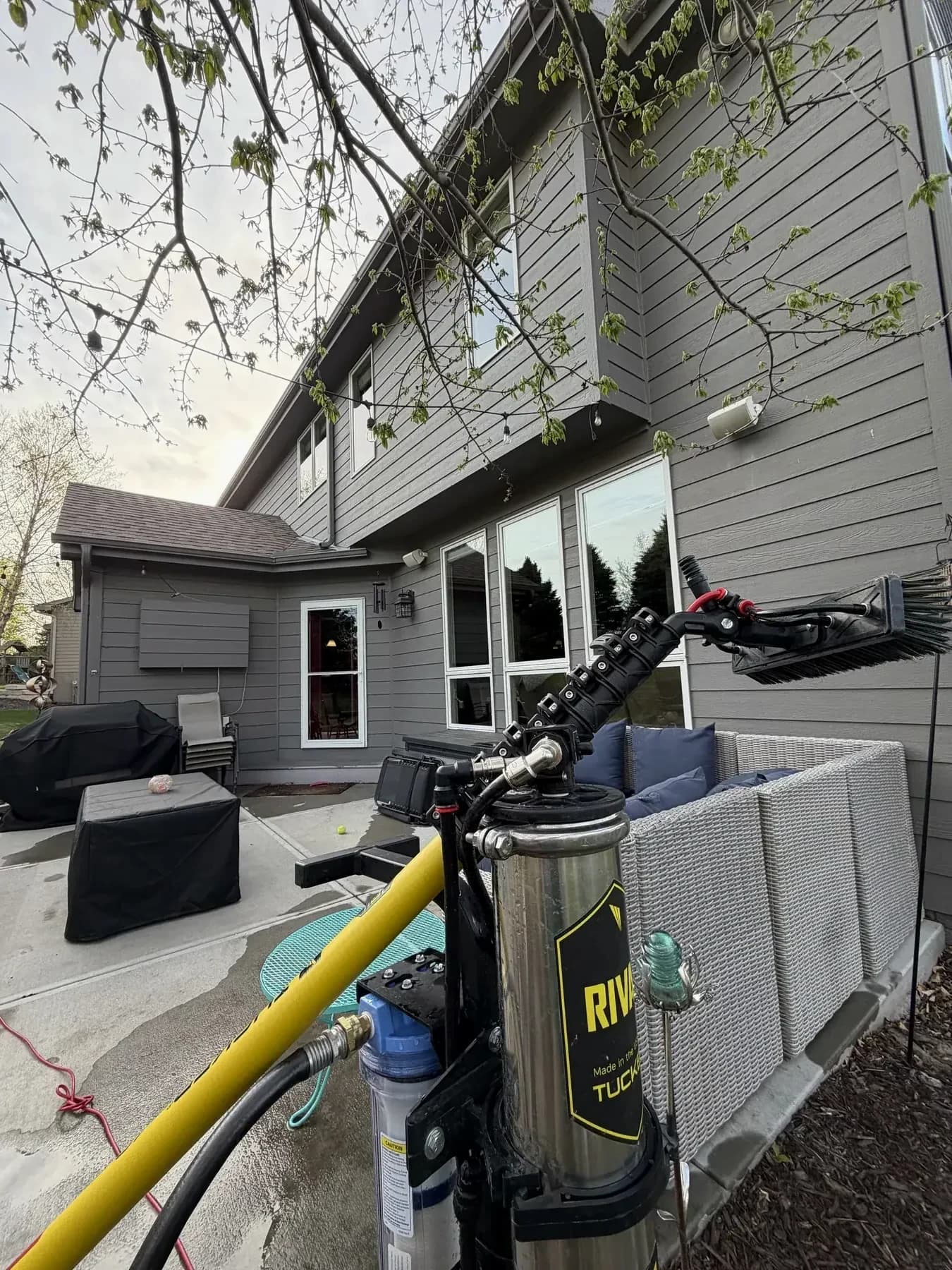
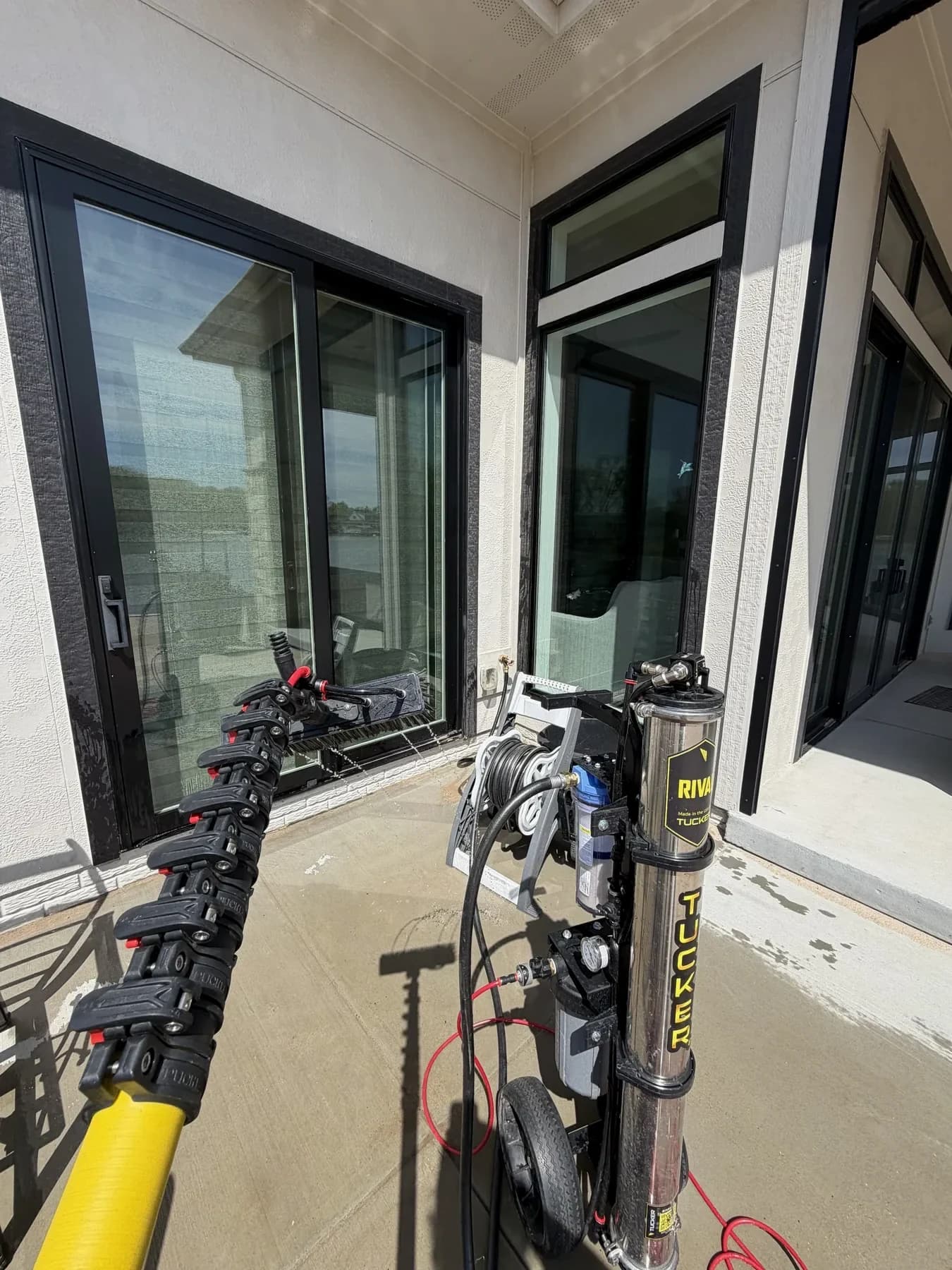
Water-fed pole brush cleaning a window in Omaha, NE

How often do Omaha homes actually need window cleaning?

Twice a year is the honest average for this metro, and it is also the answer that fits the fewest houses exactly.

(402) 213-5300

Get a free estimate

What do you need? (required)
5.0across 50+ reviews on

The short version

  • Irrigation, not weather, sets the interval on most Omaha houses
  • Rain does not rinse mineral off glass. It adds to it
  • West-edge homes need the fall visit after the combines, not before
  • Screens left up all year make the glass dirty faster
  • Plenty of houses here are fine on one visit a year

Why this comes up in Omaha

Skylight and roof window cleaning on an Omaha home

Twice a year is the honest average for this metro, and it is also the answer that fits the fewest houses exactly. Two homes a mile apart can want completely different schedules. What sets the interval is not the size of the house or how many windows it has. It is what lands on the glass between visits, how often it lands, and whether it gets a chance to dry there.

Most of what dirties glass in Omaha arrives on a schedule you can predict. Sprinklers run on a timer. Cottonwood drops from late May. Combines work the west edge in the fall, and the city salts the streets in January. Once you know which of those actually reach your windows, picking a frequency stops being a guess. For a fair number of houses the answer is less often than a window cleaner would like to tell you.

The short of it

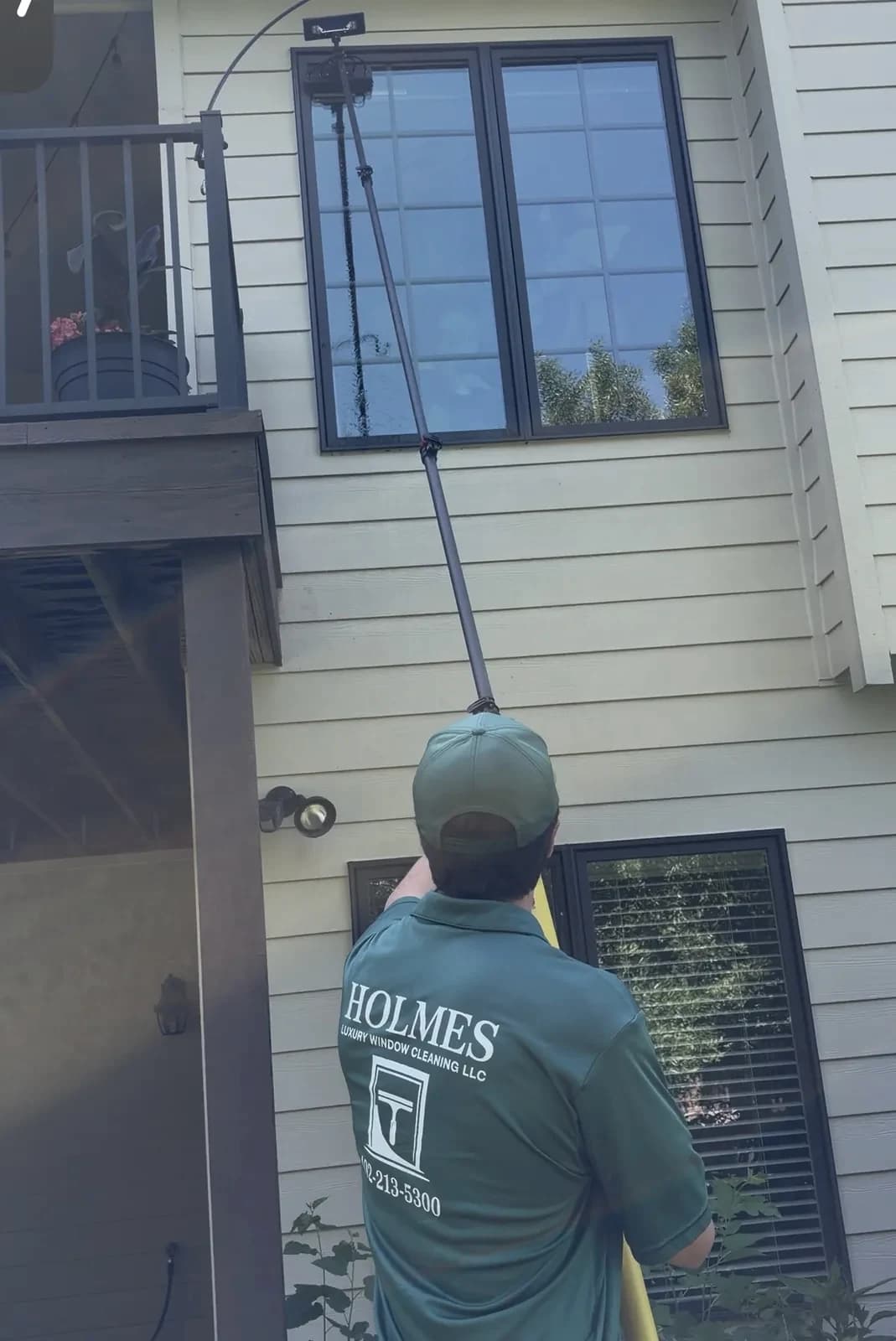
A water-fed pole reaching second-storey glass in Omaha, NE

Irrigation sets the clock more than weather does

If your sprinklers reach the glass, they decide your schedule and nothing else is close. MUD lime-softens Omaha's supply to about ten grains per gallon, so every drop that dries on a window leaves its mineral content sitting on the surface. Rain does not undo that. It is soft water. It lands, it evaporates, and the deposit already on the pane stays exactly where it was while a fresh one forms on top of it.

This is why one elevation can be visibly hazed while the rest of the house looks fine, and why homeowners tell us their windows are old when they are simply watered. Deposit a few weeks old wipes off. Deposit that has been through several summers of wetting and drying begins to bond into the surface, and at that point cleaning has stopped being the fix. Houses with heads hitting first-floor glass usually want three or four visits a year on those elevations and two everywhere else.
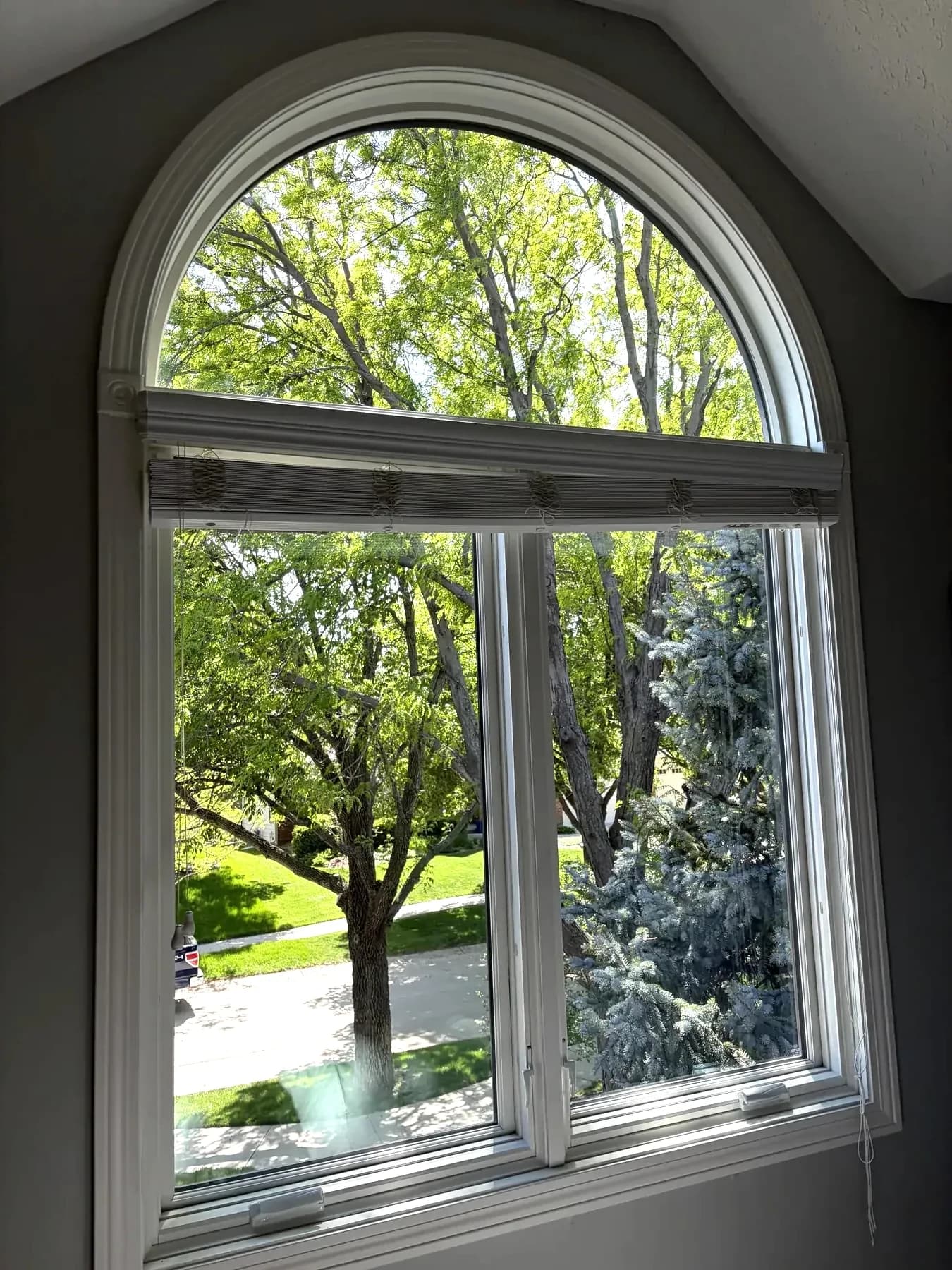
A cleaned arched window seen from inside an Omaha home

Tree cover cuts both ways

Under the old hardwoods through Dundee, Field Club, Bemis Park and the mature parts of Benson, the summer problem is not dust. It is sugar. Aphids feeding in the canopy above excrete a fine sticky mist that drifts down onto whatever is below, including your windows. It dries tacky, catches every bit of pollen and cottonwood fluff moving through the air, and grows a dark sooty film on top of itself. Rinsing it with a hose spreads it. A canopy house often wants a midsummer visit that an open lot does not.

Shade also works in your favor, and the honest version includes that half. Glass under a canopy dries slowly rather than baking, it takes far less wind-carried grit, and the low winter sun that shows every streak on an exposed south elevation never gets a clean angle at it. We see plenty of treed properties where two elevations want attention twice a year and the shaded north side genuinely does not. Cleaning what needs it and leaving what does not is a real option.

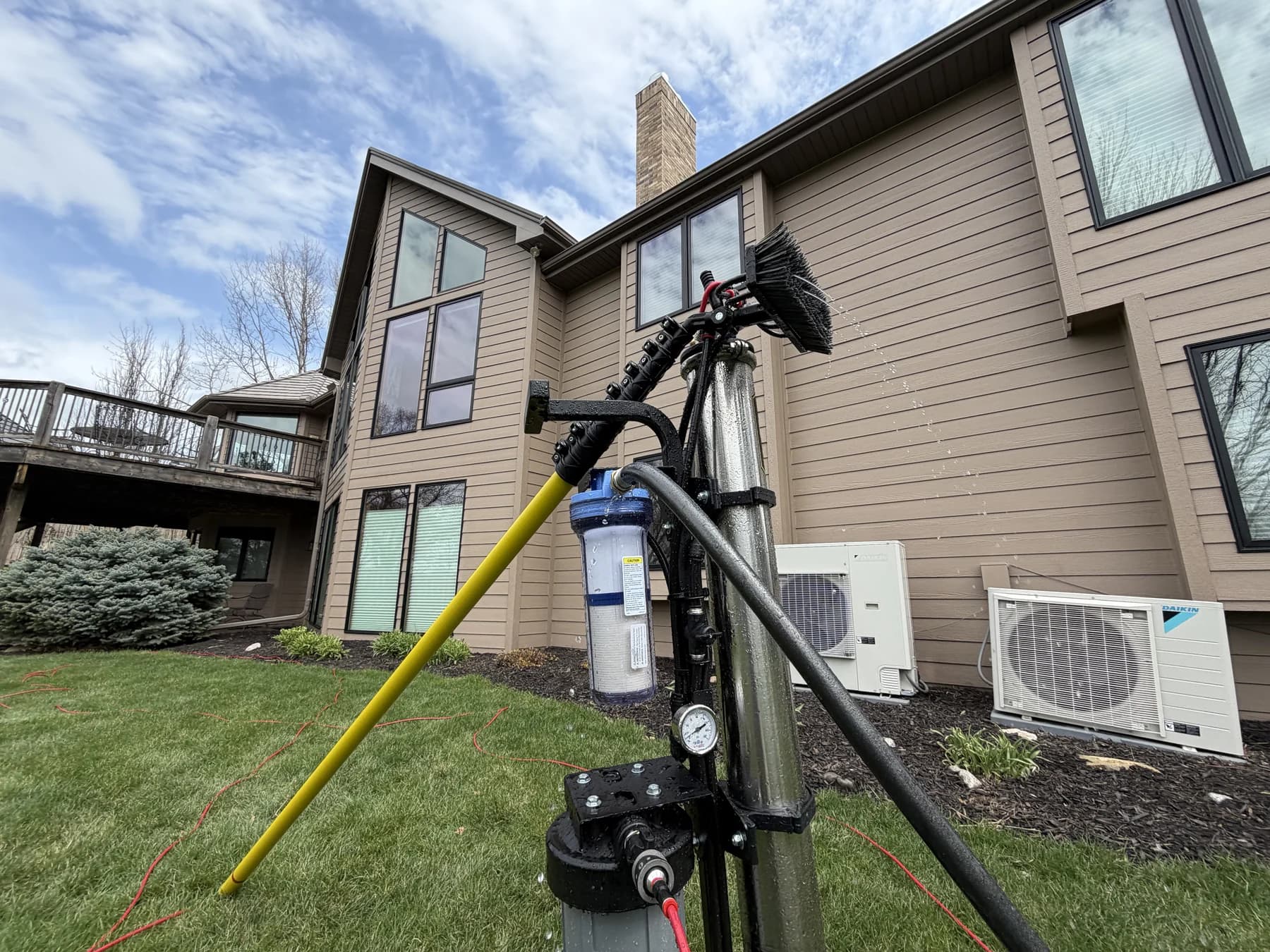
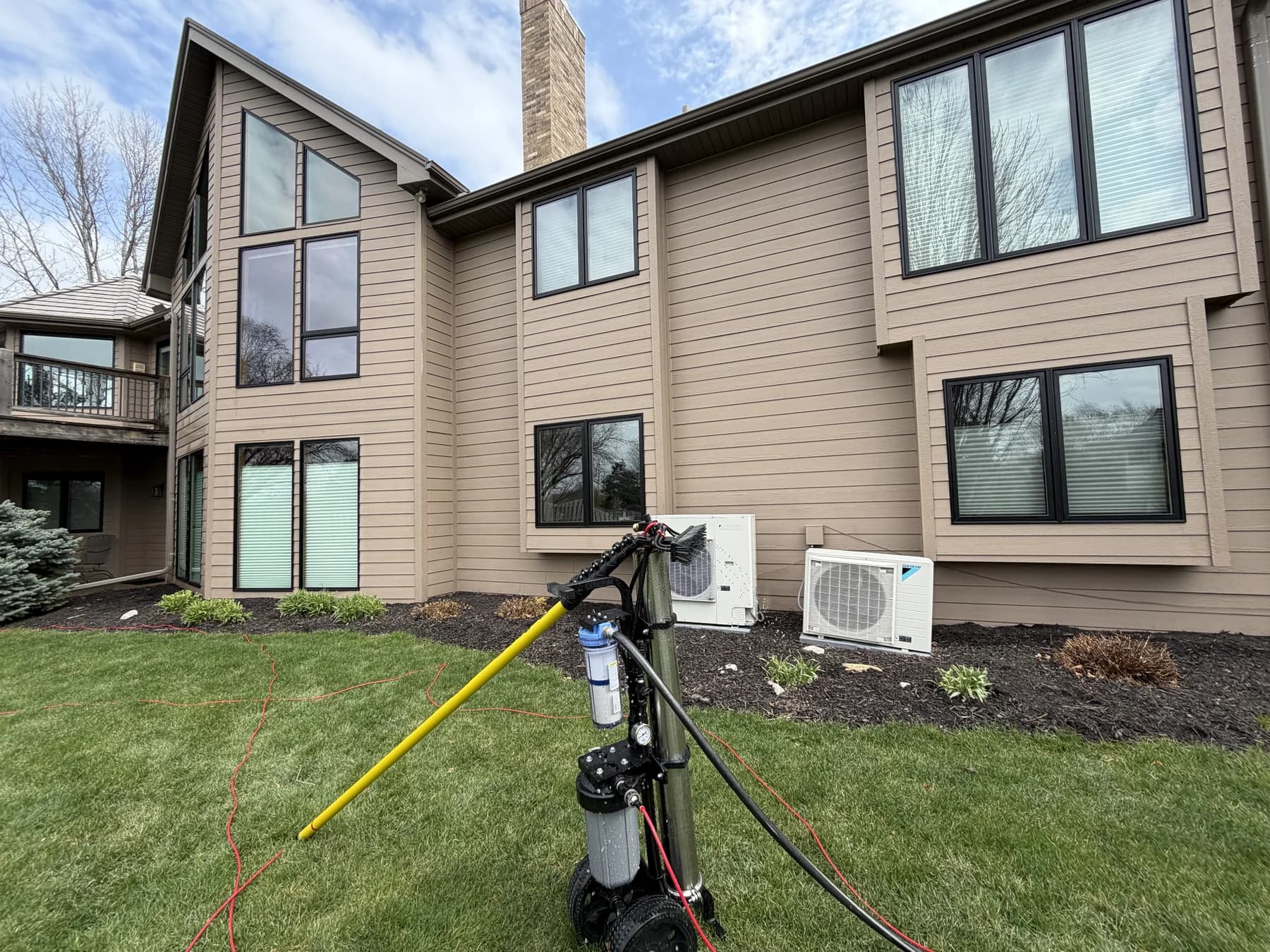
A water-fed pole rig set up on the lawn of an Omaha home

The west edge runs on a different calendar

Out past Elkhorn and Bennington, where subdivisions stop and worked ground begins, the material landing on glass is dry field soil. Particles that fine settle on a hot pane and cling, then the next morning's dew wets them just enough to cement the layer down. A garden hose will not move it after that. Homes on the outer row of a development take it straight on the west and south. Two streets deeper in, the same houses see a fraction of it.

Timing matters here more than frequency does. A fall clean booked before harvest traffic gets undone within days, so the useful slot is after the combines have finished, which lands later than most people book. New construction adds a perception problem, because a single large fixed pane shows an even film across the whole sheet while the same film spread over twelve small panes reads as almost nothing. Big glass looks dirty sooner without being dirtier.

Water-fed pole equipment beside a two-storey Omaha home

House age, storms and screens change the answer

Older Omaha houses still running two sets of sashes are on a hardware calendar rather than a dirt calendar. Storms come down and screens go up in the spring, and that is the one week in the year when everything is off the window and the cavity between the panes is open. Cleaning at any other point means somebody takes them off twice. If you already do that swap yourself, build the visit around it and you have effectively bought a free step.

Screens matter more than people expect. A screen is not a passive thing sitting in front of the glass. Mesh holds a mat of cottonwood fluff, pollen and road grit against the window all season. Every rain washes some of that load through the mesh onto the pane, where it dries as a streaked gray film. A house that stores its screens over winter keeps clean glass longer than the identical house that leaves them up. That is why we do not treat screens as an extra.

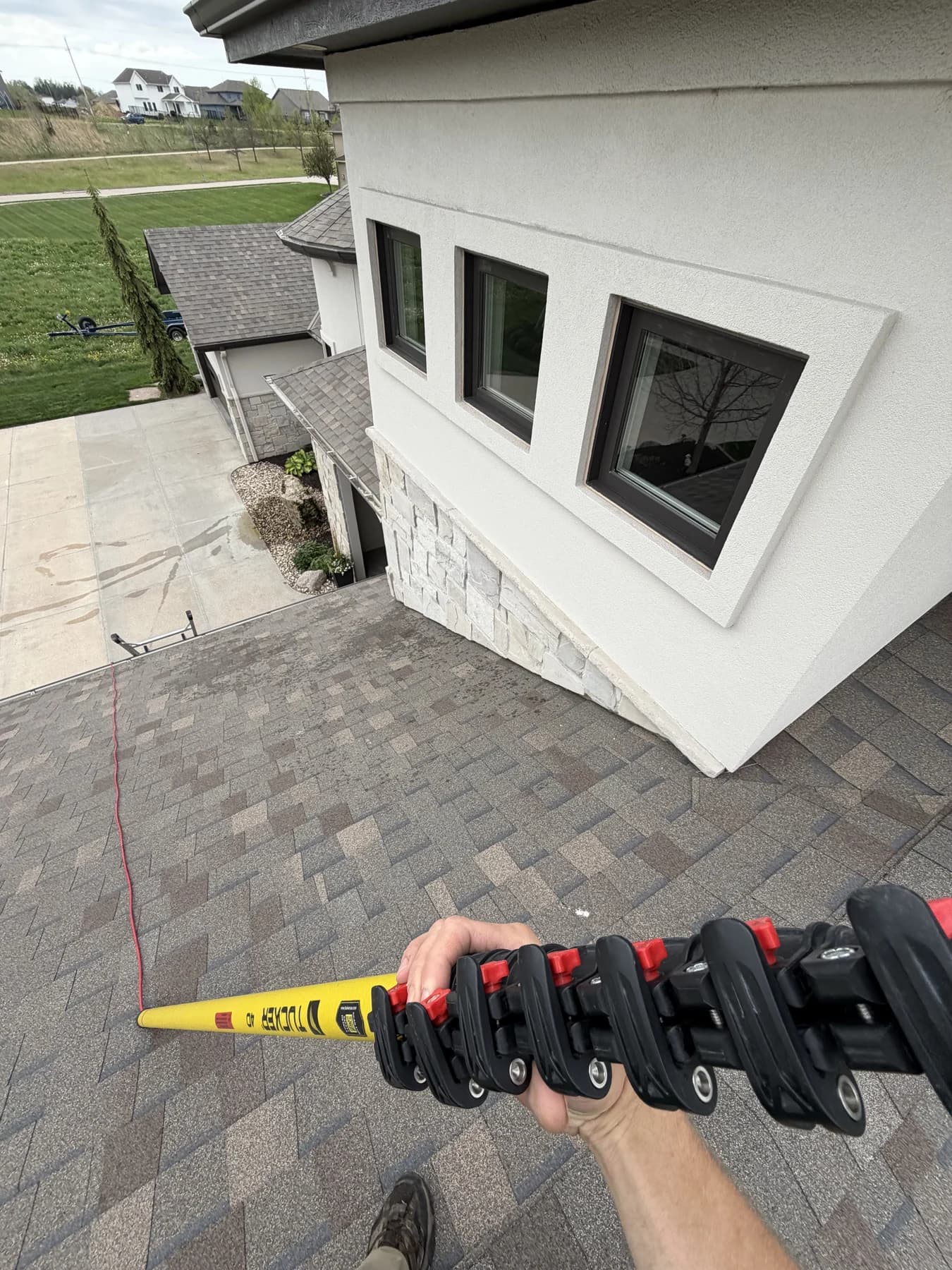
Reaching dormer glass from the roof with a water-fed pole

How to tell without guessing

Two tests settle it. First, look at your glass early in the morning or late in the afternoon from inside, with the sun coming across the pane rather than through it. Flat midday light hides film, which is why windows can look acceptable at noon and awful at five. Second, run a dry fingertip over the spots outside. If they smear, you have surface soil and a wash handles it. If they feel raised and stay put, that is mineral.

The rain test is the other one. Glass that looks better after a storm was carrying loose material, and you can safely wait. Glass that looks worse after a storm is carrying bonded deposit that the rain only rewetted and redried in streaks, and waiting is now costing you glass rather than saving you money. Book on what the windows are telling you, not on a reminder in your phone. Some years this metro is kinder than others.

The long version

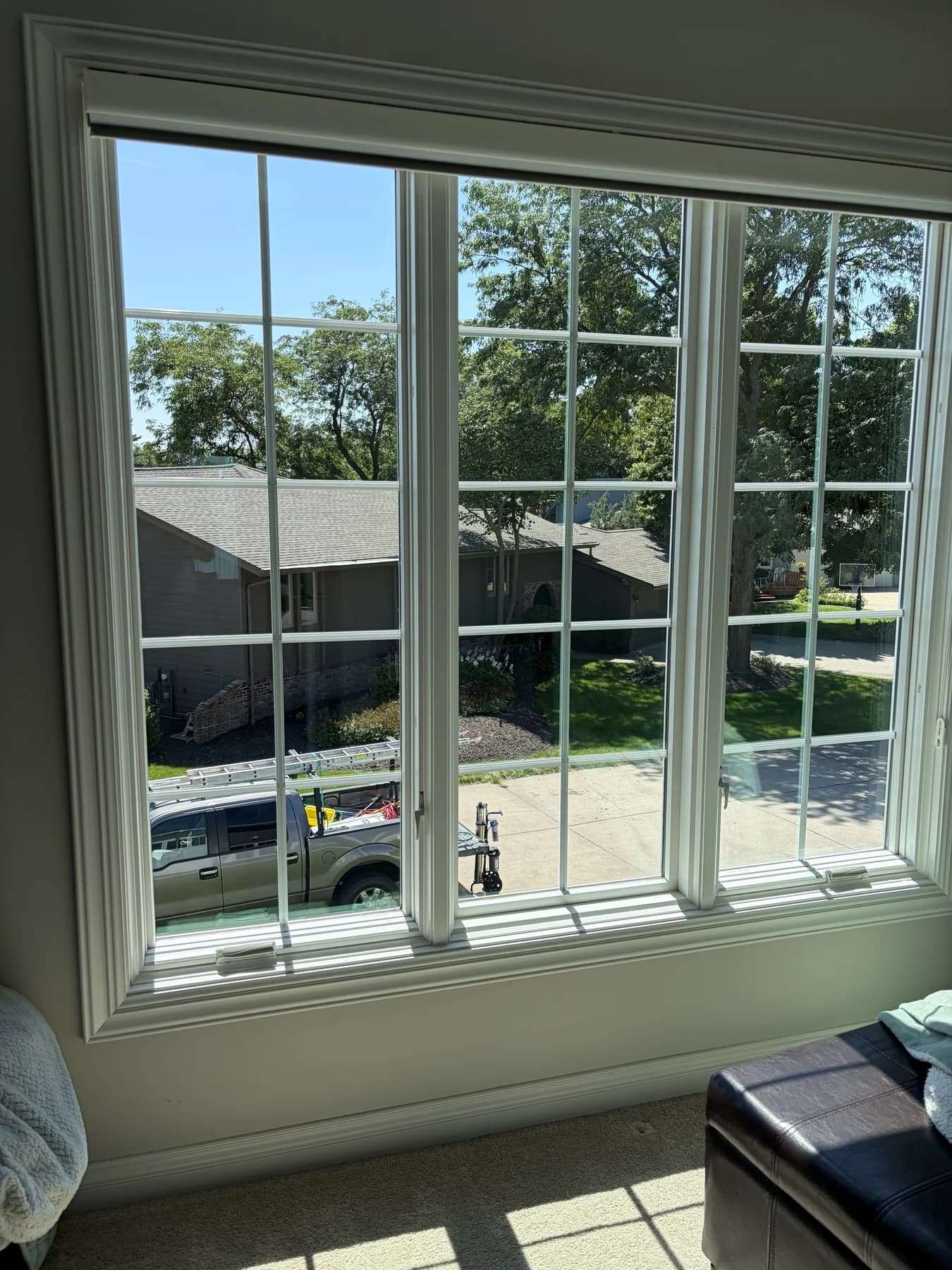
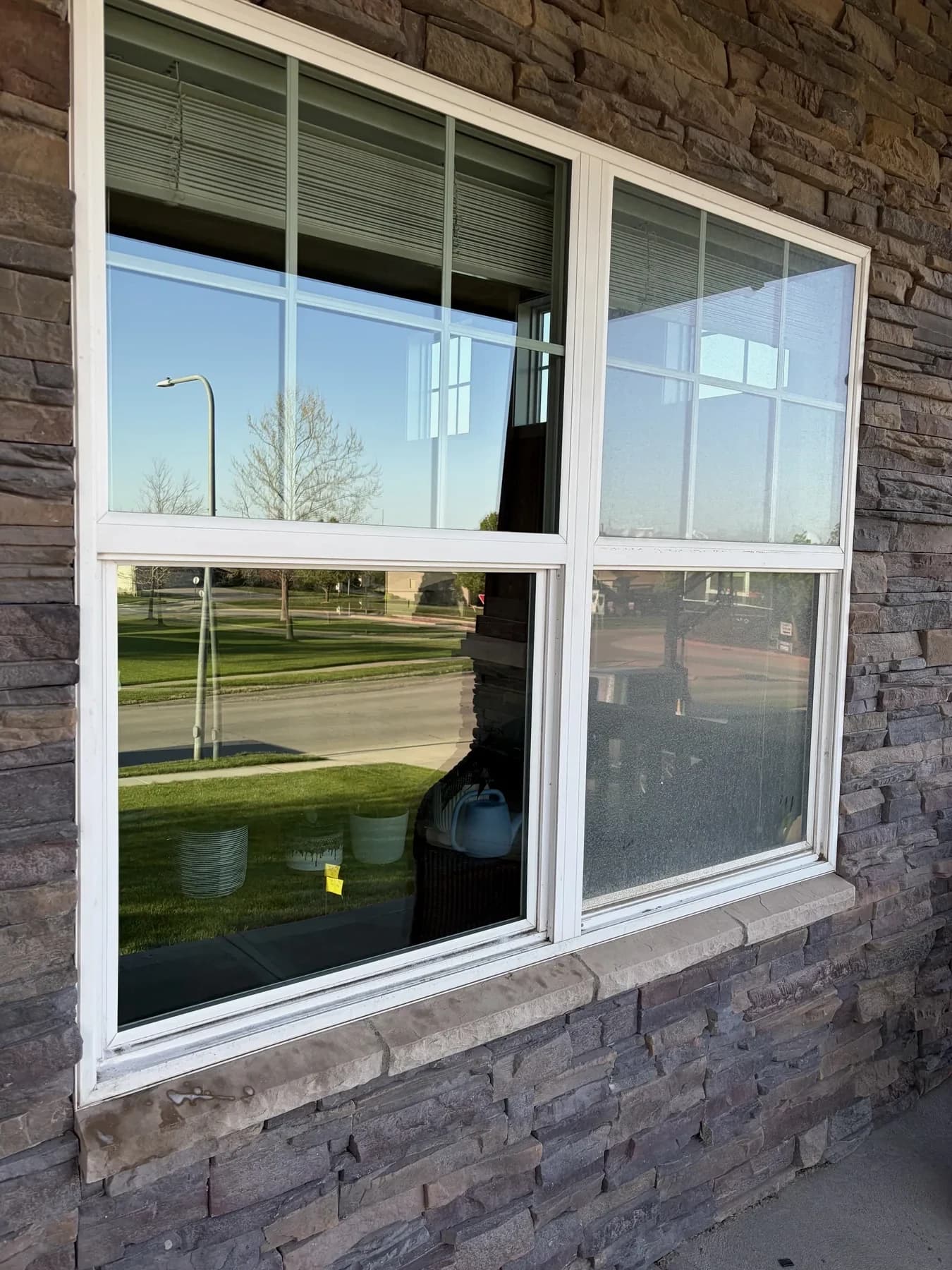
Divided-light glass, frames and sills cleaned inside and out

When twice a year is more than you need

Here is the part that costs us work. If no sprinkler head reaches your windows, no mature tree overhangs the roof, you are not on the outer edge of a development backing onto farm ground, and the house is a single story with a modest window count, once a year is genuinely enough. Take it in the fall, after harvest dust has settled and before the December sun drops low enough to light up every bit of film.

You can also buy less than a whole house. Nothing stops you from putting the watered elevation and the west run on a schedule and leaving the shaded north side out of it. Ground-floor interiors in rooms you actually sit in are a reasonable thing to do yourself between visits. Second-floor exterior glass that you only ever see from the street does not need the same attention as the kitchen window over the sink.

And there is a limit worth stating plainly. Once mineral has etched into the glass surface, no amount of frequency reverses it. Paying somebody four times a year to keep visiting etched glass changes nothing about the etching. The thing that actually helps is a wrench and twenty minutes with the sprinkler head that caused it, which is free, and we would rather you did that than kept us on the calendar for the wrong reason.

Quick answers

How often should I have my windows cleaned in Omaha?

Twice a year suits most houses here, once in spring after the road salt and once in fall after harvest dust settles. Go to three or four if sprinklers hit the glass or you back onto farm ground. Drop to one if none of that applies to your property.

Will rain clean my windows for me?

No, and on hard-water spotting it makes things look worse. Rain is soft water landing on top of mineral that is already there, so it wets the deposit, runs, and dries in streaks. Loose dust does rinse off in a storm. Anything bonded to the glass does not move.

Do I need the inside done as often as the outside?

Usually not on frequency, but the winter visit is the one worth doing inside. Omaha houses stay shut from November through March with the furnace running, so cooking residue and dust settle into a film on interior glass right as the low December sun starts hitting it at the angle that shows everything.

Questions we did not answer here

Get a free estimate

What do you need? (required)
Call (402) 213-5300Free Quote