Proudly serving Omaha · Elkhorn · Papillion · Bellevue & the Omaha metro

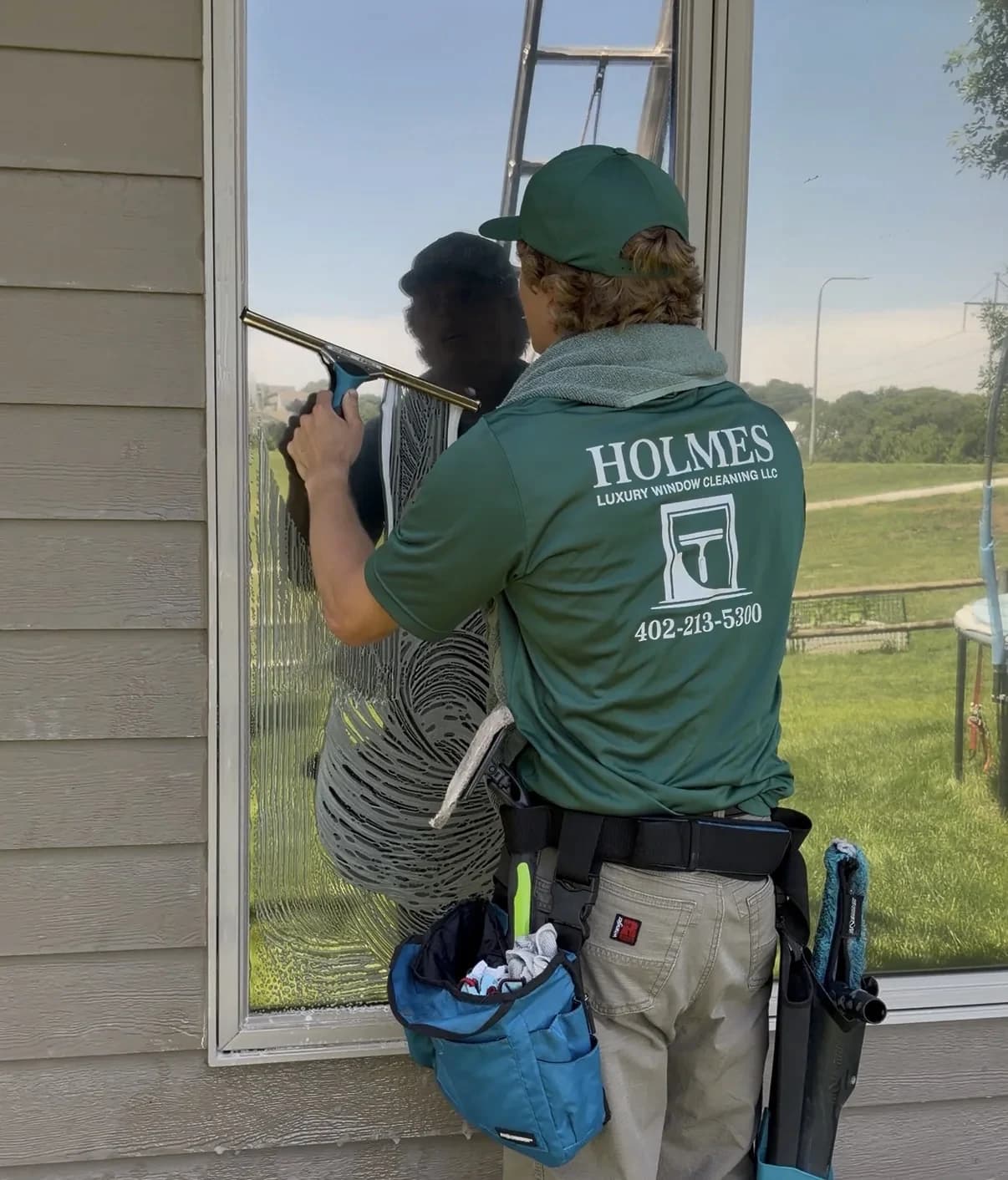
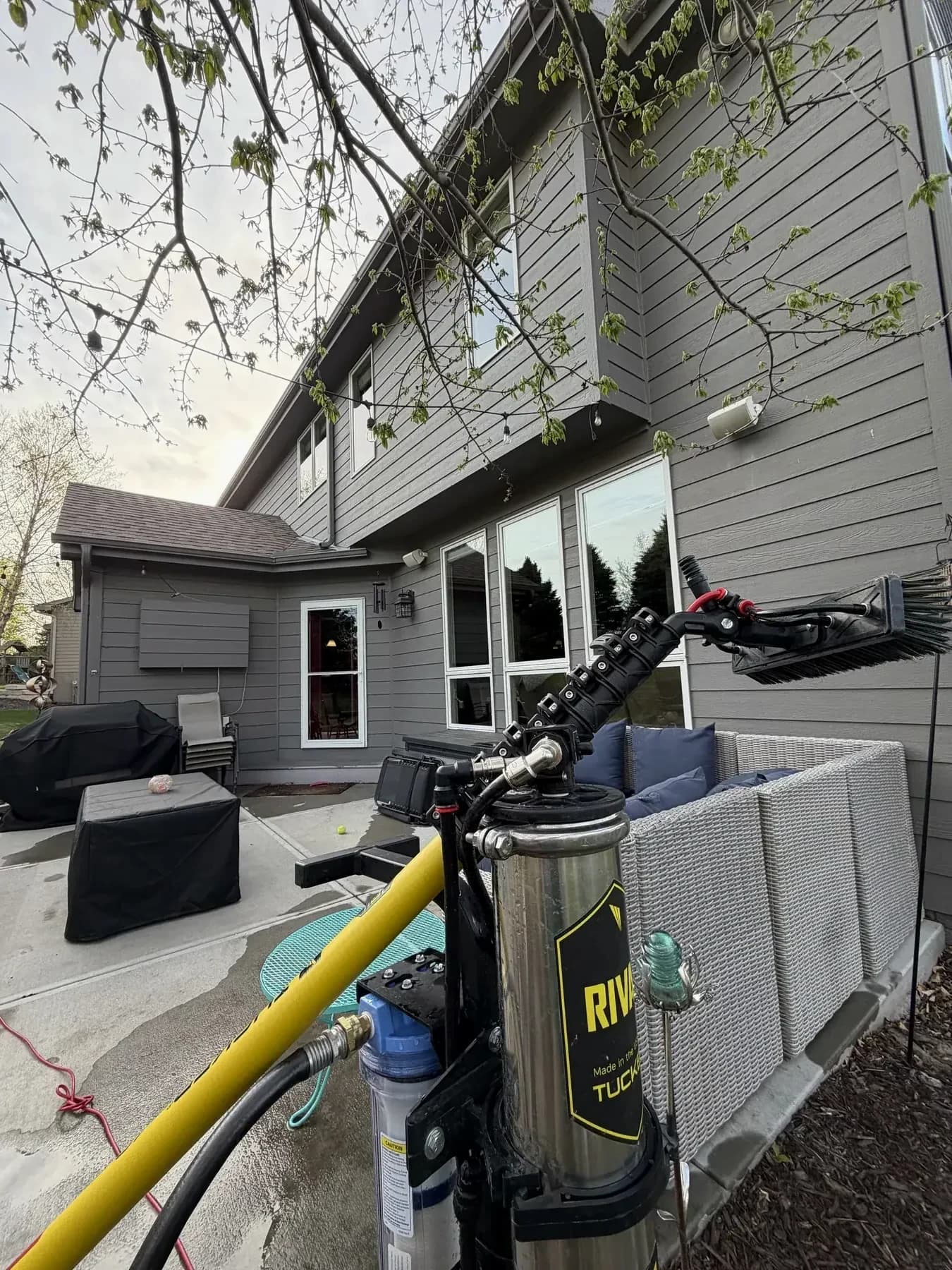
Hand-finishing a pane on an Omaha home

Cottonwood season in Omaha and eastern Nebraska

The white stuff drifting across your yard in early June is cottonwood seed, and there is so much of it because the cottonwood is Nebraska's state tree and it grows thickest along the same rivers this metro was built on.

(402) 213-5300

Get a free estimate

What do you need? (required)
5.0across 50+ reviews on

The short version

  • Cottonwood seed drops from late May, heaviest through the first half of June
  • Wet fluff mats into felt that water runs off, not through
  • Screens act as filters and lose real light by June
  • Fluff chokes AC condenser fins; rinse them yourself, no pressure washer
  • Book glass and gutters after the drop finishes, not during

Why this comes up in Omaha

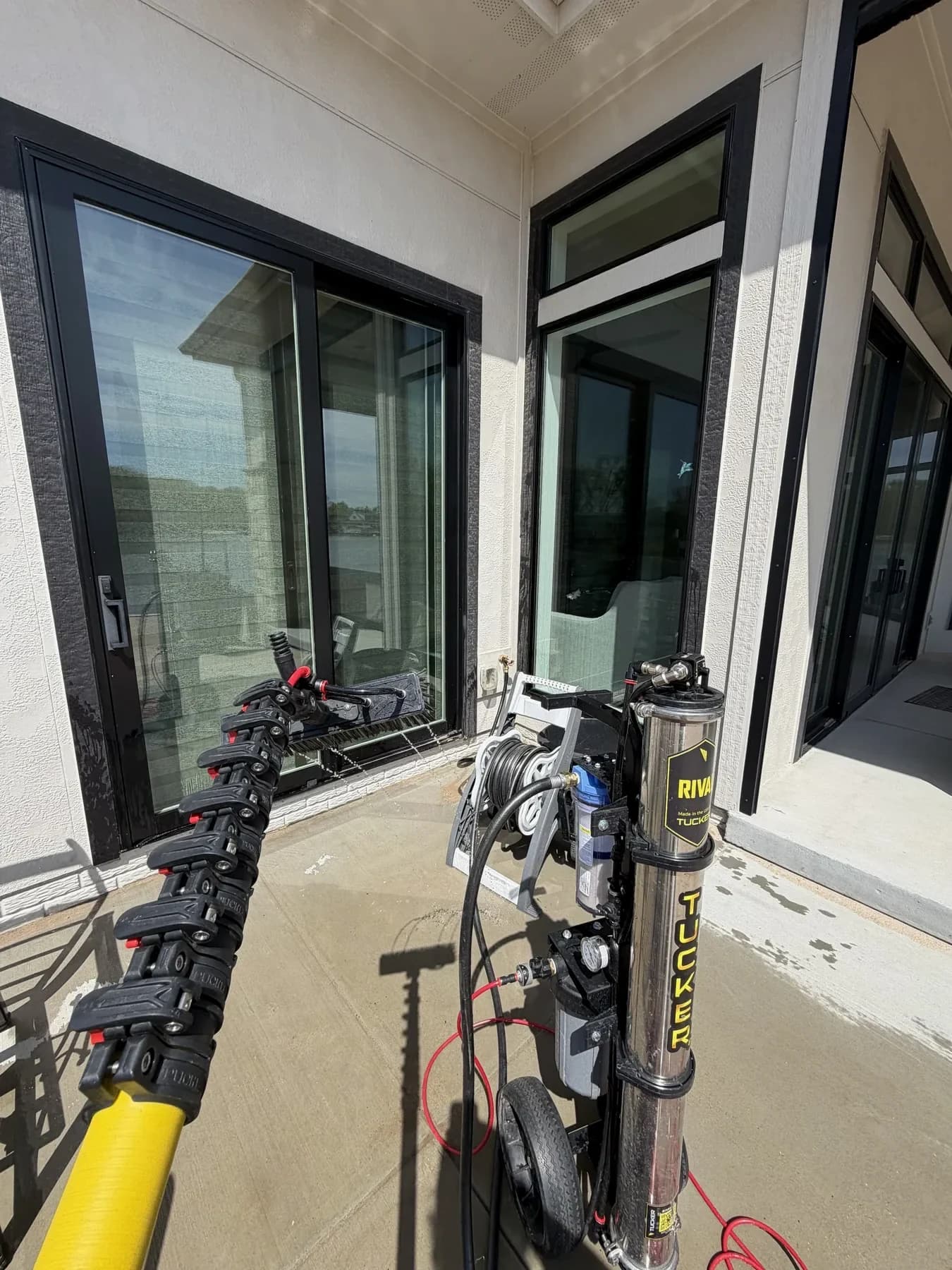
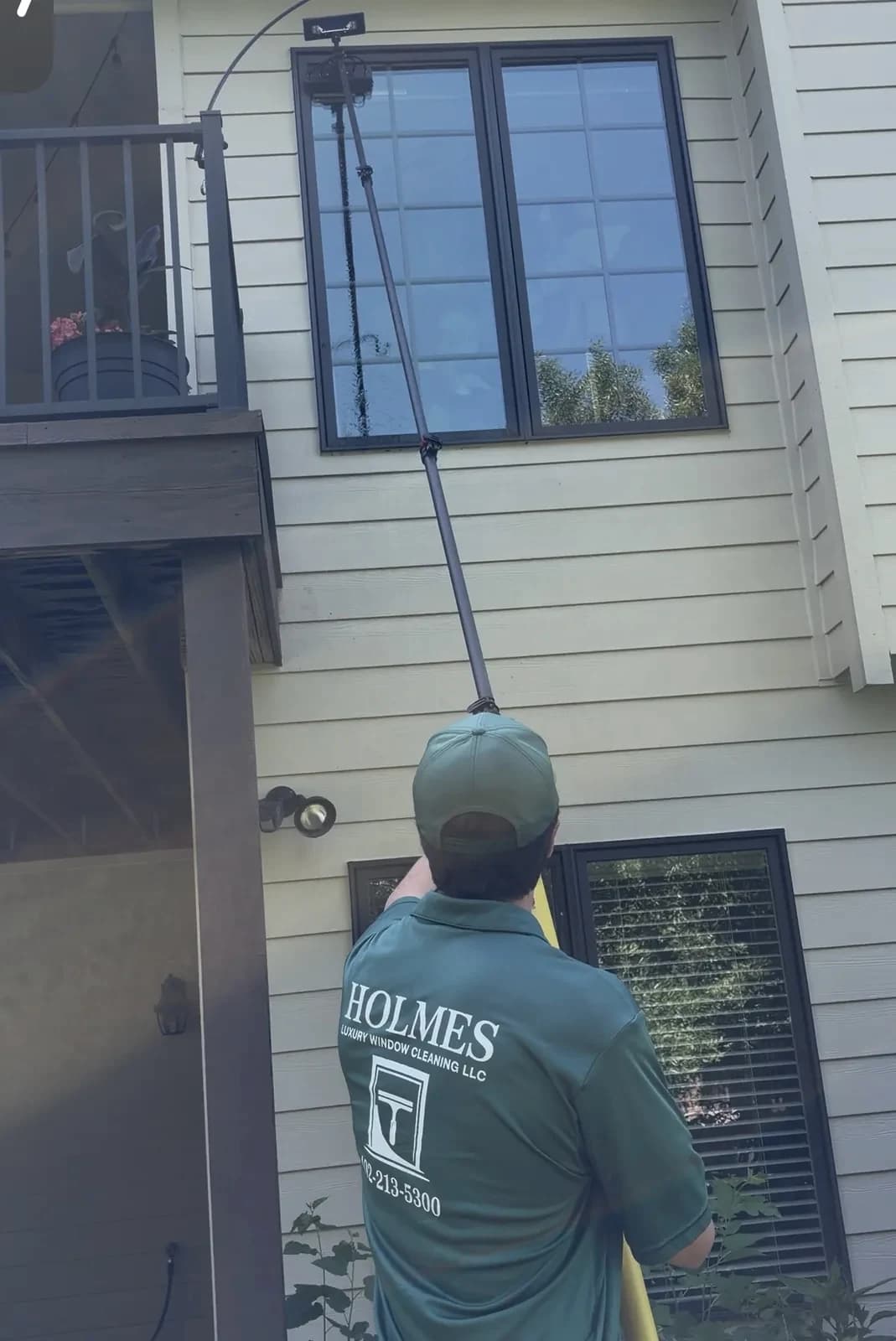
Water-fed pole window cleaning on an upper storey in Omaha

The white stuff drifting across your yard in early June is cottonwood seed, and there is so much of it because the cottonwood is Nebraska's state tree and it grows thickest along the same rivers this metro was built on. Each piece is one seed with a hair tuft attached to keep it airborne. One mature tree releases them in numbers hard to believe until you have swept a driveway during the drop.

What matters for a house is that fluff behaves nothing like pollen or leaf litter. It is a fiber. Dry, it drifts and piles into corners. Wet, it mats into a felt that water runs off instead of through, and that one property is why it plugs gutters, blinds screens and chokes the coil on your air conditioner. Below is when it runs, what it costs you, and what to do about each part.

The short of it

Water-fed pole brush cleaning a window in Omaha, NE

What the fluff actually is

Cottonwoods come as male and female trees, and only the females make seed. What lands on your porch is the transport rather than the plant: a hair tuft a few millimeters across with a seed the size of a pinhead buried inside it. Pollen came off the male trees weeks earlier, in early spring, well before any of this was visible. So the June fluff is usually not what has you sneezing, though grass pollen peaks alongside it and passes the blame over.

It is cellulose fiber, and that explains most of its behavior. Nearly weightless, so it travels for miles on a light wind and comes over a privacy fence like the fence is not there. It clings by static to screen mesh and vinyl siding. And it does not break down quickly once it has been wet and packed, so a load that goes into a gutter in June is still sitting there in September, holding water the whole time.
Skylight and roof window cleaning on an Omaha home

When it runs and where it is worst

Fluff starts coming off in late May. How long it runs depends on how the spring went and how the wind sat, but the heavy stretch is generally the first half of June and most years the trees are finished by the end of the month. That is the trees. The drifts outlast them by weeks, because fluff that piled into a window well, a fence corner or the lee side of a garage stays put until something moves it.

Volume tracks the rivers. Cottonwood is a floodplain tree, so the Platte corridor carries the densest stands in this part of the state and houses around Valley and Ashland get it at full strength. Distance helps less than people expect. Wind carries it well inland, which is why homes in Elkhorn, Bennington and west Omaha without a single cottonwood on the block still find the stuff packed into their screens in June.

A water-fed pole reaching second-storey glass in Omaha, NE

What it does to screens and glass

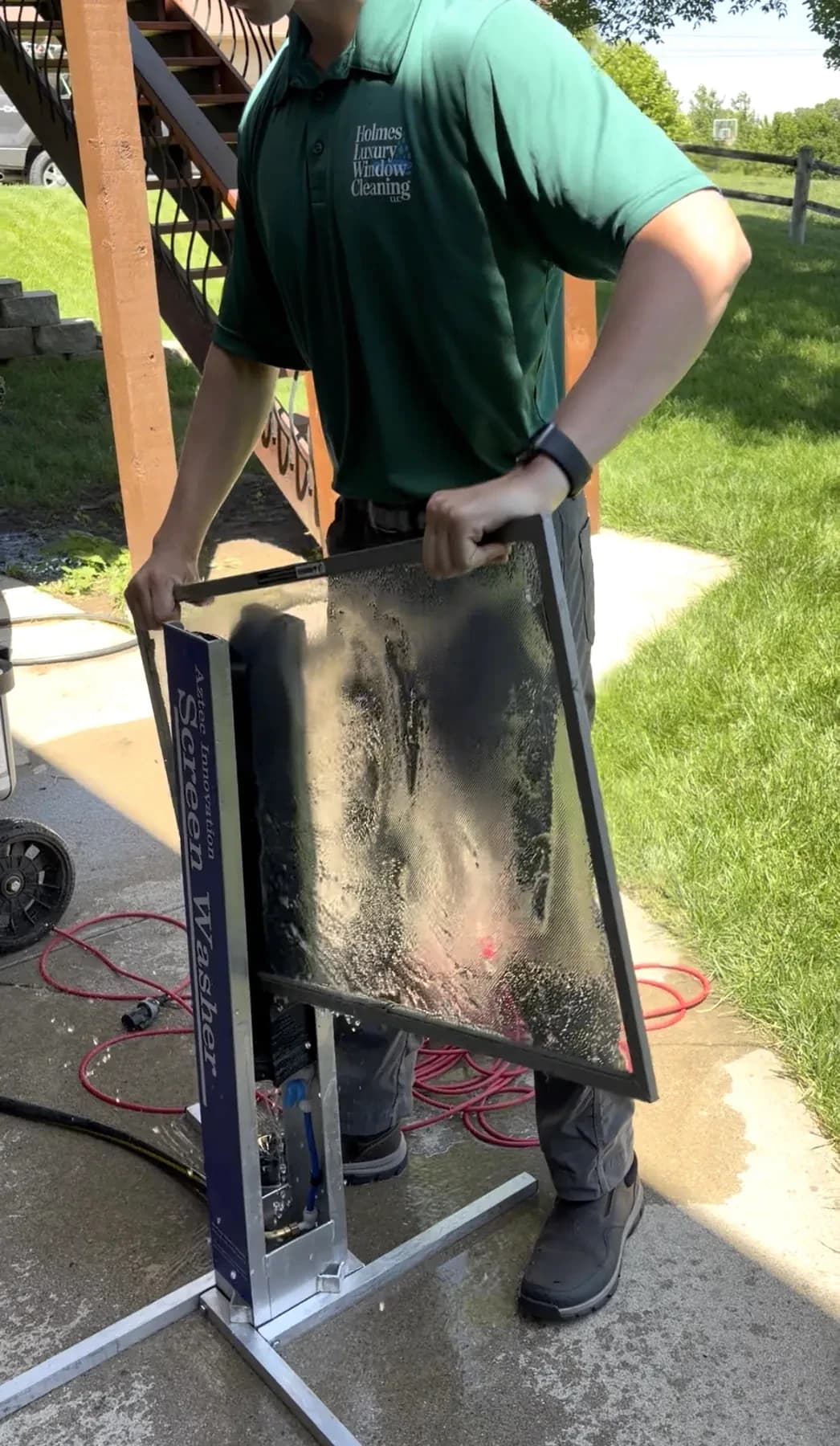
Insect screen is a filter, and in June it filters. Fibers hook into the weave rather than resting on top of it, then a rain wets the layer and it dries as something closer to felt. Light coming through the window drops off noticeably. Airflow drops with it, which matters during the few weeks of the year you actually want the windows open. Spraying a loaded screen from outside mostly moves water sideways.

Glass itself is not harmed by cottonwood. What the fluff does is hold other things against the pane. A wad of it sitting on a sunny south window traps dust and pollen underneath, dries in place and leaves a ring you can pick out in raking light. On a window that also catches sprinkler water, matted fluff acts as a wick and keeps mineral-bearing water on the glass far longer than it would otherwise sit.

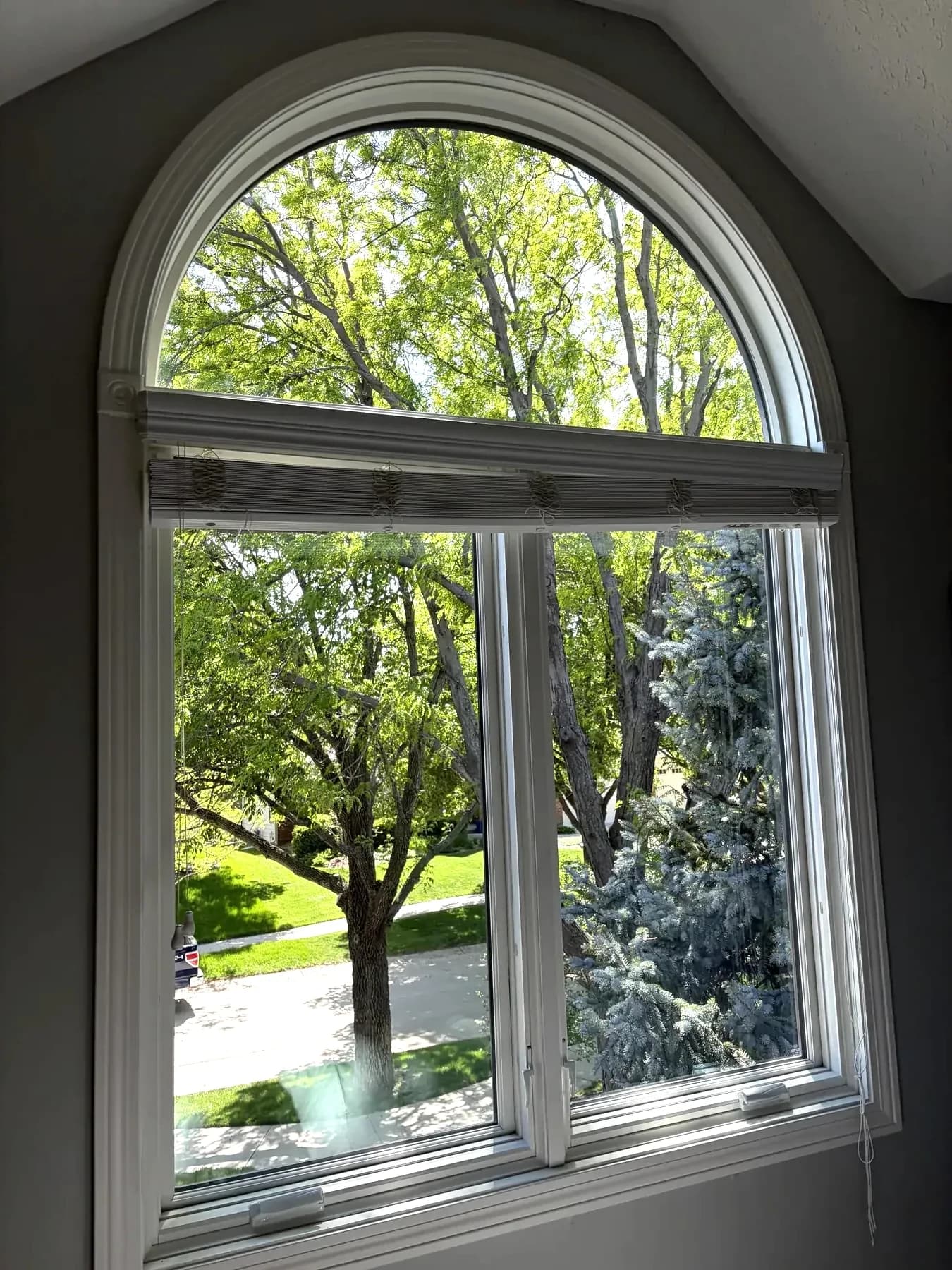
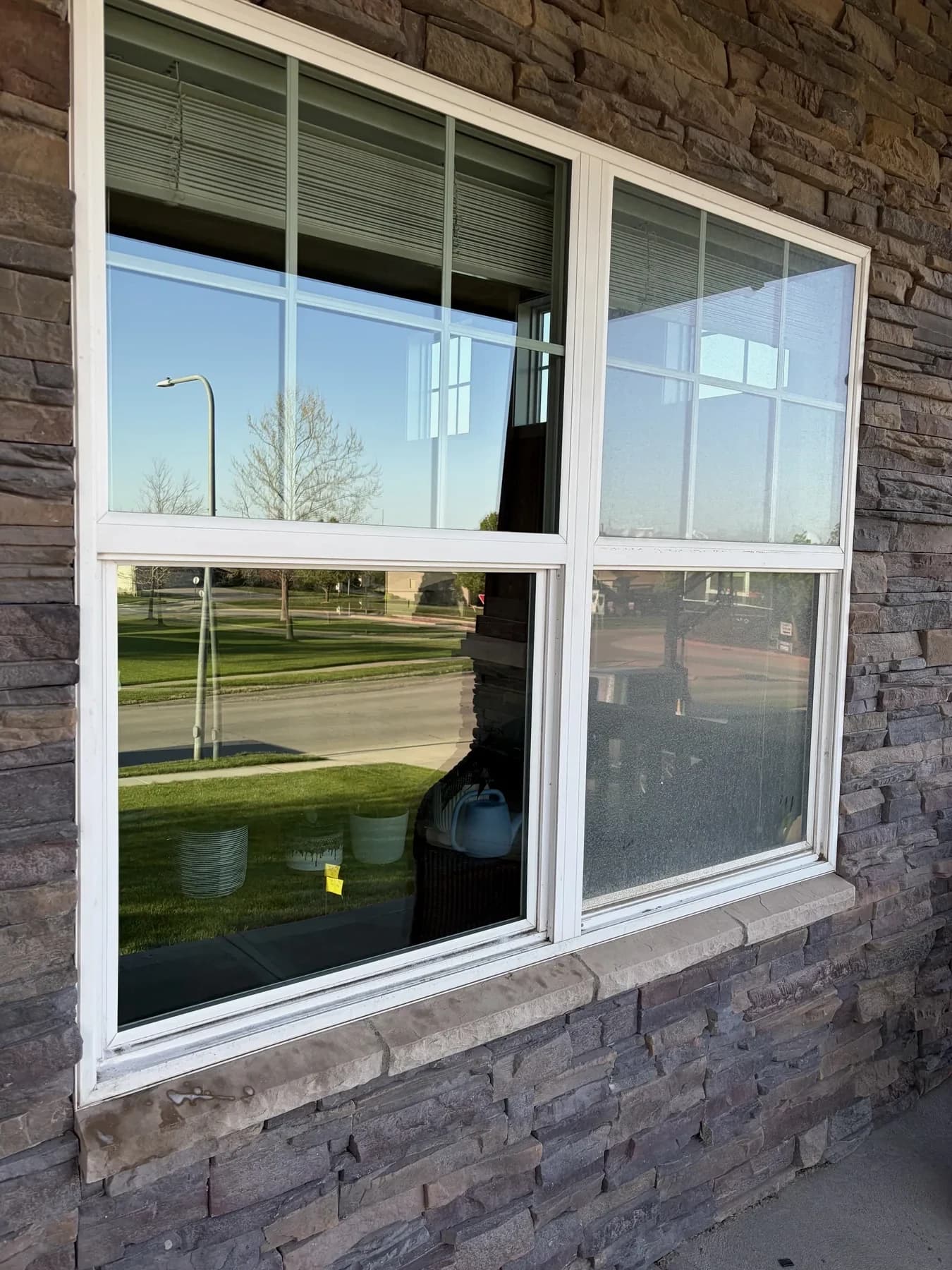
A cleaned arched window seen from inside an Omaha home

Timing work around the drop

Booking a window and screen clean while fluff is still in the air is money spent early. Screens cleared in the first week of June are loaded again by the second, and we would rather say so than take the appointment. Late June, after the trees have finished, buys you a clean that holds through the summer. That advice costs us a slot every year. It is still the correct answer.

Gutters run on different logic, and there the point is to get in after the drop and ahead of the storms. Cleared in the back half of June, a trough goes into July open, which is when being open counts. Pressure washing follows the same rule for anything under a canopy, since fluff settles onto a freshly washed deck as readily as a dirty one. Well east of the river you can generally move a week earlier.

The long version

A water-fed pole rig set up on the lawn of an Omaha home

Gutters and the plug over the outlet

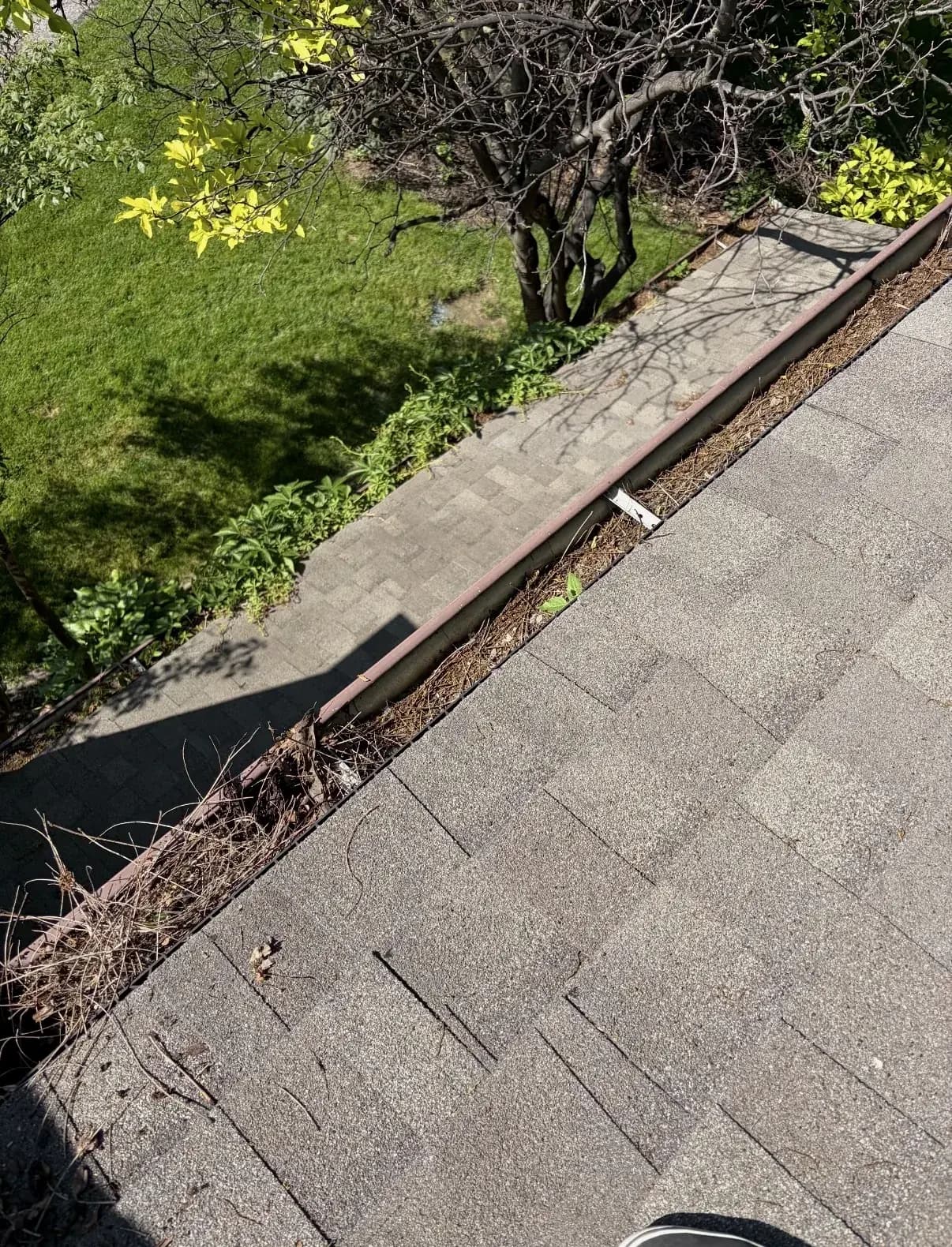
A downspout outlet is the narrowest opening in the whole system, usually a hole a few inches across at one end of a long trough. Fluff arrives in June, floats down the run with the first rain and stops there. After it has been wet and dried a couple of times it is a mat, and a mat over that hole turns a gutter into a bathtub with a very slow drain. Nothing about that improves on its own.

Timing is what makes it serious. This is well ahead of leaf drop, so the plug is in place before July and August, the wettest weeks the region gets. Water then leaves at the front lip and at the miter joints on the corners, which puts it down hard against the foundation. In a city sitting on clay, that stops being a gutter question and becomes a basement question.

You can check for it without going up a ladder. Stand outside during a good rain and watch the bottom of the downspout. A spout that trickles while the gutter spills over its front edge is telling you the outlet is blocked, and hosing from the ground will not get through a felted mat.

Water-fed pole equipment beside a two-storey Omaha home

The condenser coil nobody checks

The outdoor half of a central air system is a coil wrapped around the inside of the cabinet with a fan on top pulling air in through the sides. In June that fan spends all day pulling cottonwood into it. Fluff builds on the outer face of the fins the way lint builds on a dryer screen, airflow through the coil falls, and the refrigerant inside has nowhere to dump the heat it just carried out of your house.

What you notice is longer run times and a house that will not quite reach the setpoint on the hottest afternoon, which is the same afternoon the compressor is working hardest. The fix is free. Kill power at the disconnect box beside the unit, then rinse the coil from the inside out with a plain garden hose so the fluff leaves the way it came in. Never a pressure washer. Those fins are thin aluminum, they fold flat under pressure, and folded fins block air until somebody combs them straight.

This is not work we sell. We do not service air conditioners, we do not offer coil cleaning as an add-on, and it appears here only because the same fluff filling your gutters is sitting on that coil in the same weeks and almost nobody thinks to look. If the unit still struggles once the coil is clear, that is a call to an HVAC company rather than a call to us.

Quick answers

When does cottonwood season start and end in eastern Nebraska?

Seed release begins in late May, and the heavy stretch is usually the first half of June, with most trees finished by the end of the month. Wind and how warm the spring ran will shift it. Drifts in window wells and fence corners hang around for weeks after the trees have stopped.

Does cottonwood fluff hurt my air conditioner?

It restricts it. Fluff mats across the outer fins of the outdoor coil and cuts the airflow the fan depends on, so the system runs longer and cools less on the hottest days. Shut power off at the disconnect and rinse the coil from the inside out with a garden hose. No pressure washer, because the fins fold.

Should I have my cottonwood taken down?

Not our call, and usually not necessary. Only female trees release seed, so the source may be a neighbor's tree rather than yours, and along the Platte the fluff travels far enough that removing one tree changes very little. Tree work is not something we do or make money from either way.

Questions we did not answer here

Get a free estimate

What do you need? (required)
Call (402) 213-5300Free Quote