Proudly serving Omaha · Elkhorn · Papillion · Bellevue & the Omaha metro

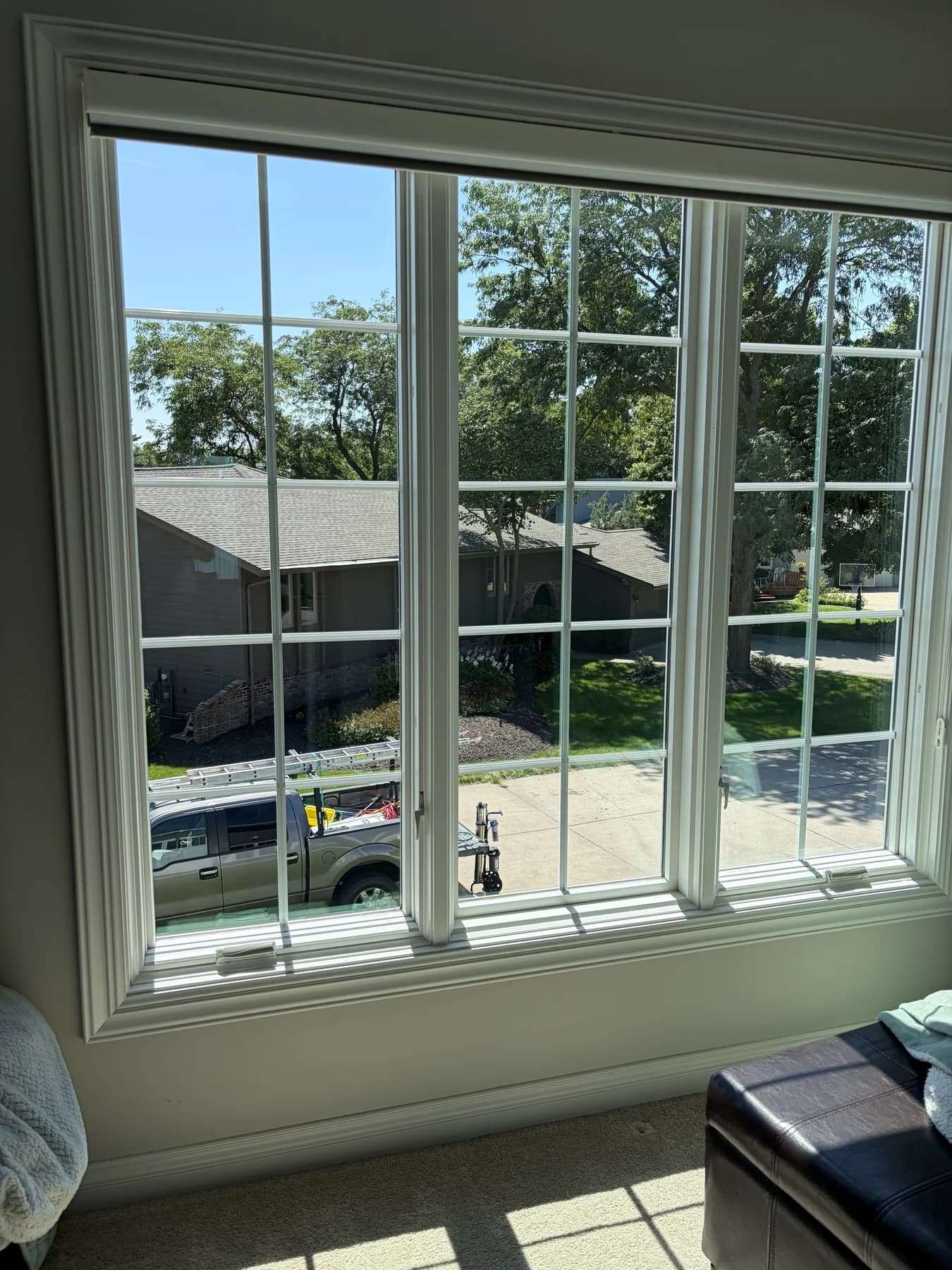
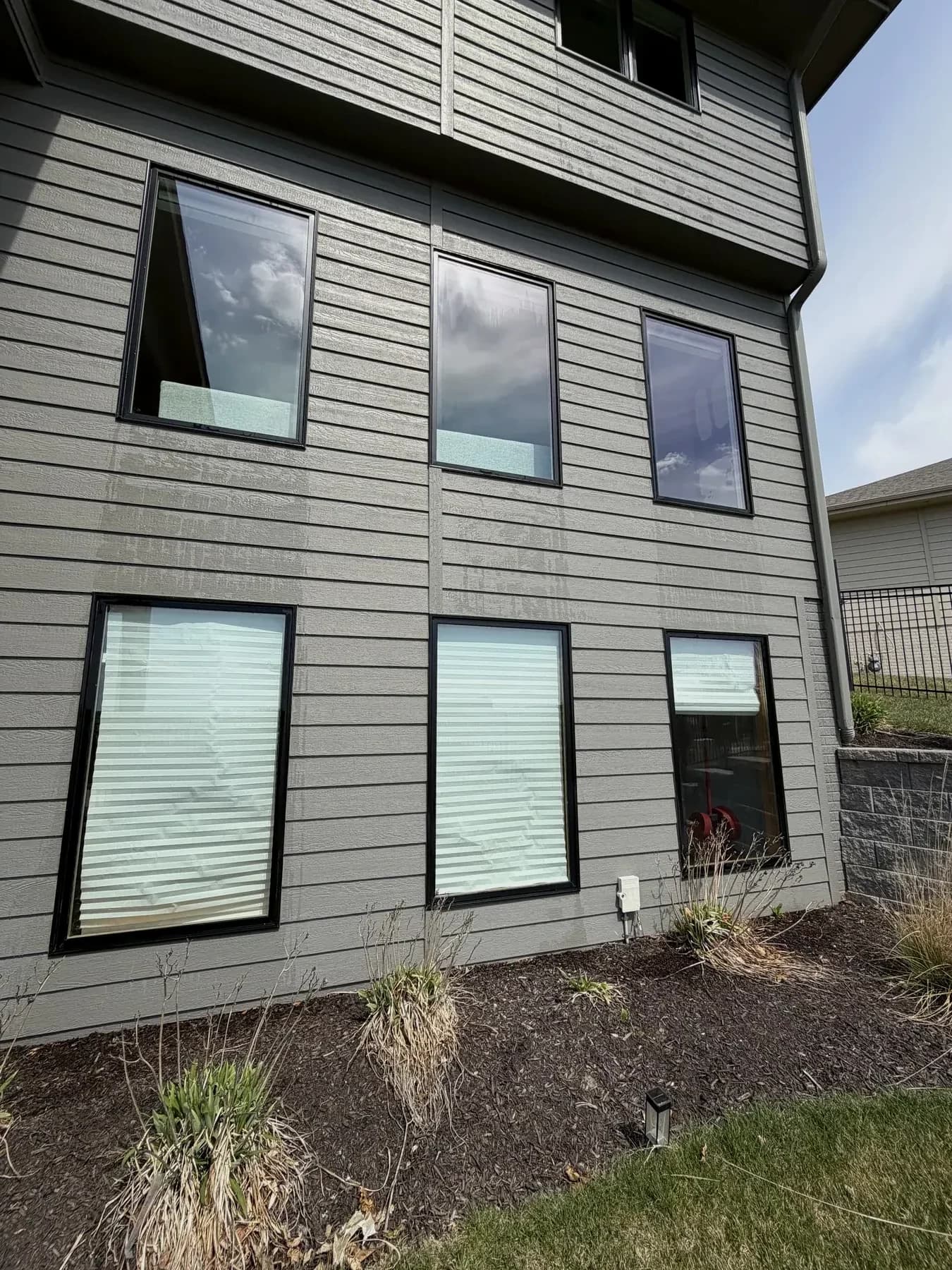
Two-story window cleaning on an Omaha-area lake home

Winter window and exterior prep in Omaha

There are about six things worth doing to an Omaha house before the first hard freeze, and most of them take an afternoon.

(402) 213-5300

Get a free estimate

What do you need? (required)
5.0across 50+ reviews on

The short version

  • Clean gutters do not prevent ice dams; insulation and ventilation do
  • Road salt arrives as aerosol and hazes lower glass and storm doors
  • De-icer brine soaks into concrete pores, then crystallizes and scales the surface
  • Clear window weep holes before the freeze or the track holds ice
  • Screens off for winter means more light and less frame corrosion

Why this comes up in Omaha

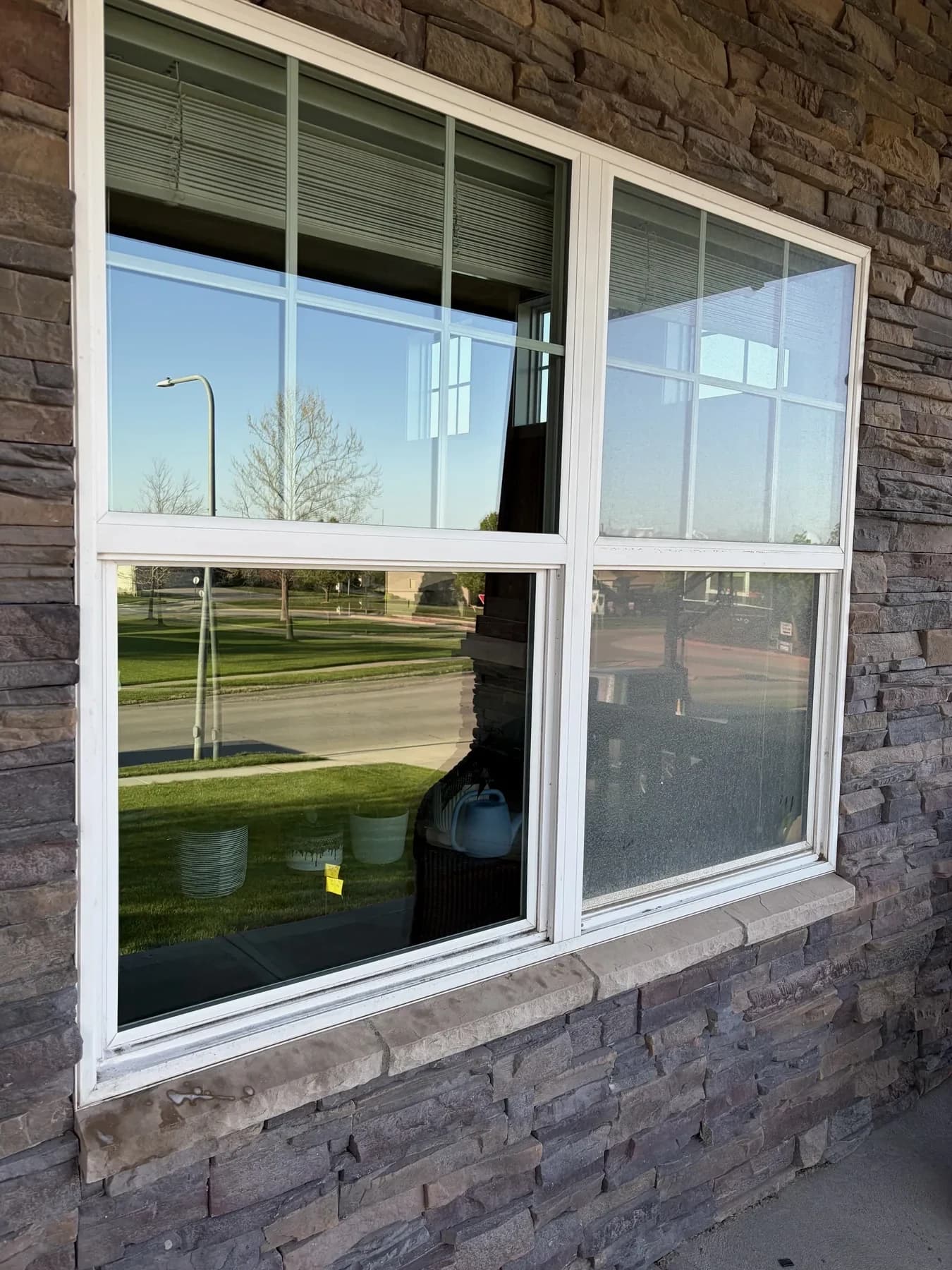
Residential window cleaning on a modern Omaha home

There are about six things worth doing to an Omaha house before the first hard freeze, and most of them take an afternoon. The point is not appearance. Winter here does specific mechanical damage to glass, concrete and window tracks, and nearly all of it is cheaper to head off in October than to deal with in April. A fair amount of it cannot be dealt with in April at all.

The other half of this page is what the season actually does, because knowing the mechanism tells you what is worth acting on. Road salt is not dirt in the ordinary sense. De-icing chemicals do not sit on top of concrete, they get down inside it. And the most expensive winter problem a house has, ice damming, is not something exterior cleaning prevents, whatever a November sales call tells you.

The short of it

High-access window cleaning on a modern Omaha property

What road salt does to lower glass

Salt off the street does not reach your windows as splash. It arrives as aerosol, thrown up by tires and carried further on the wind than people expect, which is why the haze appears first on ground-floor glass facing the road and on the panel in a storm door. It dries as a fine crystalline film that scatters light rather than blocking it, so the window reads as cloudy instead of reading as dirty.

That film also pulls moisture out of humid air and goes slightly damp before drying again, and each of those cycles spreads it a little wider across the pane. A storm door takes the worst of it because the spray hits at knee height and almost nobody washes one. Warm water and a squeegee twice over the winter keeps ahead of it, and that is a job you can do yourself in twenty minutes.

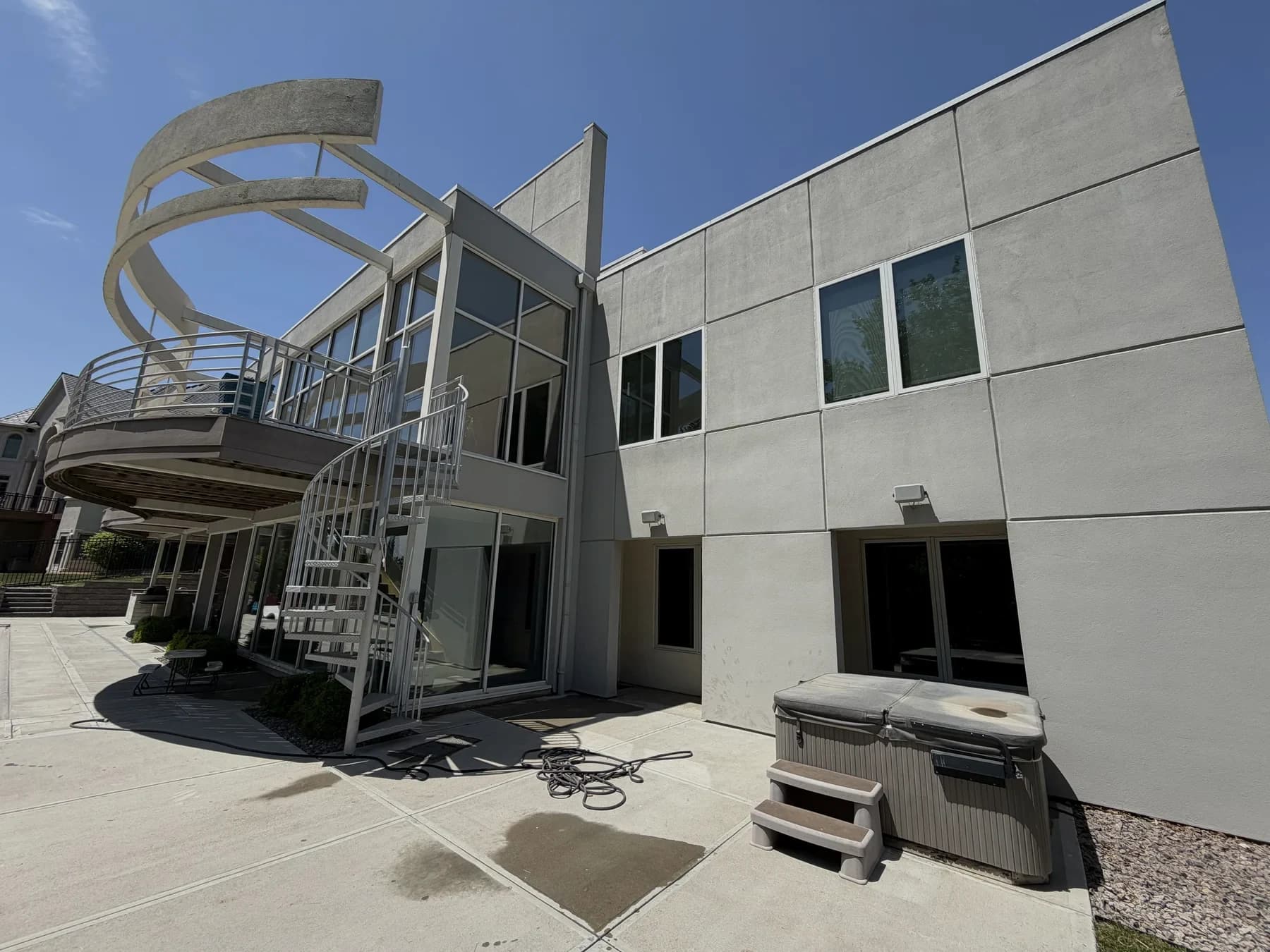
A modern Omaha property seen across the pool deck

Screens off before the weather turns

Screens come out in the fall at a lot of Omaha houses, and the view is only part of the reason. Mesh in front of south-facing glass cuts winter sun that would otherwise come into the room as free heat, and December daylight this far north is short enough already. Old aluminum frames also corrode at the bottom rail where salt spray collects, and a frame in the basement is not corroding.

Store them dry, on edge, and in the order they came out. A screen put away damp comes back up from the basement in April with staining across the mesh that will not wash off. Stacking them flat lets the ones underneath bow. And if a fall window clean is already on the calendar, have the screens done before they go into storage rather than after they come back out.

Pressure washing a driveway in Omaha, NE

Why December light finds everything

Something happens to windows in December that has nothing to do with the windows. At this latitude the midwinter sun never climbs far above the horizon, so rather than passing through the glass it rakes across the face of it at a shallow angle. Light hitting a surface that way scatters off every particle sitting on it. Film that was invisible in July becomes the brightest thing in the room.

That is why the calls come in the first week of December from people whose glass looked fine in October. Nothing got dirtier. The angle changed. It also makes the fall exterior clean the best-timed visit of the year, since you are getting ahead of the harshest light the calendar produces rather than reacting to it six weeks later with the temperature already against you.

The long version

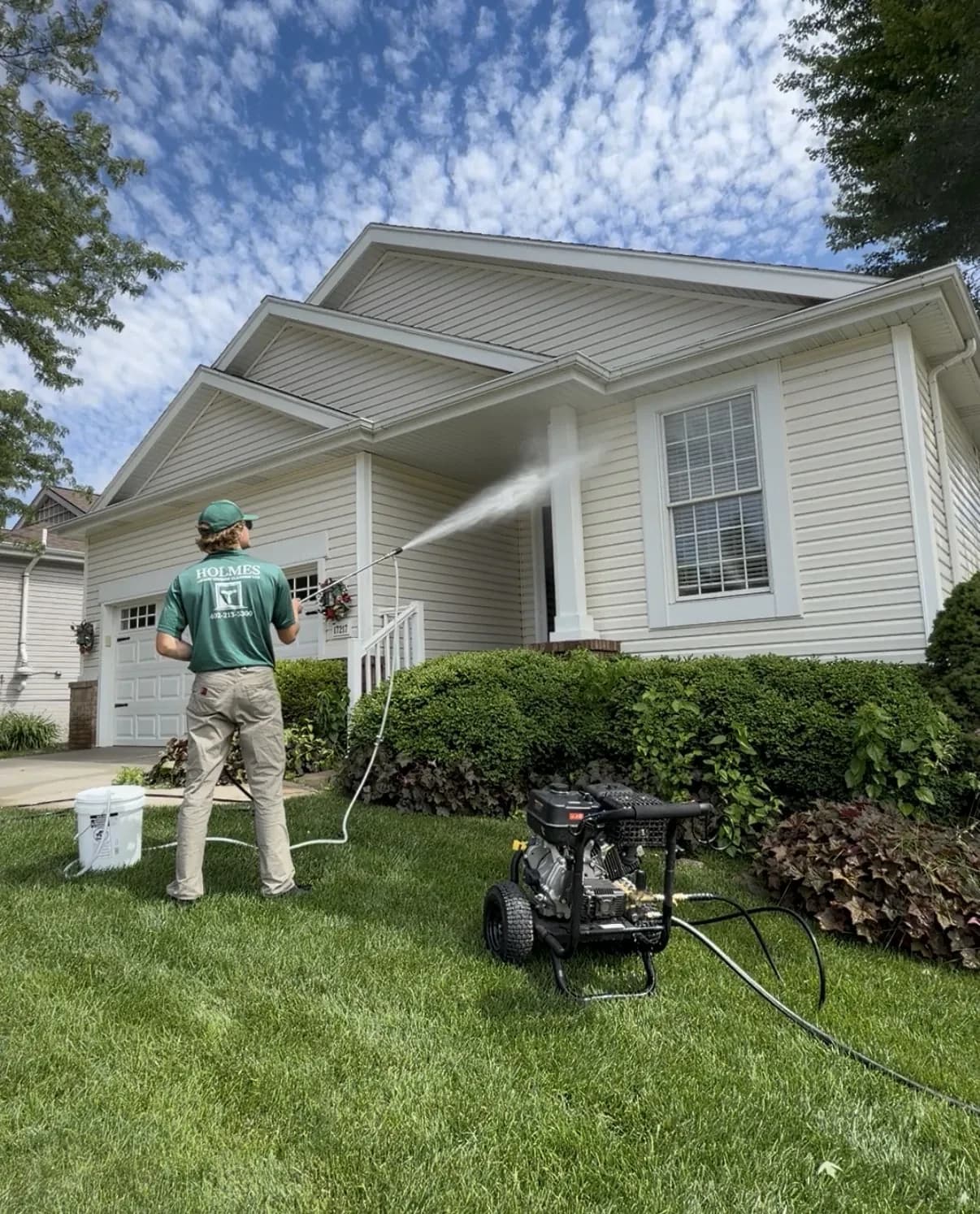
Low pressure exterior house washing in Omaha, NE

How de-icers get inside concrete

Concrete is porous, and that is the part most people miss. A driveway is not a sealed slab, it is a network of fine capillaries. A de-icer works by dissolving into meltwater and dropping its freezing point, and that brine is then drawn into those capillaries by the same action that pulls water up a paper towel. When the surface dries out, the salt stays behind inside the pore structure.

Crystals growing in a confined space push. Repeat that across a Nebraska winter, on a slab that is also freezing and thawing with more water in it than it would otherwise hold, and the top few millimeters give up. That is scaling: the finished surface flaking away in patches to leave the aggregate standing proud. Once started it accelerates, because a rough surface holds more brine next winter than a smooth one did.

Washing a driveway each spring gets the chloride load off before it goes another round, which is preventive on a slab that has not scaled and purely cosmetic on one that has. We will tell you which of those you have. We do not seal concrete and we will not pretend a wash substitutes for sealing, because sealing is the actual preventive measure and it belongs to somebody else's trade.

Skylight and roof window cleaning on an Omaha home

Weep holes and standing water in tracks

A window track is designed to get wet. Rain that gets past the outer seal is meant to run to the low end and out through small slots at the base of the frame. Those slots are the whole drainage system, and they are exactly the size to be closed off by a season of cottonwood fluff and dust. Blocked, the track becomes a tray.

In October a tray is a nuisance. In January it is a wedge. Water standing in a track freezes and expands where it has nowhere to go, working on the weatherstrip, the frame corner and the seal along the bottom rail, and eastern Nebraska hands you a great many freeze and thaw crossings between December and March. Each one packs the debris tighter and moves the damage along slightly.

This one is genuinely a homeowner job if you want it to be. Open the sash, look along the outside base of the frame for a slot or a small hinged flap, and clear it with a plastic pick rather than anything metal. Then pour a cup of water into the track and watch whether it leaves. If it sits there, you have found the thing that quietly rots sills from underneath.

Hand-finishing a pane on an Omaha home

Ice dams are an attic problem

Worth being blunt here, because gutter cleaning gets sold on this every fall. An ice dam forms when heat leaking out of the living space into the attic warms the underside of the roof deck. Snow on the warmed section melts, the meltwater runs down toward the eave, and the eave is cold because there is no heated room beneath it. The water refreezes at that line and builds into a ridge.

Everything after that follows from the ridge. Water backs up behind it, stands above the shingle line, and works its way under the laps and through the deck into the wall. Notice what is missing from that sequence: the gutter. A gutter full of leaves does not create the dam, and a gutter cleaned last Tuesday does not prevent one. Heat loss creates it, and only heat loss.

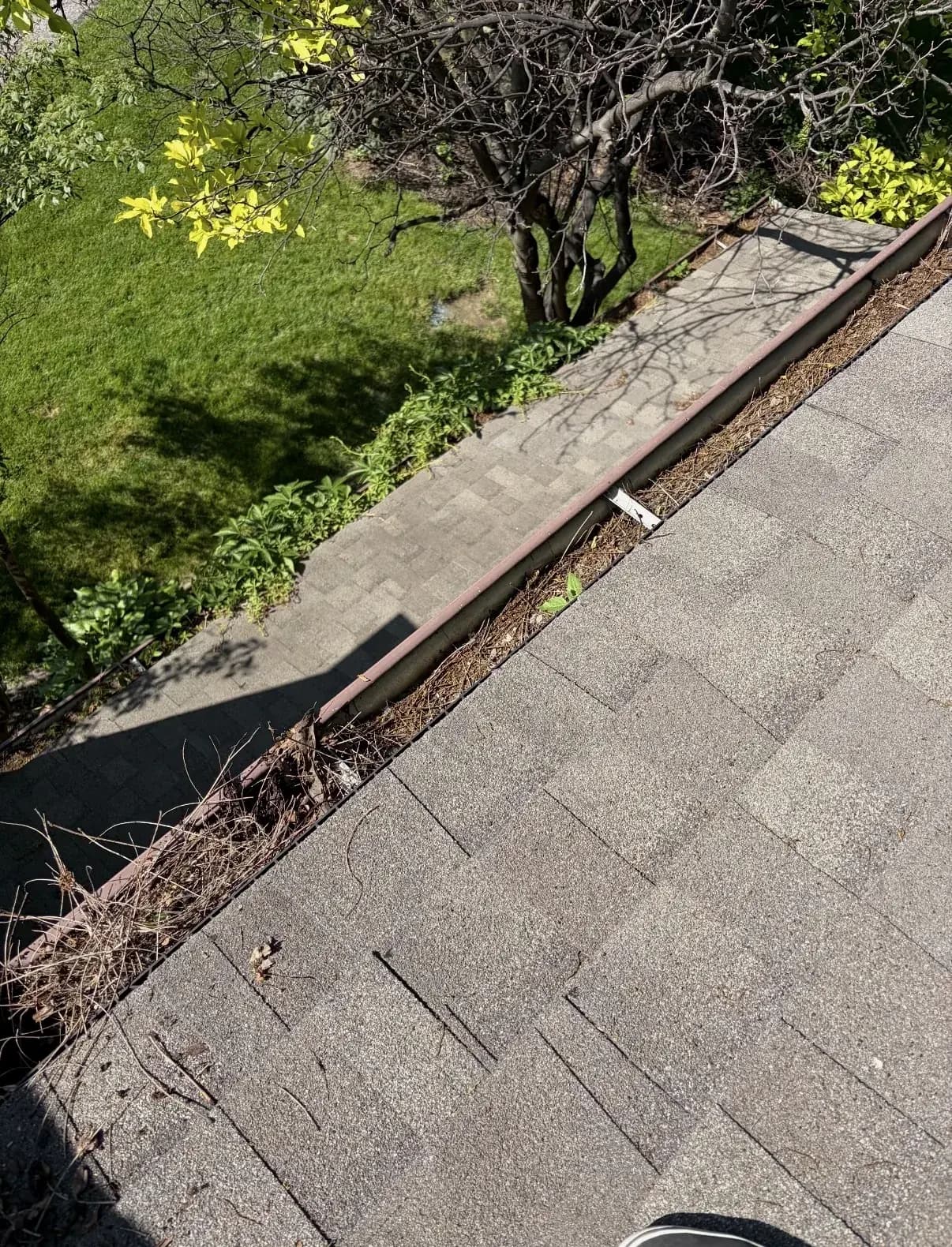
Clear gutters do help at the margin, which is the honest version rather than the flattering one. An open trough and a working downspout give meltwater a route off the roof once things thaw, so water spends less time standing at the eave. But the fix for ice damming is attic insulation, ventilation, and air sealing around fixtures and the hatch. That is an insulation contractor. We have nothing to sell you on it.

Quick answers

Will cleaning my gutters stop ice dams on my roof?

No. Ice dams come from heat escaping into the attic, melting snow on the roof, and that meltwater refreezing at the cold eave. Clear gutters give the water somewhere to go once it thaws, which helps at the edges, but the cause sits above your ceiling. That is an insulation and ventilation job, not a cleaning one.

When should the last exterior clean of the year happen?

Before overnight lows settle below freezing, which around here usually means late October into November. Exterior glass work needs water that will not start setting up on the glass while it is still being worked, and washing concrete late in the season leaves the slab saturated going into a freeze. Interior window work runs all winter with none of those limits.

Should I wash road salt off my driveway during the winter?

Not with a machine. A slab washed in January holds water down in its pore structure that expands the first night it refreezes, which is the same damage you are trying to avoid in the first place. Rinse with a hose on a warm afternoon if you like, then book the real wash for spring once nights hold above freezing.

Questions we did not answer here

Get a free estimate

What do you need? (required)
Call (402) 213-5300Free Quote