Proudly serving Omaha · Elkhorn · Papillion · Bellevue & the Omaha metro

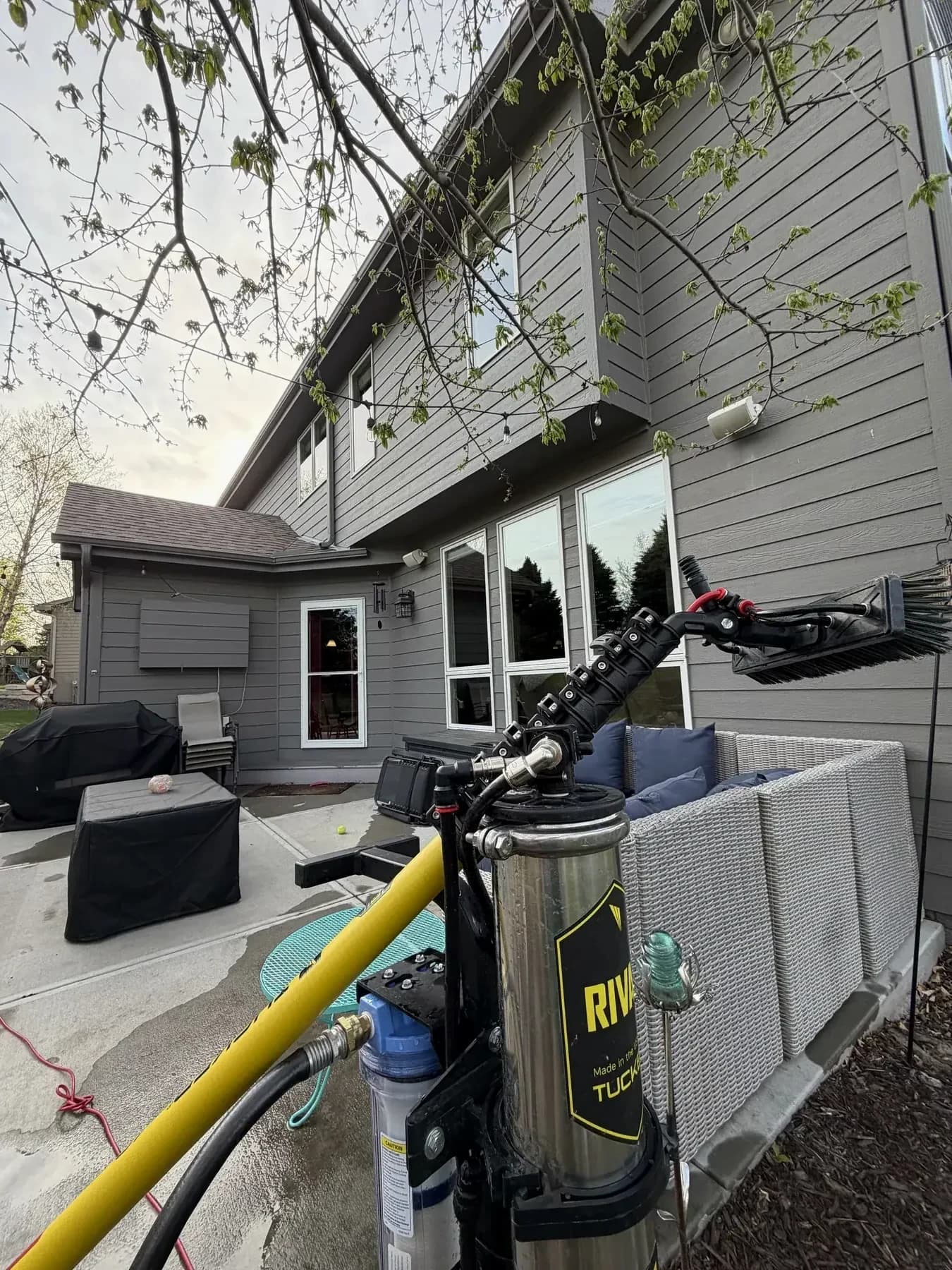
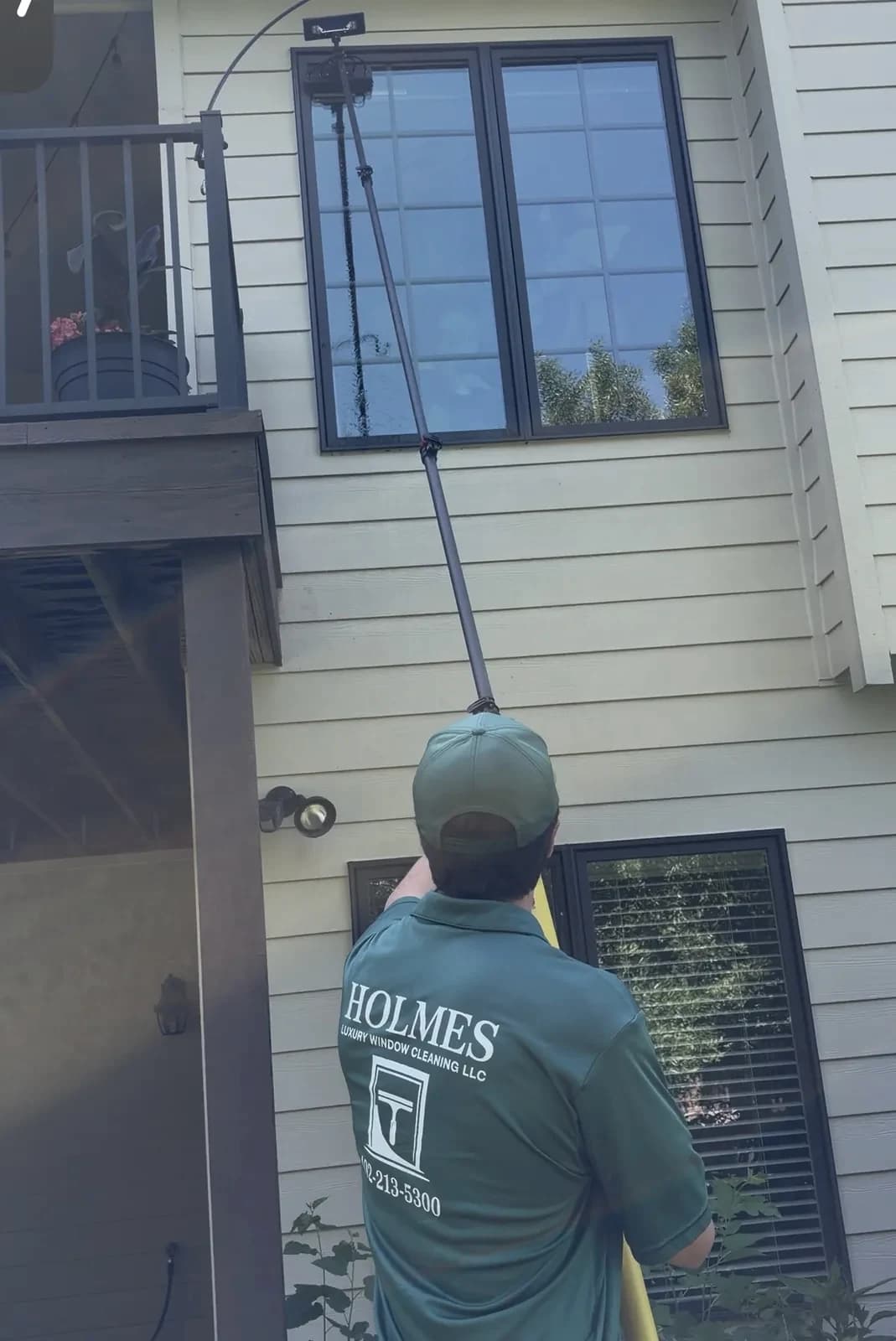
A water-fed pole reaching second-storey glass in Omaha, NE

Hard water spots on Omaha windows

That white haze along the bottom of your first-floor windows is mineral, and the water that carried it there is almost certainly your own.

(402) 213-5300

Get a free estimate

What do you need? (required)
5.0across 50+ reviews on

The short version

  • MUD lime-softens Omaha water to about 10 grains per gallon
  • Surface deposit washes off; etched glass only improves with polishing
  • Wet the pane. Haze still visible under water is etching
  • Realigning a misaimed sprinkler head stops the cause for free
  • Tempered patio doors can distort under polishing, so we test first

Why this comes up in Omaha

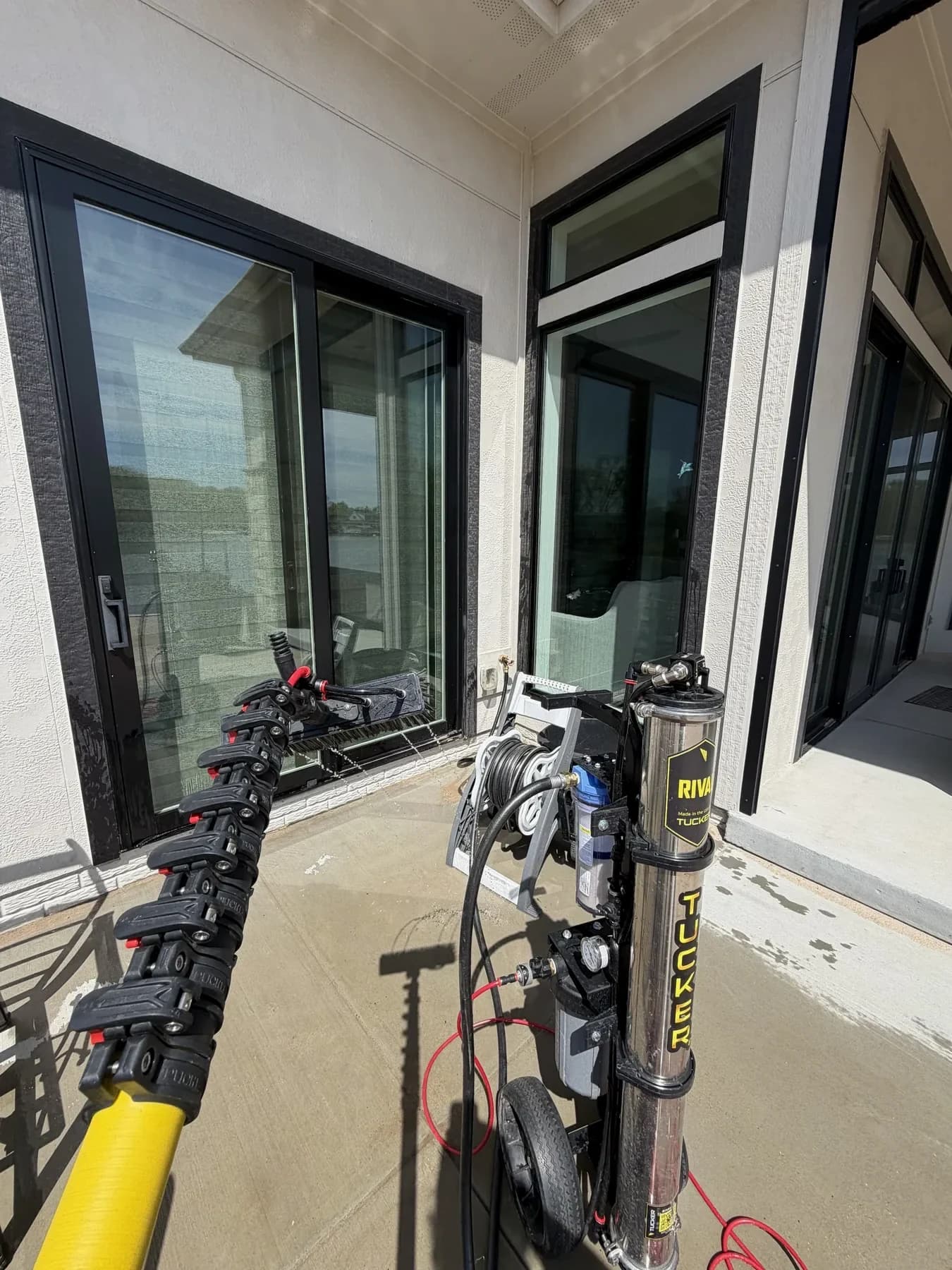
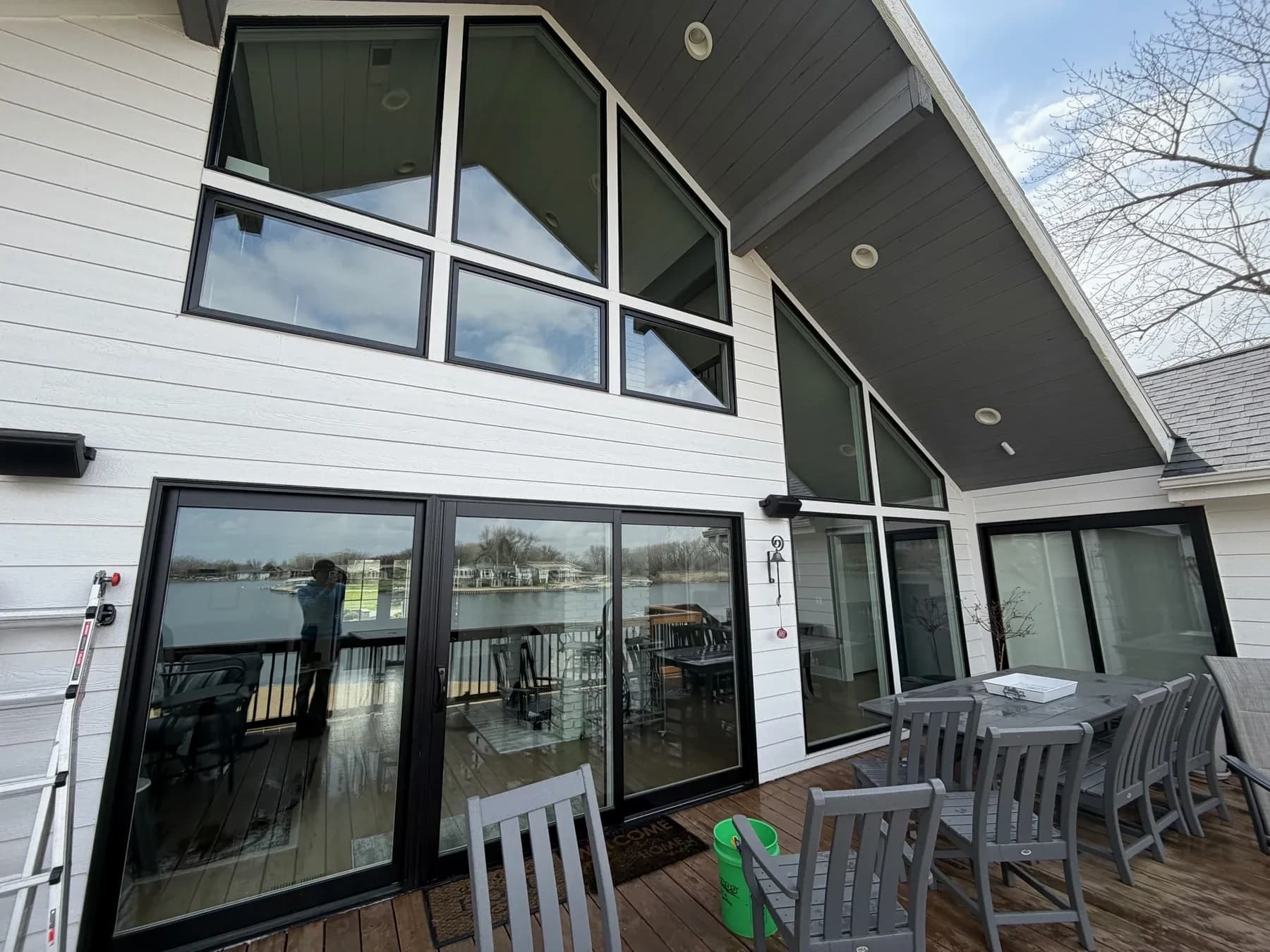
Two-story window cleaning on an Omaha-area lake home

That white haze along the bottom of your first-floor windows is mineral, and the water that carried it there is almost certainly your own. Omaha's supply is lime-softened by the Metropolitan Utilities District to somewhere around 10 grains per gallon. Softened, and still hard by any standard. A sprinkler head puts that water on the glass, the sun takes the water back, and everything dissolved in it stays behind. Three mornings a week across one summer adds up fast.

The question worth answering is not how to scrub it off. It is whether the mineral is sitting on the glass or has begun working into it, because those are two different problems with two different endings. One washes away. The other never fully comes back, regardless of who you hire. Here is how to tell them apart at your own window, and how to shut off the cause for nothing.

The short of it

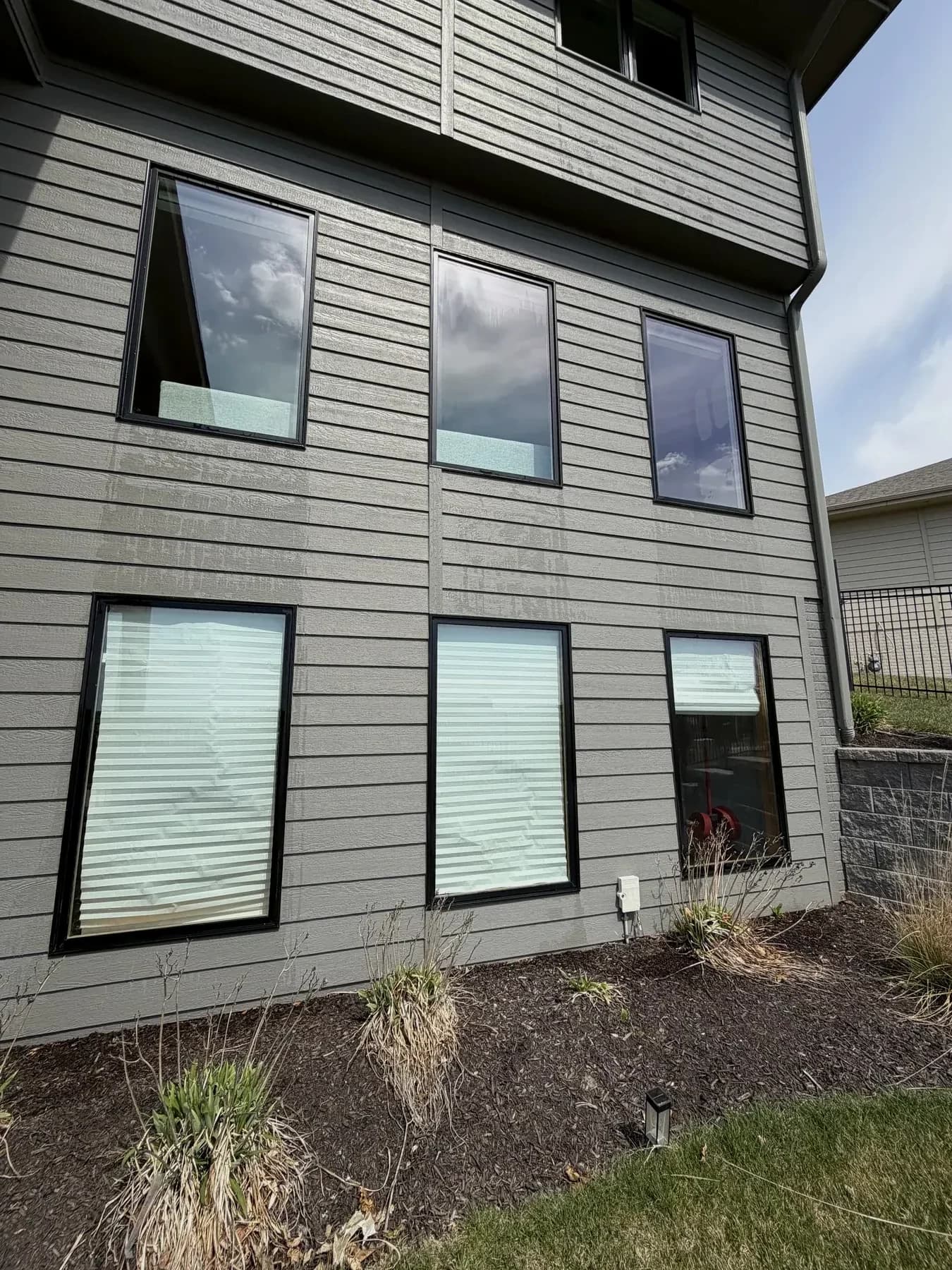
Residential window cleaning on a modern Omaha home

Where the minerals come from

Lime softening pulls a good share of the calcium and magnesium out of raw river water. It does not pull all of it, and roughly 10 grains per gallon is what arrives at the tap across the city. None of that is a water quality problem. It is fine to drink and it is what the whole metro cooks with. It only becomes visible when you let it dry on something instead of drinking it.

Irrigation does the damage, because irrigation is repeated and aimed. One splash from a garden hose dries into a ring you can wipe away next week. A spray head clipping the same three windows every other morning from May through September lays down layer on layer in the same places, always in the same arc, each one drying harder than the one beneath it. The shape left on the glass generally identifies the head that made it.
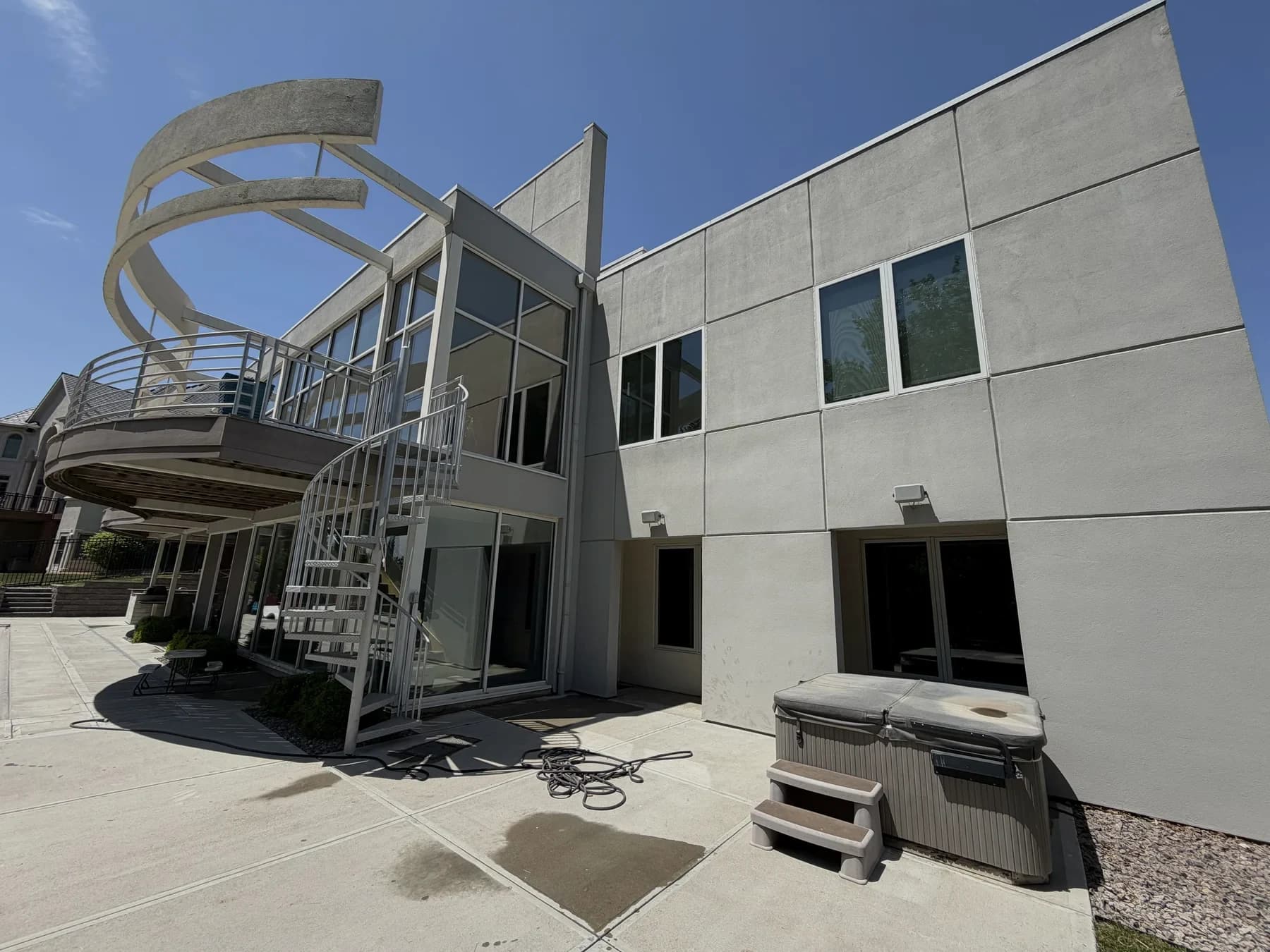
High-access window cleaning on a modern Omaha property

Deposit and etching are not the same thing

For the first season or two the mineral simply sits there. Carbonate builds as a crust on top of the glass surface, and an acidic treatment dissolves it back off leaving nothing behind. That is a cleaning job and it is the easy version. Left through more summers, particularly on glass that takes full sun, something different starts happening underneath the crust.

Glass is a silica network and it is less inert than it looks. Alkaline mineral held against a hot pane through hundreds of wet-then-dry cycles slowly attacks that surface layer and leaves microscopic pitting. The haze you see at that point is not a coating at all. It is the texture of the glass scattering light. West and south elevations reach it first, since they run hottest and cycle dry fastest.

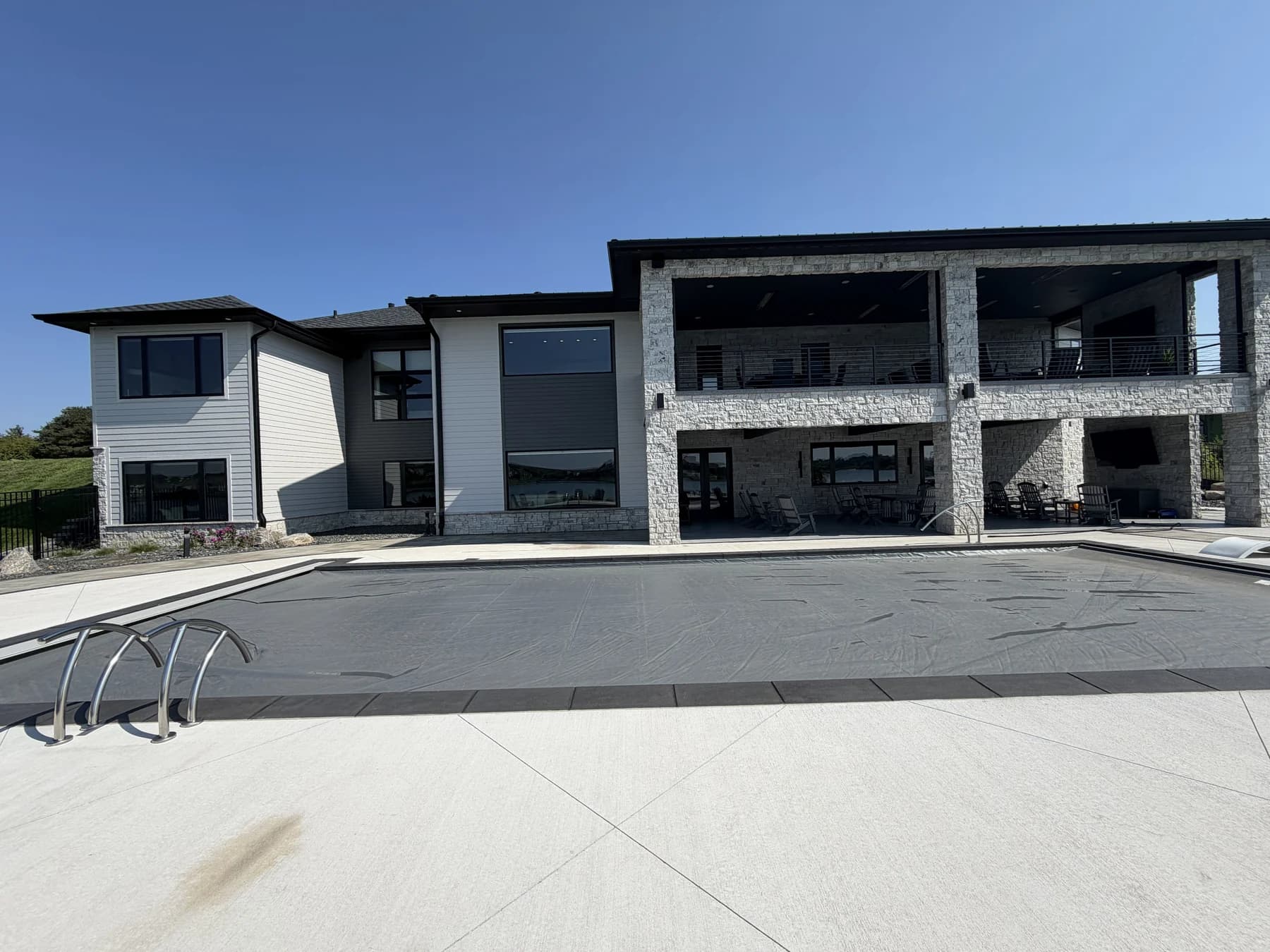
A modern Omaha property seen across the pool deck

How to tell which one you have

Wet the pane and watch. Run water over the hazy area, then step back a few feet and look at it while it is still wet. Surface deposit largely vanishes under a film of water and returns as the glass dries, because the water fills the texture and bends light closely enough to hide it. Etching stays plainly visible while wet. That test takes half a minute and costs nothing at all.

Two more checks worth doing. In low raking sun, deposit reads as separate rings, streaks and fan shapes matching where water landed, while etching reads as one even dull field across everything the spray reached. Then run a fingertip over it. Deposit has grit you can feel and catch a nail on; etched glass is smooth but flat-looking. Do not take a razor blade to it to find out, because on coated and tempered panes that is how a fixable problem becomes a permanent one.

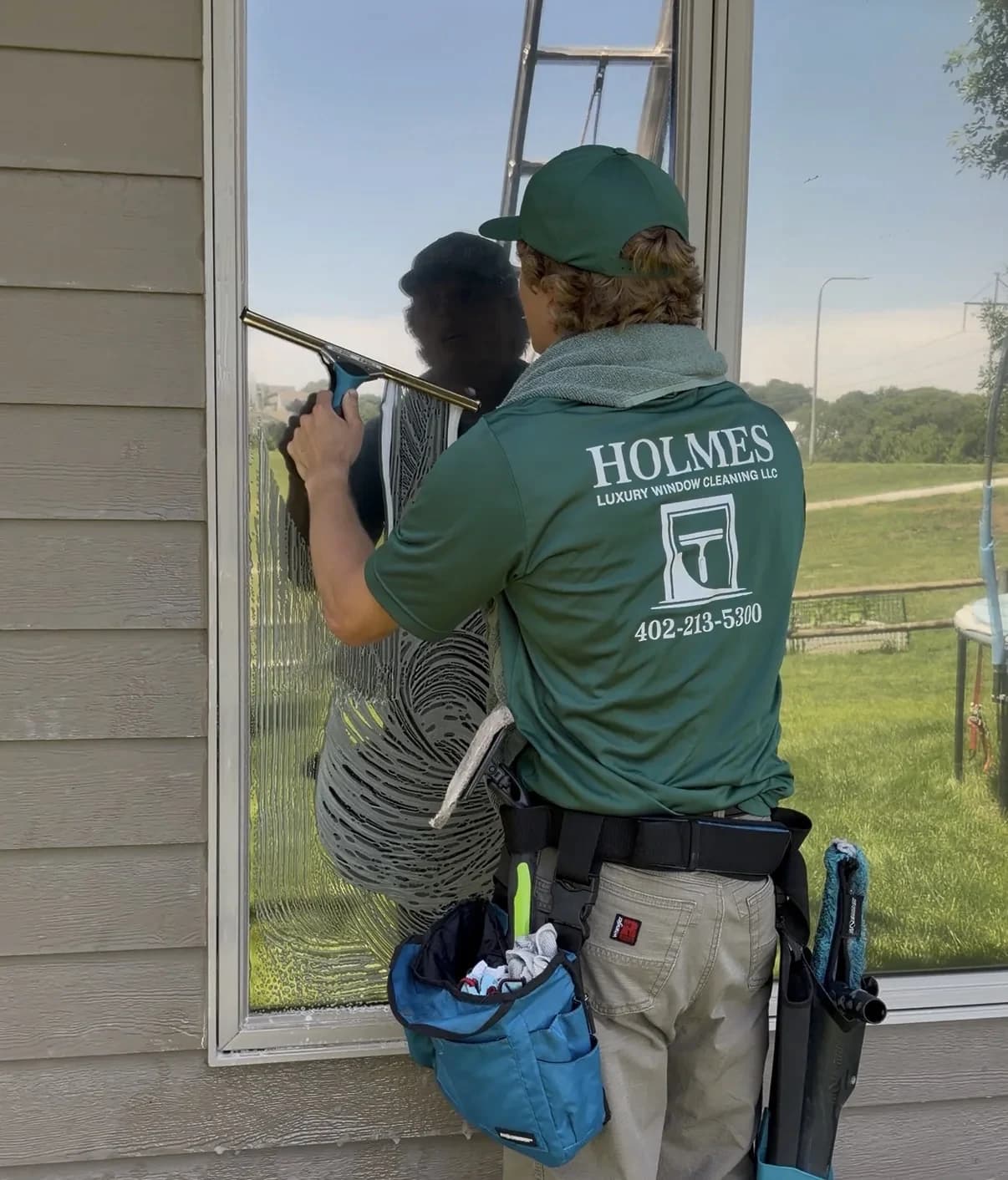
Water-fed pole brush cleaning a window in Omaha, NE

Walk your zones, the fix that costs nothing

Pick a Saturday morning, run each irrigation zone one at a time, and stand back and watch where the water actually goes. You are looking for specific faults: a head throwing its arc into the house instead of stopping short of it, a head sunk below the turf line so the spray fans upward off the grass, a rotor knocked out of alignment by a mower tire, and fine misting at the nozzle that drifts onto glass in any breeze.

Most of that is correctable in minutes with your hands and a small screwdriver. Spray heads carry an adjustment at the nozzle for arc and radius, rotors have a screw on top, a head can be twisted in its socket to aim somewhere else, and a nozzle that throws a shorter distance costs very little. None of this needs a contractor and none of it needs us. Until the water stops landing on glass, any treatment we perform is a rental rather than a repair.

Skylight and roof window cleaning on an Omaha home

Keeping it from coming back

Once the heads are aimed away from the house, the rest is upkeep. Splash sources are worth a walk around: a downspout elbow dumping onto a walk beside a window, a low patio that throws rain back onto a slider, an outside faucet dripping onto a basement pane. Same water, same result, only slower. And if you rinse windows yourself with a hose, dry them rather than letting them air dry, since the hose carries exactly the same 10 grains the sprinkler does.

One caution about products. Acidic cleaners that lift mineral off glass are not kind to the materials around the glass. Let them run onto anodized aluminum frames, painted sills or the finish on a storm door and you can dull or spot the surface, and that damage does not polish out later. Keep them on the pane, work in shade rather than on hot glass, and rinse the frame down afterward.

The long version

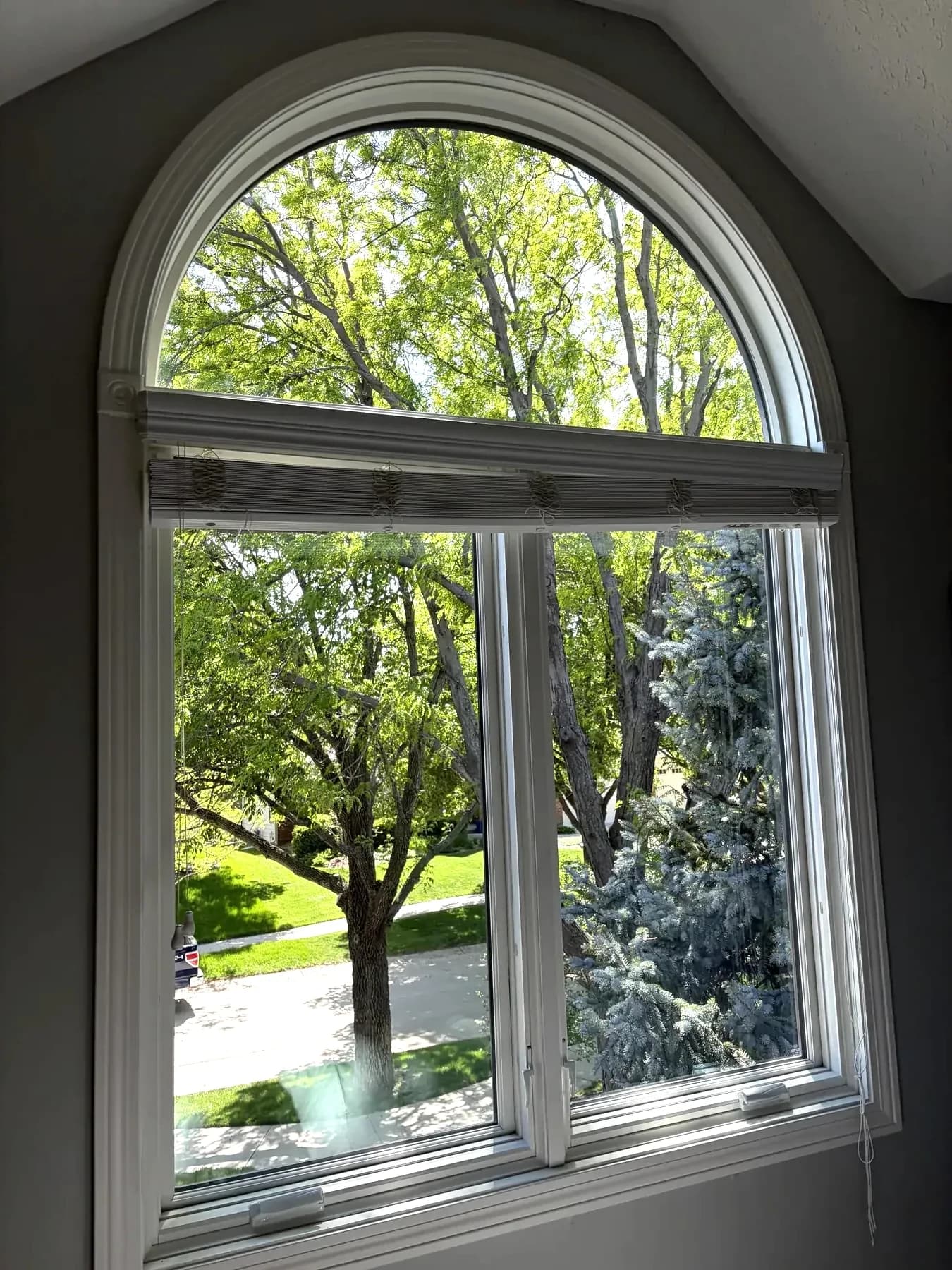
A cleaned arched window seen from inside an Omaha home

What can be reversed and what cannot

Surface deposit comes off. We use an acidic treatment made for the job rather than soap, it is included at no extra cost on any recurring plan, and glass cleaned on a schedule rarely gets past this stage at all. That is the honest argument for frequency in a city with water like ours. The mineral never gets to sit long enough to do anything you cannot undo.

Etched glass is a different conversation and we want to have it before the work, not after. Polishing with a mechanical compound takes a very thin layer off the glass to bring the surface back toward flat. It improves. It does not return a pane to new, and anybody telling you otherwise is selling. On tempered glass, which covers patio doors and most panes down near floor level, heavy polishing can leave a visible distortion in the reflection.

So we test first. One patch on the least visible elevation of the house, then you look at the result on your own window and decide whether the rest is worth doing. If a pane will not come back far enough to justify the work, we say so and leave it alone. We do not replace glass and we do not sell window units, so there is nothing in that answer for us.

Quick answers

Why do only some of my Omaha windows have hard water spots?

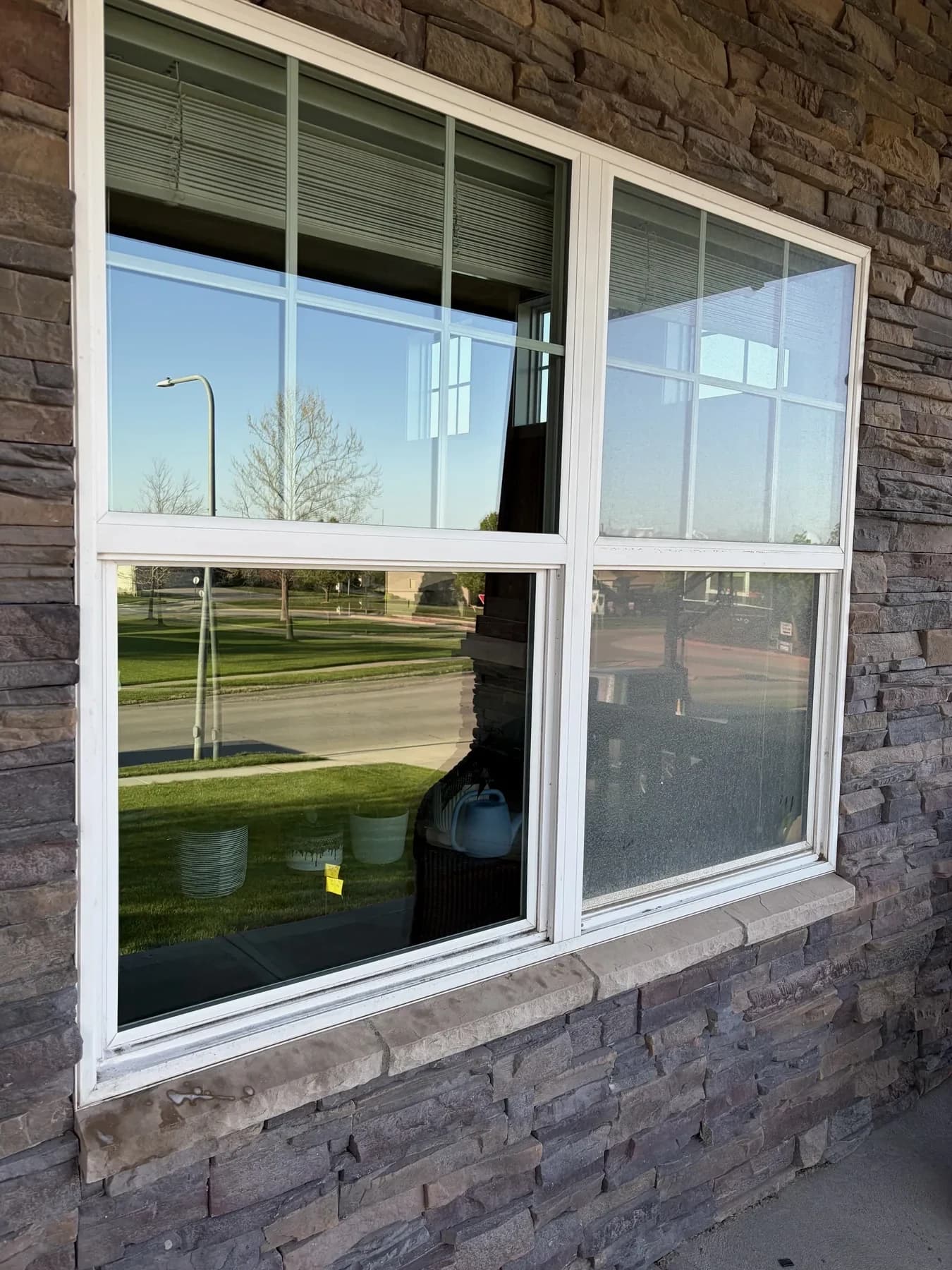
Because only some of them get watered. Spotting maps onto sprinkler coverage almost exactly: first-floor glass on the elevations a zone reaches, usually in an arc or a fan shape. Windows above the spray line and on sides with no heads stay clear. Walk the zones and the pattern on the glass will point straight at the head.

Will vinegar take hard water spots off my windows?

On light, recent deposit, sometimes. It does nothing for etching, since there is no coating left to dissolve at that point. Watch where it runs, though. Vinegar sitting on anodized frames, painted sills or a storm door finish can dull them, and that is a worse outcome than the spots you started with.

Can you replace a pane that is etched too badly to fix?

No. We clean glass, we do not replace it, and we do not install or repair windows. When a pane is past what polishing can achieve, we tell you plainly and you can take it to a glass company. We would rather lose the line item than sell you a result we cannot actually produce.

Questions we did not answer here

Get a free estimate

What do you need? (required)
Call (402) 213-5300Free Quote