Pressure Washing in Papillion, NE
The irrigation that spots Papillion's windows also changes what happens to its concrete, and the effect is easy to miss because it is gradual.
(402) 213-5300Pressure Washing in Papillion, in short
- Where
- Sarpy County, south of the Omaha line, about twenty minutes from home base.
- County
- Sarpy County, Nebraska
- Housing stock
- Mostly newer construction with generous window counts and, crucially, a very high rate of installed lawn irrigation. Well-kept properties where the sprinklers run on a timer.
- Areas we cover
- Shadow Lake, Settlers Creek, Midland, Tara Heights, Papillion Creek corridor
Irrigated ground, shaded concrete, and what grows on it
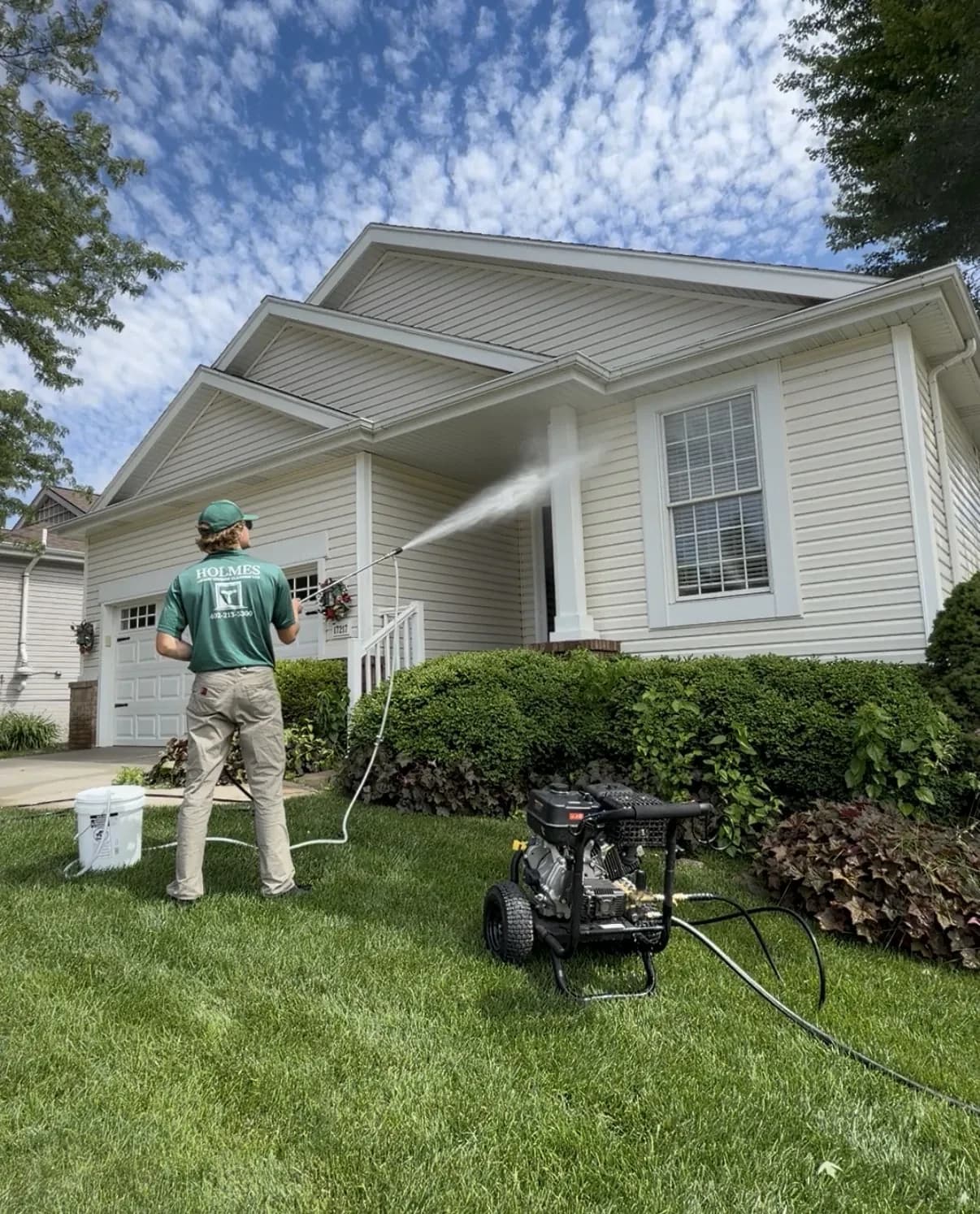
Ground that is watered on a timer through a humid Nebraska summer never fully dries, and concrete adjacent to it stays damp at the edges. Damp shaded concrete grows algae: that green-black film along the edge of a walk or the north side of a driveway. It is not just discoloration; it is genuinely slippery when wet, which matters on a front walk and matters more on a pool deck.
It also means the dirtiest part of a Papillion driveway is often not the middle where the cars sit, but the shaded edge nearest the lawn. Cleaning the middle and leaving the edge produces exactly the kind of uneven result that reads worse than not cleaning at all, so the edges here get detailed by hand after the surface cleaner has done the open run.
Patios and pool decks get the same treatment for the same reason. Stamped and colored concrete, which is common on newer Papillion patios, gets the gentlest approach we use, because the color and pattern live in a thin surface layer under a sealer, and aggressive washing takes that sealer off unevenly.
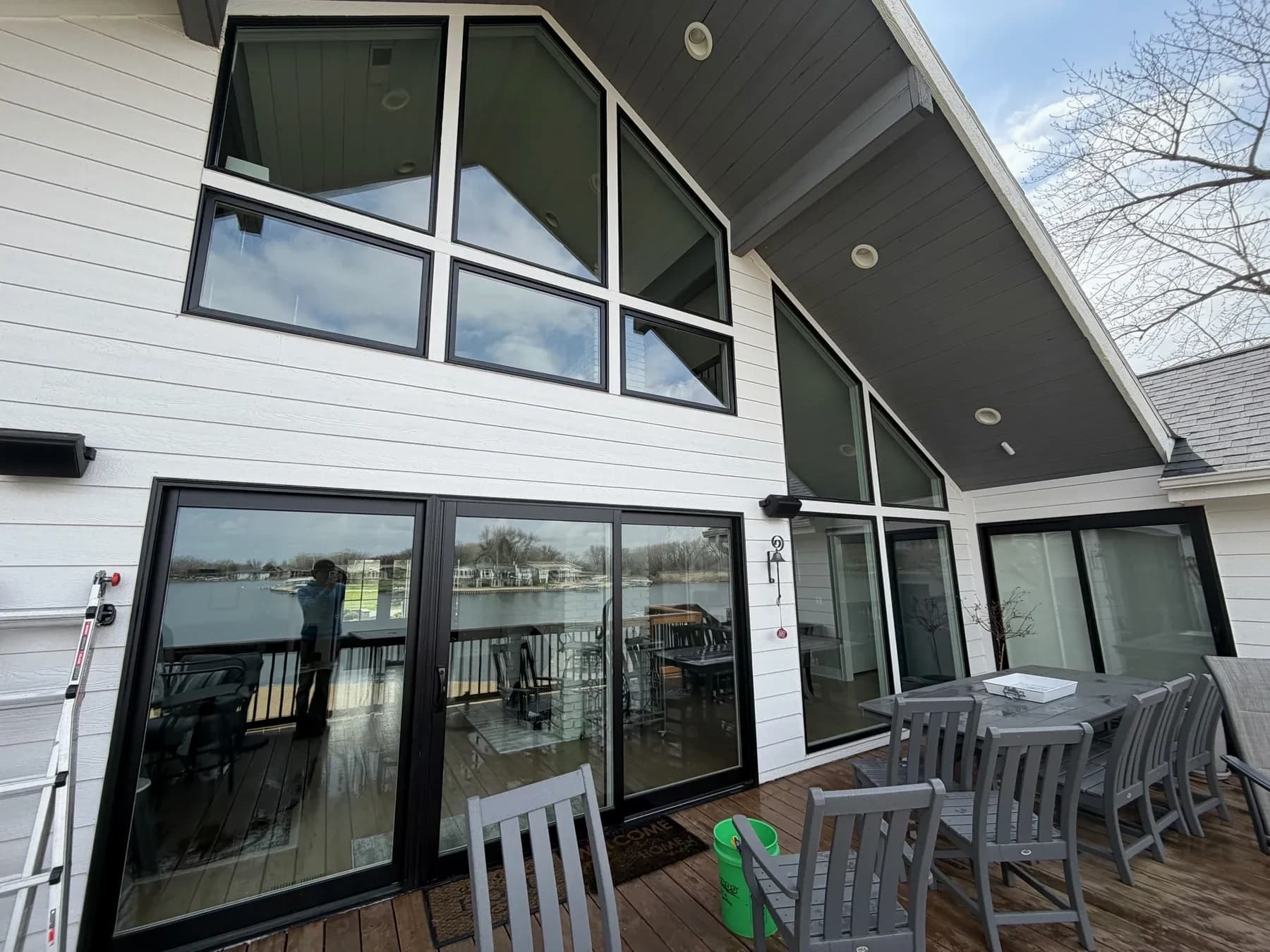
Irrigation leaves a mark on siding too, and it is mineral rather than dirt. Where a head throws against a wall, the water dries off and the calcium stays behind, so the bottom two or three courses of vinyl build a chalky band that a normal wash will not move. An acid treatment takes most of it. On painted brick it sometimes will not come off at all, and that is a thing we say at the quote rather than at the end.
Cedar fencing gets a look as well, because out here a fence line and a sprinkler line almost always run together. Constant wetting at the base rots pickets from the ground up while the top four feet still look sound enough to fool anyone. We will not put a wand on a fence that has gone soft. You get splintering and lost boards, and what that fence actually needs is a carpenter.
What that means on your property
- Shaded irrigated edges detailed by hand, not just the open run
- Algae film treated as a slip hazard, not a stain
- Stamped and colored patios washed at the gentlest setting we run
Washing around a timer and a forecast
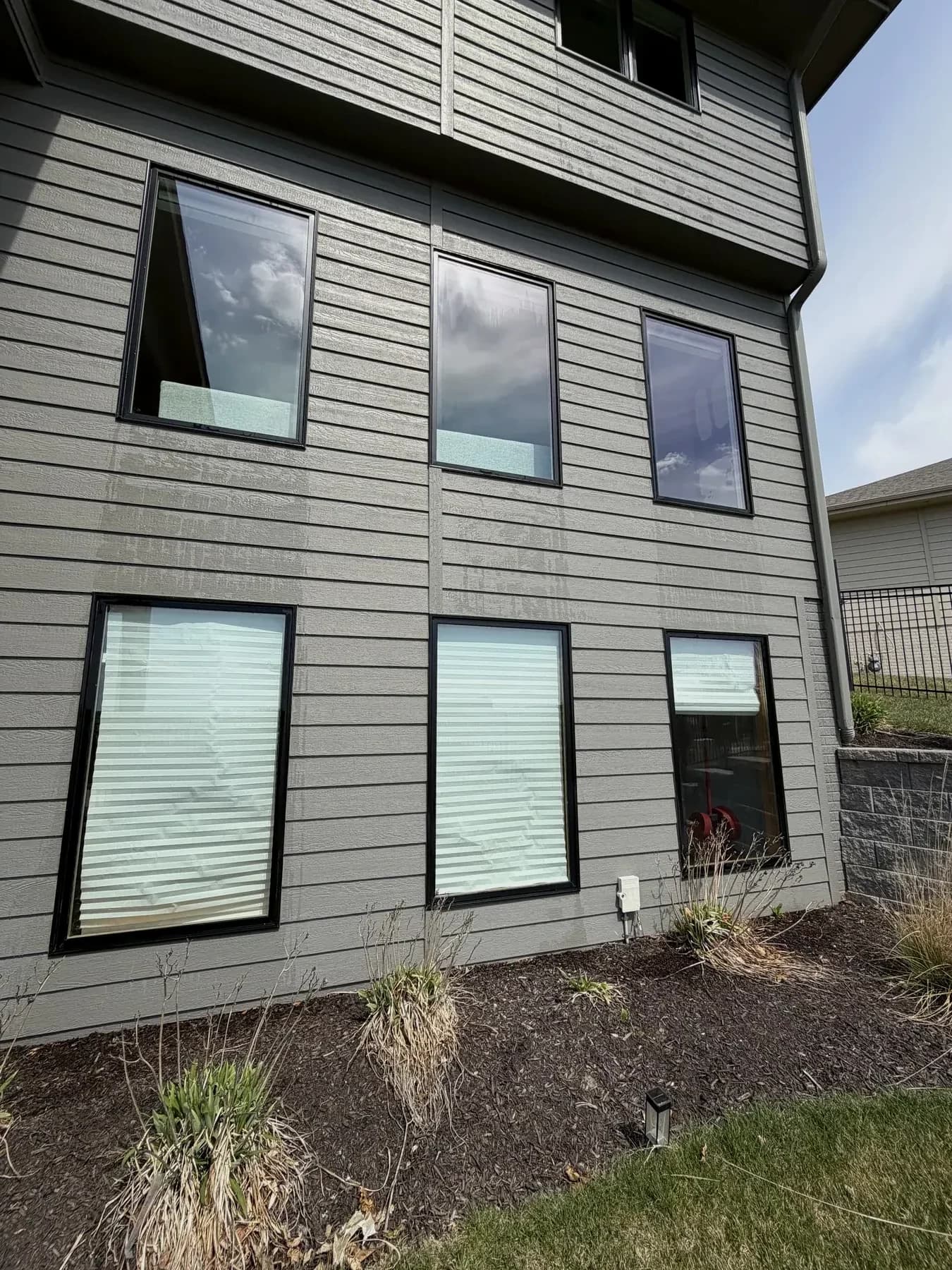
Algae is alive, so it comes off best when you kill it rather than blast it, and it dies hardest late in the season when the growth has reached full extent. Late August into September is the useful window on an irrigated Papillion property. Wash in April and the shaded edge nearest the lawn is green again by August, because the sprinklers never stopped and that strip of ground never dried out.
We do ask you to pause the affected zones for a day on either side. Cleaning solution needs dwell time to reach the root, and a timer that fires four hours after we pull away rinses it off the surface before it has done much of anything. That single scheduling detail is the most common reason a wash out here underperforms, and preventing it costs nobody a dollar.
Pressure Washing in Papillion, asked and answered
Why is the shaded edge of my driveway green?
Ground watered on a timer never fully dries, and concrete beside it stays damp along that edge. Damp shade grows algae. It gets genuinely slippery well before it looks bad, which is why we treat a green front walk as a safety job rather than an appearance one.
Will pressure washing damage my stamped concrete patio?
It can. The color and pattern sit in a thin surface layer under a sealer, and too much pressure strips that sealer unevenly, which reads worse than the dirt did. Stamped and colored concrete gets the lowest setting we run, and we will tell you if the sealer is already failing.
How often does a Papillion driveway actually need washing?
Once a year for most. If the green shaded edge is your problem, late summer beats spring, because you kill the growth at full extent instead of knocking it back early. If winter salt in the slab is the problem, spring is the visit that matters. We will ask which one you have.