Pressure Washing in Ashland, NE
Ashland has more genuinely old masonry per block than anywhere else on our list, and old masonry is where pressure washing does its worst permanent damage.
(402) 213-5300Pressure Washing in Ashland, in short
- Where
- Saunders County, on the Platte between Omaha and Lincoln. The far edge of our run.
- County
- Saunders County, Nebraska
- Housing stock
- A genuinely old small-town core with period housing, brick commercial buildings, and true divided-light sashes, surrounded by newer development and river-adjacent property.
- Areas we cover
- downtown Ashland, Silver Street, Platte River corridor, Highway 6 corridor
Old brick, soft mortar, and knowing when to say no
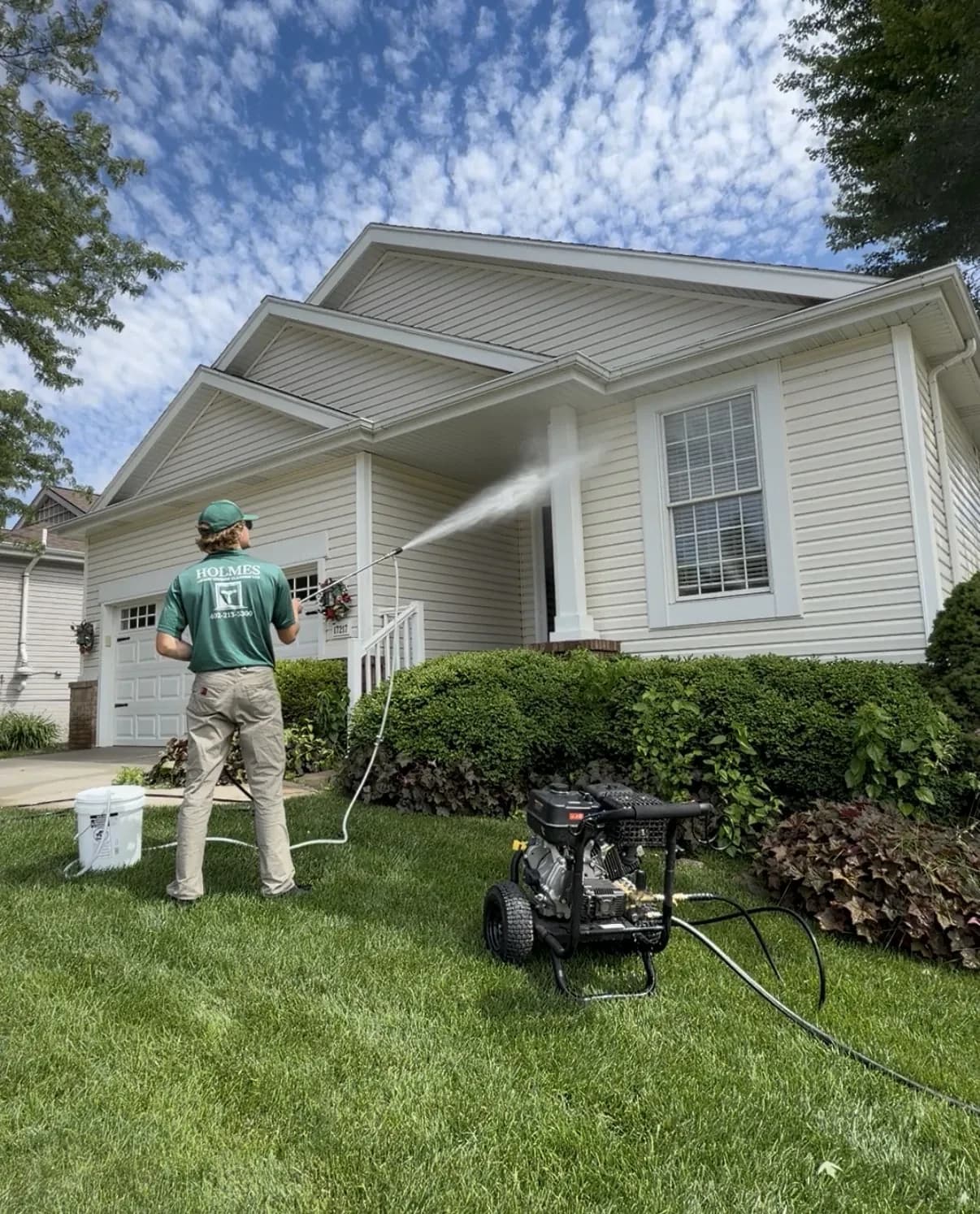
Lime mortar and older cement mortar soften with age. A wand aimed into a joint will scour it hollow in seconds, and once the mortar is gone the wall takes water behind the face, which is a repointing bill and, on a bad wall, a structural conversation. The damage looks minor on the day and gets worse every winter afterwards.
So on old brick we work across the joints rather than into them, at a pressure the mortar can actually take, and there are walls we will decline to wash at all. If the joints are already failing, the honest answer is that the wall needs a mason before it needs a cleaner, and we would rather tell you that than take the money.
The newer development around the town core is a conventional job: concrete drives, vinyl and fiber-cement siding, and a standard approach.
River-adjacent property near the Platte gets the damp-shade treatment: heavier organic growth on north elevations and on anything under tree cover, which needs chemistry at low pressure rather than force.
White bloom on an old brick wall is not surface dirt. It is salt that traveled out through the brick dissolved in water and crystallized when that water evaporated at the face, which means the source of it is moisture inside the wall. You can wash it off. It comes back on the same schedule until whatever is wetting the wall gets dealt with, and we would rather say that before quoting than after your second visit.
Painted surfaces on a house built before 1978 are where we stop. Stripping paint of that age puts it into your soil and your neighbor's, and containment is a certified contractor's job with a setup ours is not. Old porch woodwork gets the same caution for a different reason: pressure cuts the soft grain out from between the hard grain on softwood and leaves a furrowed rail that no amount of sanding brings back flat.
What that means on your property
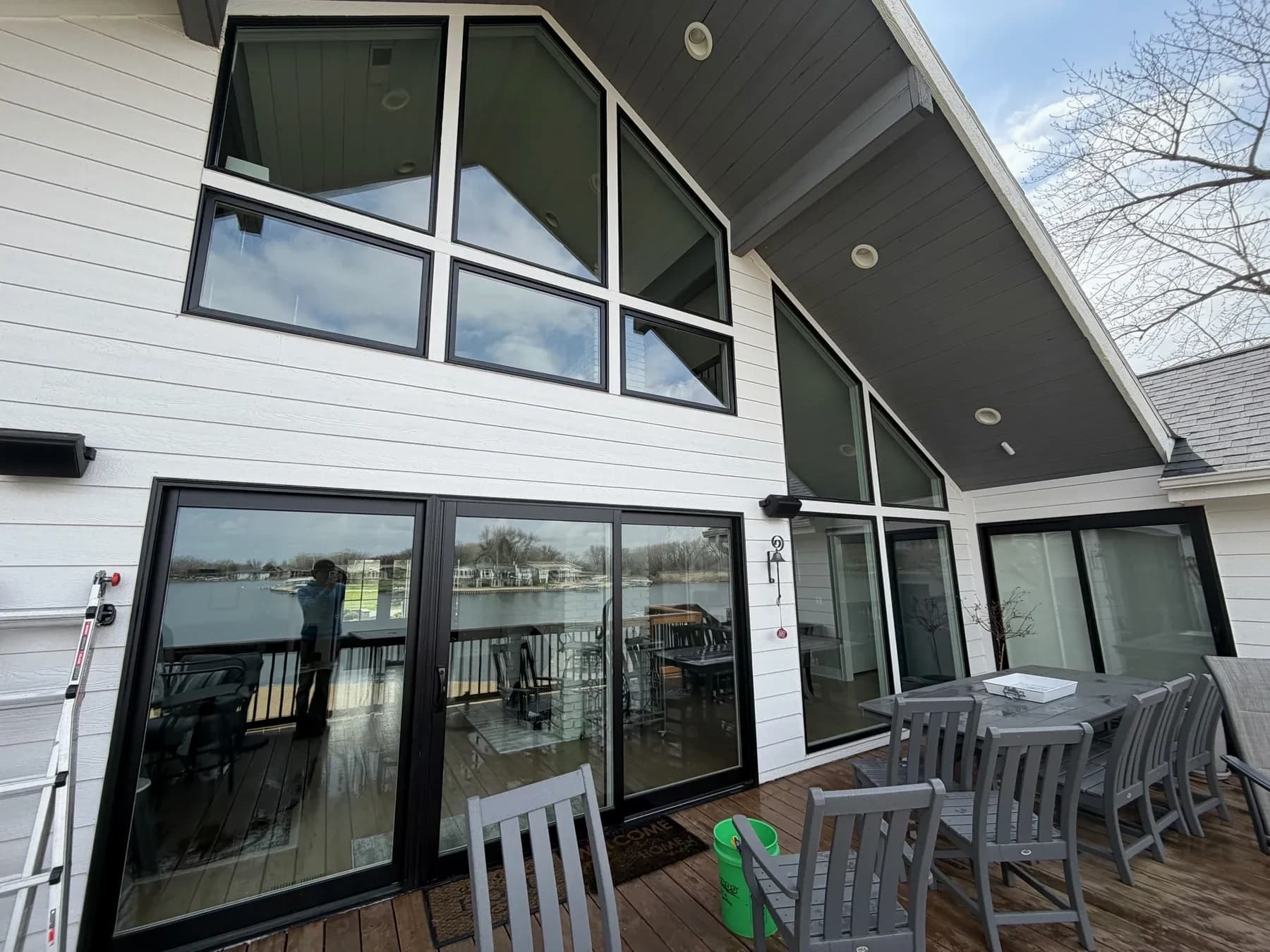
- Old mortar washed across the joints, at pressure it can take
- Walls we think need a mason first, where we will say so and decline
- River-adjacent north elevations soft washed for established growth
Freeze risk closes our masonry season
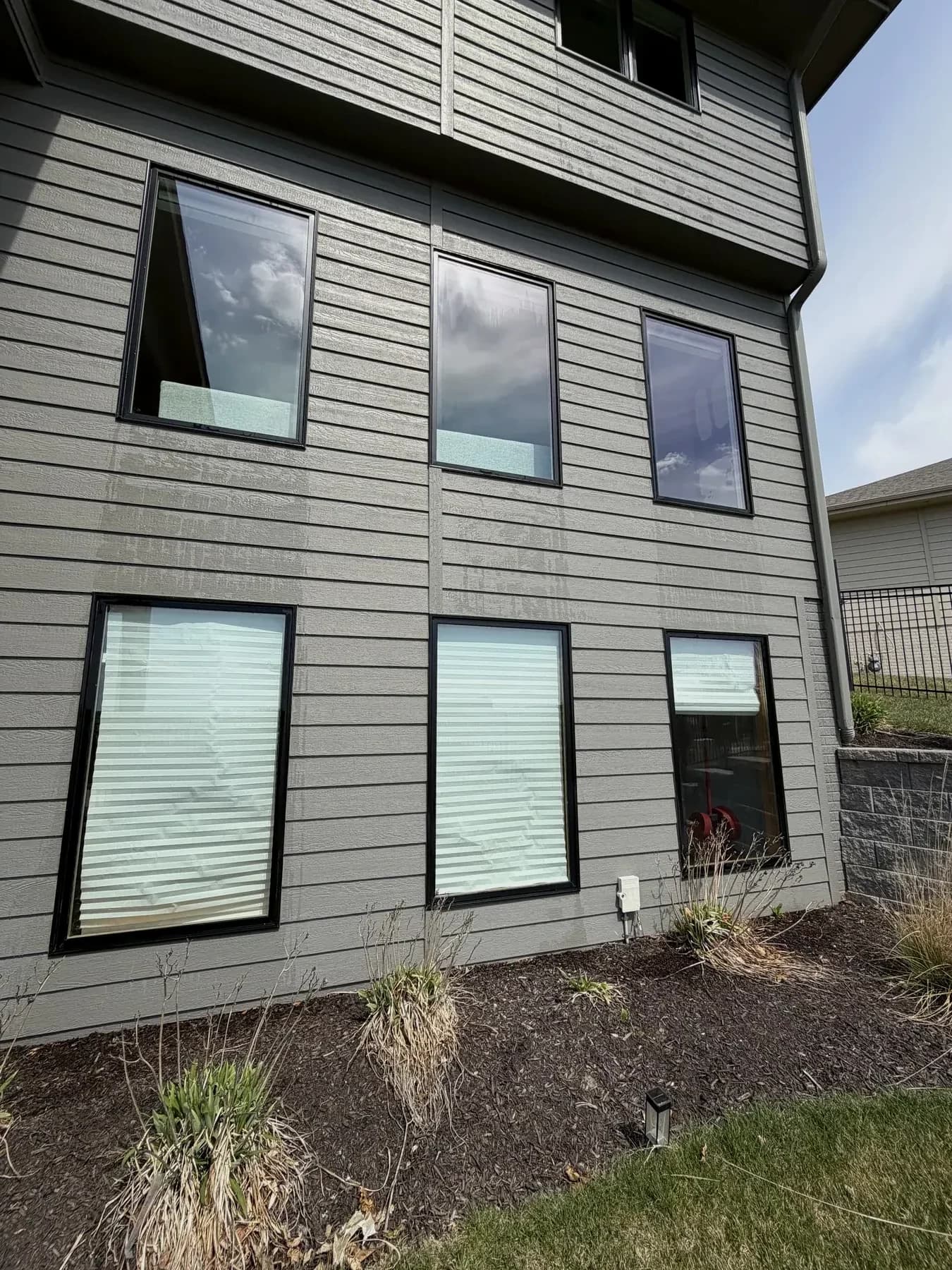
Old brick takes up a lot of water and gives it back slowly. Wash a wall in November, let the overnight temperature drop, and the water sitting in the outer eighth of an inch freezes, expands, and lifts the fired face off in flakes. So we do not wash masonry in Ashland once overnight lows are anywhere near freezing, and we will move a booking rather than gamble on a marginal forecast.
That leaves roughly late April through October, and inside that stretch the back half is better. Spring here brings rain often enough that a wall gets rinsed and resoiled before you have finished paying for it, and ground near the river stays soft under equipment. Late summer into fall buys you firmer footing, a wall that stays clean longer, and real margin before the first hard freeze.
Pressure Washing in Ashland, asked and answered
My house in Ashland has painted brick. Can you clean it without taking the paint off?
Depends how well the paint is stuck. We test a patch low on the wall where nobody looks. If the film is already lifting, washing takes it off in sheets and leaves you needing a repaint, and finding that out on one square foot beats finding it out across a whole elevation.
How much pressure do you use on old brick?
As little as does the job, and the angle matters more than the number. We keep the fan moving across the joints instead of into them, and we lean on chemistry and dwell time rather than force. A wall that needs more than that to come clean needs a mason, not a cleaner.
Can you wash the concrete and skip the house?
Yes, and on a fair number of properties out here that is what we would suggest. Flatwork shows dirt fastest and takes cleaning best. If your siding is newer and it is the drive that looks tired, do the drive and keep the rest of the money.